


A year is a long time to keep doing the same shoulder and hand exercises, especially when the arm you are rehabbing has been weak since a stroke that happened years ago. Most people in that situation are told, gently, that the window for real recovery closed a long time ago. What is left is maintenance. So the more interesting question in a new report from the VNS-REHAB trial is not whether a small nerve implant helped people move their arm again. It is whether the gains were still there twelve months later, once the novelty and the intensive clinic sessions had worn off.
The answer, for the 74 people who finished the year, is that they held on to what they had regained.
What the implant actually does
The device sits under the collarbone and sends short pulses to the vagus nerve, a thick cable that runs from the brainstem down through the neck and into the chest. That nerve is a main line of communication between the body and the parts of the brain that adjust attention, arousal and, crucially here, how readily the brain rewires itself. When you pair a brief jolt of vagus stimulation with a specific movement, you are essentially tagging that movement as important. The brain releases a burst of the chemicals that make learning stick, right at the moment the person is trying to close their hand or lift their wrist.
In VNS-REHAB, a therapist triggered the pulse by hand during each rehab repetition. Reach for the peg, feel the half-second of stimulation, do it again. The trial had already shown that pairing the pulses with therapy beat sham stimulation over six weeks. This new analysis, led by Teresa Kimberley and colleagues and published in Stroke, follows the participants out to a full year, including the people who started on the sham device and later crossed over to the real thing.
The numbers that lasted
Recovery after stroke is usually measured with a scale called the Fugl-Meyer Assessment, where a clinician scores how well someone can perform a fixed set of arm and hand movements. At one year, the pooled group had improved by an average of just over five points from where they started. That may not sound dramatic, but for chronic stroke, where change is normally close to zero, a five-point shift is the difference between an arm that mostly hangs there and one that can help with a task.
The improvements were not confined to the exam room. Participants also did better on a timed test of real-world hand function, and they reported using the affected arm more in daily life, rating their own quality of movement higher. Scores on quality-of-life measures went up too. What matters is the shape of the curve over time. People kept the ground they had taken during the intensive phase while doing self-directed exercises at home, triggering their own stimulation. The benefit did not evaporate the moment the clinic sessions ended.
That durability is the real headline. Plenty of rehab interventions produce a bump that fades once the schedule relaxes. Here the effect behaved more like a floor than a spike.
What the study can't say yet
This is a post hoc analysis, which means the researchers went back to data from a trial that was designed to answer a shorter question. By the one-year mark, only 74 of the original 108 participants were still contributing data, and everyone who stayed in knew they were getting real stimulation. There is no untreated comparison group at twelve months, because the ethics of the crossover design meant the sham group eventually got the working device. So the report can tell you that people who used paired stimulation for a year held their gains. It cannot cleanly separate how much of that came from the nerve pulses and how much from a year of structured practice with a reason to keep going.
There is also the matter of who benefits and by how much. A five-point average hides a spread. Some people surely improved far more, others barely at all, and the study is not built to predict which is which. And the whole approach still requires surgery to place the implant, plus a therapist willing to time hundreds of pulses to hundreds of movements, at least at the start.
Why it still matters
For years, the working assumption was that the brain's capacity to reorganize itself after a stroke shuts down within months. Paired vagus nerve stimulation is one of the clearer signs that the window is not as firmly closed as the textbooks implied, at least for the arm and hand. The therapy is already cleared by the FDA, which puts it in the small club of stroke-recovery treatments that have moved from a hopeful trial to something a patient can actually receive.
The most useful thing this follow-up adds is patience. Recovery in these participants did not arrive in a single burst and then leak away. It came during focused work, and then it stayed while they kept working on their own. For someone told a decade ago that their arm was as good as it would ever get, that is a different and more honest kind of promise.
Kimberley et al. "Long-Term Outcomes of Vagus Nerve Stimulation Paired With Upper Extremity Rehabilitation After Stroke." Stroke, 2025. doi.org/10.1161/STROKEAHA.124.050479
PubMed PMID: 40329913.
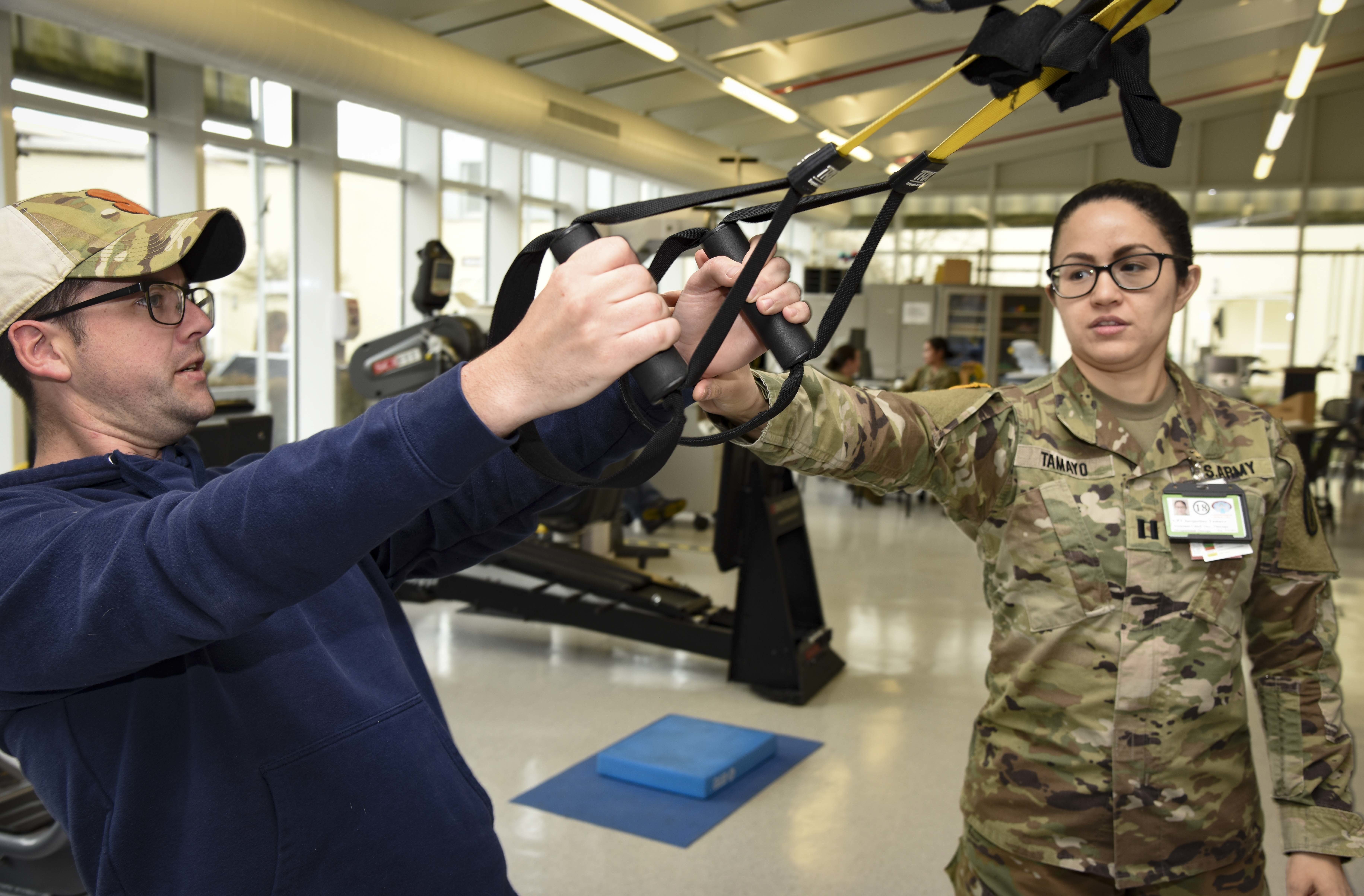
Photograph: U.S. Air Force photo by Senior Airman Elizabeth Baker, Public domain, via Wikimedia Commons.
Comments