The methylguanosine cap is one of the tidier divisions in molecular biology. RNA polymerase II makes messenger RNA and caps it; the cap marks the transcript as a translation substrate, and the initiation factor eIF4E binds it to start protein synthesis. RNA polymerase III makes transfer RNAs and ribosomal RNA, which are not translated and have no business carrying a cap. The division is textbook, and it is not quite true.
A group at the University of Tokyo previously found the cap on a handful of transfer RNA precursors in budding yeast. Mapping it comprehensively, they now report that nearly all pre-tRNAs carry it, that capping increases under heat stress, and that the capped precursors bind up eIF4E. A molecule with no messenger function competes for the factor that messengers require.
Why it matters: This is a mechanism for throttling protein synthesis that works by competition rather than by signalling. The cell does not switch translation off; it floods the compartment with decoys that look like substrates, and eIF4E has only so much of itself to go around.
What capping does for a tRNA precursor
The cap's original job here is defensive. A newly transcribed pre-tRNA carries a 5' leader sequence that must eventually be trimmed off, and in the interval it is exposed to exonucleases that chew RNA from that end. A cap blocks them, which is the same protective function it serves on messenger RNA even though nothing downstream is going to be translated.
Mapping which precursors get capped required knowing exactly where each transcript starts, and the sequencing method produced that as a by-product: precise transcription start sites for every tRNA gene in the genome, with many genes turning out to have several. Capping frequency varied substantially between tRNA species, and the variation was predictable. Precursors whose 5' leaders and 3' trailers were less likely to base-pair with each other, leaving the leader structurally flexible, were capped preferentially.
Reading the cap to find the start
A methodological point deserves separating out, because it is the part most likely to be reused. Locating transcription start sites precisely is difficult for polymerase III genes, and the usual approaches infer them from where sequencing reads pile up, which blurs under processing and degradation. Capping supplies a chemical handle instead: the cap marks the genuine 5' terminus, so a method that captures capped ends reads the true start rather than an inferred one.
Applied across the genome, that yielded start and termination sites for every tRNA gene in the organism, and revealed that many carry several alternative starts rather than one. The same data gave exact 5' leader and 3' trailer sequences, which is what made the structural analysis of leader flexibility possible at all. The authors note the approach should transfer to other eukaryotes, humans included, where polymerase III start sites are mapped no more precisely than they were here before.
The switch under heat
Heat stress changed the picture in a coordinated way. Overall capping rose. Transcription start site usage shifted, and 3' trailers extended. The capped precursors were processed into capped fragments, and those fragments sequestered eIF4E, reducing the pool available for cap-dependent translation.
The logic is economical. Heat-shocked cells need to suppress bulk protein synthesis quickly while continuing to make the specific proteins that handle the damage, and a competitive mechanism does that without dismantling any machinery. Because eIF4E binding is a matter of relative abundance, the same molecules that protected the precursors from degradation become, in quantity, a brake on translation. As Kikuchi and colleagues report in Nature Communications, one modification is doing two unrelated jobs depending on how much of it there is.
What the study can't say yet
The organism is budding yeast, and the authors are direct that this is the simple case. As they put it, In higher eukaryotes, regulation of 5′ capping of pre-tRNAs is more complex than in yeast, due to greater diversity of cap-binding proteins, decapping enzymes, and recapping systems. A mechanism resting on competition for a single limiting factor behaves differently when several cap-binding proteins, decapping enzymes and recapping pathways are in play. Whether human cells do anything similar is open.
Sequestration is also demonstrated more firmly than its consequences. Showing that capped pre-tRNA fragments bind eIF4E, and that translation falls under heat stress, is not the same as showing the first causes the second, since heat shock suppresses translation through several well-characterized routes at once. Quantifying how much of the observed suppression this pathway accounts for is the missing number.
The correlation between leader flexibility and capping is likewise a structural prediction matched to a sequencing result, not a demonstrated cause. It is a reasonable hypothesis about what the capping enzyme finds accessible, and it awaits a test that manipulates the structure directly.
Quick questions
Why would a cell cap something it never translates? Because the cap's most basic function is protecting the 5' end from exonucleases, which is useful for any RNA with an exposed terminus, translated or not.
Is this how cells normally shut down translation under stress? It is one route among several. Heat shock also acts through initiation factor phosphorylation and stress granule formation, and this work adds a mechanism rather than replacing them.
What's the one-line takeaway? Nearly all yeast transfer RNA precursors carry the cap thought to belong to messenger RNA, and under heat stress they accumulate and soak up eIF4E, competing with real messages for the factor that starts translation.
Kikuchi et al. "Heat stress promotes pre-tRNA capping to modulate cap-dependent translation in Saccharomyces cerevisiae." Nature Communications, 2026;17(1). doi.org/10.1038/s41467-026-76325-6
PubMed PMID: 42567854.
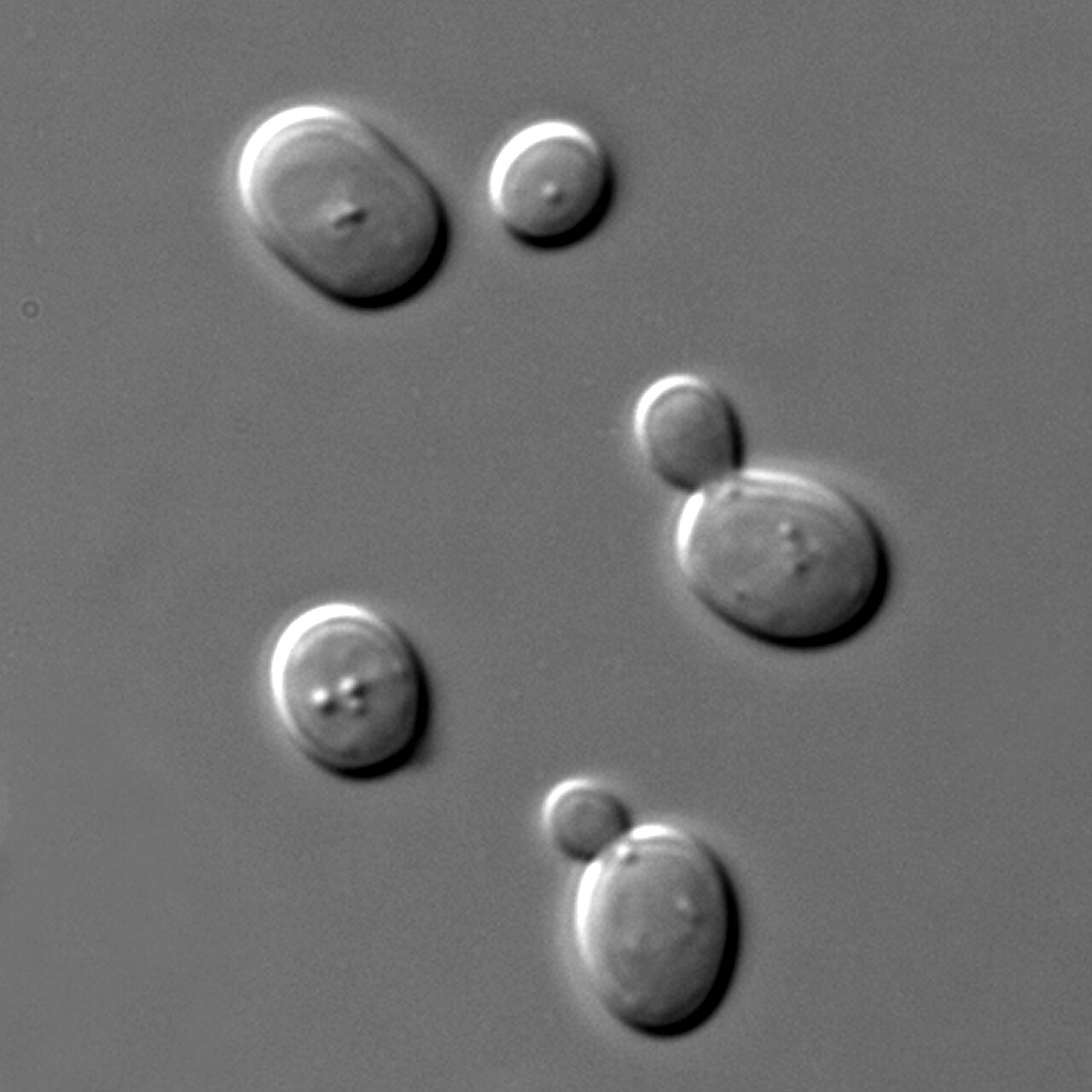
Image: Saccharomyces cerevisiae under DIC microscopy, Masur, public domain, via Wikimedia Commons.
Comments