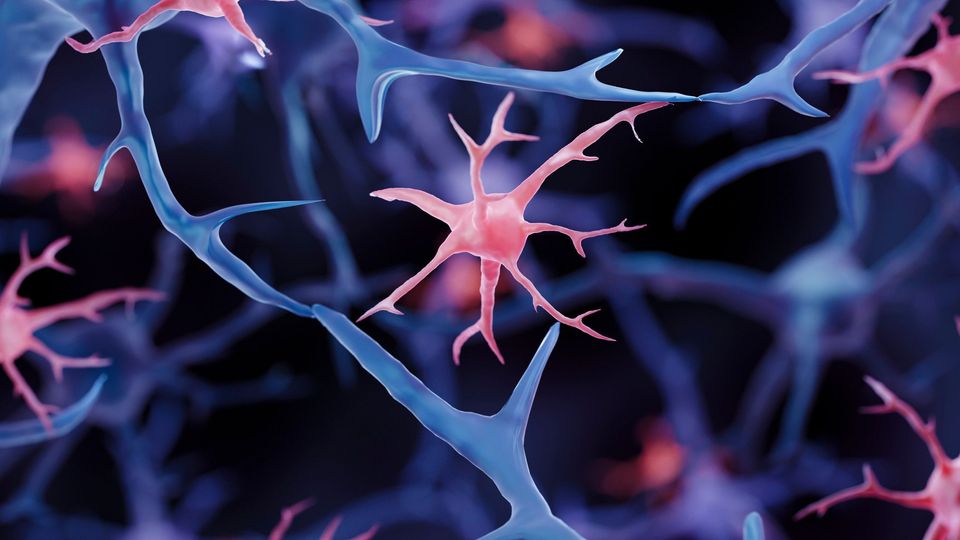
Microglia are the brain's resident immune cells. They patrol neural tissue, prune synapses, clear debris, and — when something goes wrong — drive inflammation that can either help or hurt recovery. They are also notoriously hard to replace. Unlike most immune cells, microglia originate during embryonic development and largely maintain themselves in place, which makes correcting microglial dysfunction in adult brains a long-standing challenge.
A 2025 paper from Kiavash Movahedi's group at the Vrije Universiteit Brussel offers a possible workaround. The researchers showed that monocytes — a type of immune cell that circulates in blood and can be recruited into the brain under inflammatory conditions — can be induced to adopt many of the defining features of microglia once inside neural tissue.
Working primarily in mouse models, the team identified the signaling environment and transcription factor activity that shifts an infiltrating monocyte toward a microglia-like state. The reprogrammed cells took on the gene expression patterns, morphology, and surveillance behavior characteristic of microglia, and they integrated into the existing microglial network without obvious disruption.
What this opens is a route to repopulating the brain's immune system with cells whose properties can be controlled. In conditions ranging from neurodegenerative disease to traumatic brain injury, dysfunctional microglia are thought to contribute to disease progression. If peripheral monocytes — which are far easier to engineer outside the body than the brain's resident microglia — can be converted into a working replacement, it becomes possible to imagine cell therapies that deliver healthy or therapeutically tuned immune cells directly to where they are needed.
Clinical translation is still distant. The reprogramming was demonstrated in mice, and the converted cells are not perfectly identical to native microglia. But the result establishes that the gap is bridgeable, which had not been clear before.
Comments