

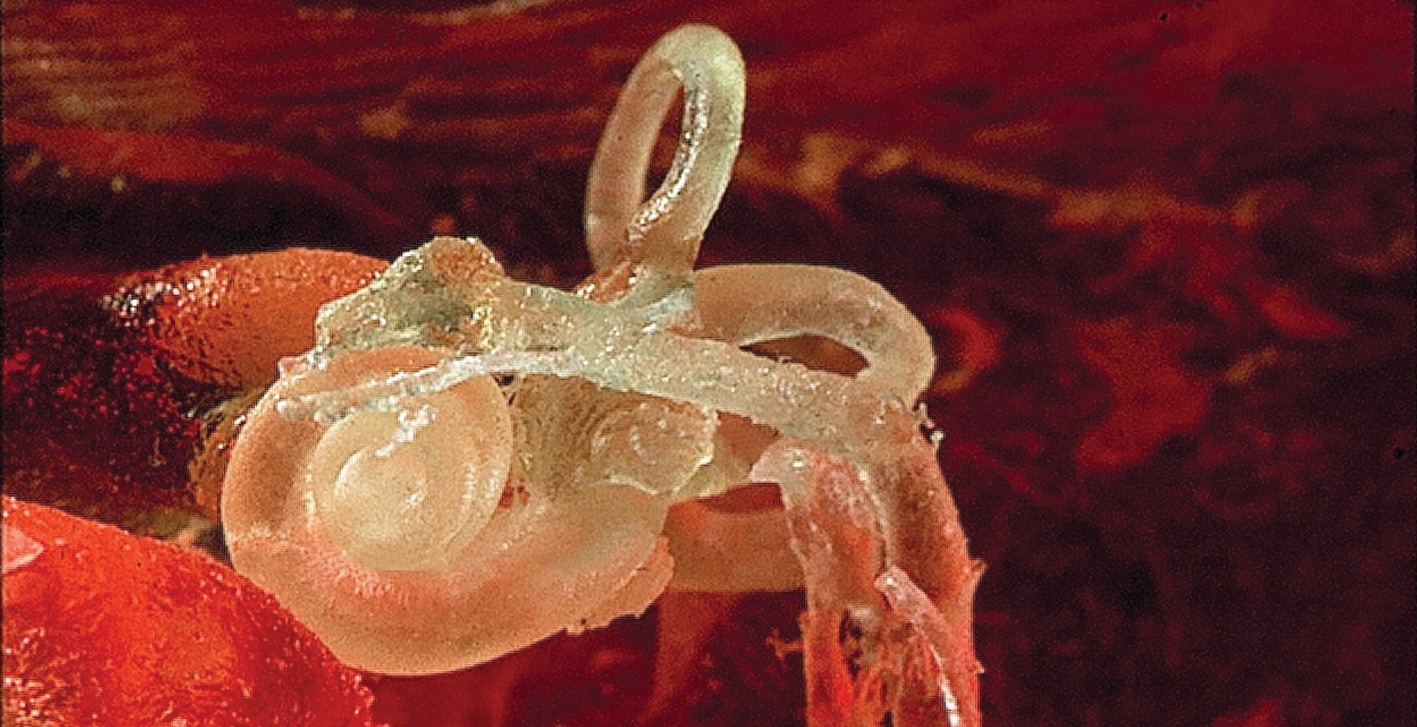
The cochlea is a tightly coiled, fluid-filled structure embedded deep in the temporal bone, and it is famously difficult to study. Most of what we know about how it converts sound into nerve signals comes from indirect measurements or from tissue that has already been removed from a living animal and rapidly degraded. A 2025 paper out of Rockefeller University describes a device that changes this constraint: a chamber that keeps a small, functional slice of the gerbil cochlea alive and responsive outside the body for hours.
The work was one of the final achievements of A. James Hudspeth, a neuroscientist who spent most of his career studying how hair cells in the inner ear convert vibration into electrical signal. Hudspeth died in August 2025. The paper, published shortly before, lays out a system for perfusing the cochlear slice with nutrients and oxygen while leaving its hair cells in their native mechanical environment.
What the team can now watch directly is a process that has been inferred for decades but never observed cleanly in mammals. As a sound wave moves through the cochlea, hair bundles on the outer hair cells don't just respond passively — they push back, adding energy to the wave and sharpening which frequencies the brain ends up hearing. This active amplification is what gives mammalian hearing its sensitivity and frequency resolution, and its breakdown is a major cause of hearing loss.
With the new preparation, the Rockefeller group recorded outer hair cells changing shape in response to sound and measured how that motion contributed to amplification along the cochlear partition. They also tracked how hair bundles synchronized their motion with incoming vibrations, providing the most direct mechanical view yet of how the cochlea tunes itself.
The applications are practical as well as basic. Most current treatments for sensorineural hearing loss — hearing aids and cochlear implants — work around damaged cochlear mechanics rather than restoring them. A platform that lets researchers observe and manipulate the system in real time makes it possible to test drugs, gene therapies, and other interventions on the actual machinery they are meant to fix.
Comments