


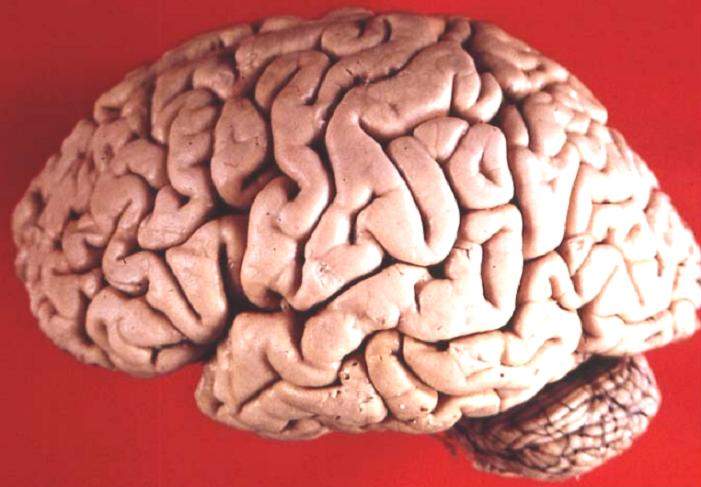
Almost every speech brain implant built so far points at the same patch of tissue. It sits on the outer surface of the motor cortex, the strip that fires when the mouth, tongue and larynx move. That choice made sense. The surface is easy to reach with an electrode array, and the signals there are strong. But it also left a quiet assumption baked into the whole field: that the motor cortex is the best, and maybe the only, place to listen for the intent to speak.
A team based mainly in Maastricht set out to test that assumption directly. Instead of adding another array to the cortical surface, they used recordings that already reached deep into the brain, and they asked a broader question. If you could listen anywhere, where would speech actually be easiest to hear?
Listening across the whole brain at once
The researchers worked with 30 people who had electrodes implanted for epilepsy monitoring. These are stereo-EEG electrodes, thin shafts pushed through the brain so that contacts sit at many depths at once, not just on the surface. That setup happens to be ideal for a survey. A single patient might have contacts in gray matter, white matter, folds near the surface and structures buried far below.
Each participant read or spoke while the electrodes recorded. The team then tried to predict the speech, continuously, from the neural signal. They did this at several scales. One version pooled every electrode in a person's brain into a single brain-wide prediction. Another zoomed all the way down to what one contact alone could tell them. By sliding between those scales, they could ask not just whether speech was decodable, but where the useful signal was concentrated.
Signal shows up in unexpected places
The surface of the motor cortex still carried speech information, as expected. The surprise was how much company it had. The team found significant speech-detection accuracy in both gray matter and white matter, the wiring that connects regions rather than doing the computing itself. White matter is usually treated as cabling, not as a place to record intent, so a usable signal there is not obvious.
They also compared gyri and sulci, the bumps and the valleys of the cortex. Surface arrays naturally sit on the gyri, the parts that bulge outward. The sulci, the deep grooves folded in between, are hard to reach without going in with a shaft electrode. Here the two performed about the same. There was no significant difference between the crests and the depths, which means a lot of decodable speech is hiding in folds that a surface implant never touches.
When the team pooled results across everyone, the promising targets clustered around the lateral fissure on both sides of the brain. That is the long cleft separating the temporal lobe from the rest. Specific spots stood out: the central sulcus and nearby grooves, the transverse temporal gyrus in the hearing region, the supramarginal cortex, and parts of the insula folded deep inside. Subcortical structures, the older machinery below the cortex, contributed little.
Why a map like this matters
The motor cortex is a fine target if it is intact. It is not intact for everyone. Some people who lose speech have damage to that exact strip, or to the pathways feeding it, which is one reason a single-target strategy is fragile. A map showing that speech information is spread across many folds and both hemispheres gives implant designers a menu instead of a single option.
It also points toward the depths. Most current speech implants read from the two-dimensional cortical surface. This work suggests that reaching a few millimeters into a sulcus, or toward the insula, could open sites that a flat array physically cannot see. For someone whose usual target is unavailable, that flexibility could be the difference between a workable implant and none at all.
What the study can't say yet
This is a map of where speech can be read, not a working device. The recordings came from people with epilepsy who could still speak, using electrodes placed for clinical reasons, not for a communication implant. Decoding speech that someone is actually producing is a much easier problem than decoding speech that a paralyzed person can only attempt, and the two do not translate one to one.
The analysis was also mostly offline. Predicting speech after the fact from stored recordings is not the same as running a decoder live, in a closed loop, while a person tries to talk. The stereo-EEG contacts are sparse and scattered wherever epilepsy care demanded, so this is a coarse survey rather than a dense reading of any single region. And the paper does not claim that the insula or a sulcus would beat the motor cortex in a real patient. It claims those places hold enough signal to be worth a serious look.
What the study does deliver is a shift in default thinking. For years the motor cortex surface was the obvious and largely unquestioned home for a speech implant. This brain-wide look says the signal is more widely distributed than that, buried in folds and reaching toward the insula, and that the next generation of speech neuroprostheses may not need to aim at the same target at all.
Verwoert M et al. "Moving beyond the motor cortex: A brain-wide evaluation of target locations for intracranial speech neuroprostheses." Cell Reports, 2025. doi.org/10.1016/j.celrep.2025.116241
PubMed PMID: 40913768.
Photograph: John A. Beal, PhD, CC BY 2.5, via Wikimedia Commons.
Comments