


Watch someone with a tremor closely and you notice it does not always behave the same way. Sometimes the hand shakes while it sits still in a lap. Sometimes it stays calm at rest but wobbles the moment the person reaches for a glass of water. Doctors have long treated these as two flavors of the same problem. A study published this week in Cell Reports argues they are wired differently in the brain.
Researchers led by Lukas L. Goede, working across teams in Berlin, Boston, and several hospitals in China, looked at where in the motor cortex electrical stimulation actually helps. Their conclusion is clean. Rest tremor and action tremor trace back to distinct networks running along the strip of cortex that controls movement.
Reading the wiring through an electrode
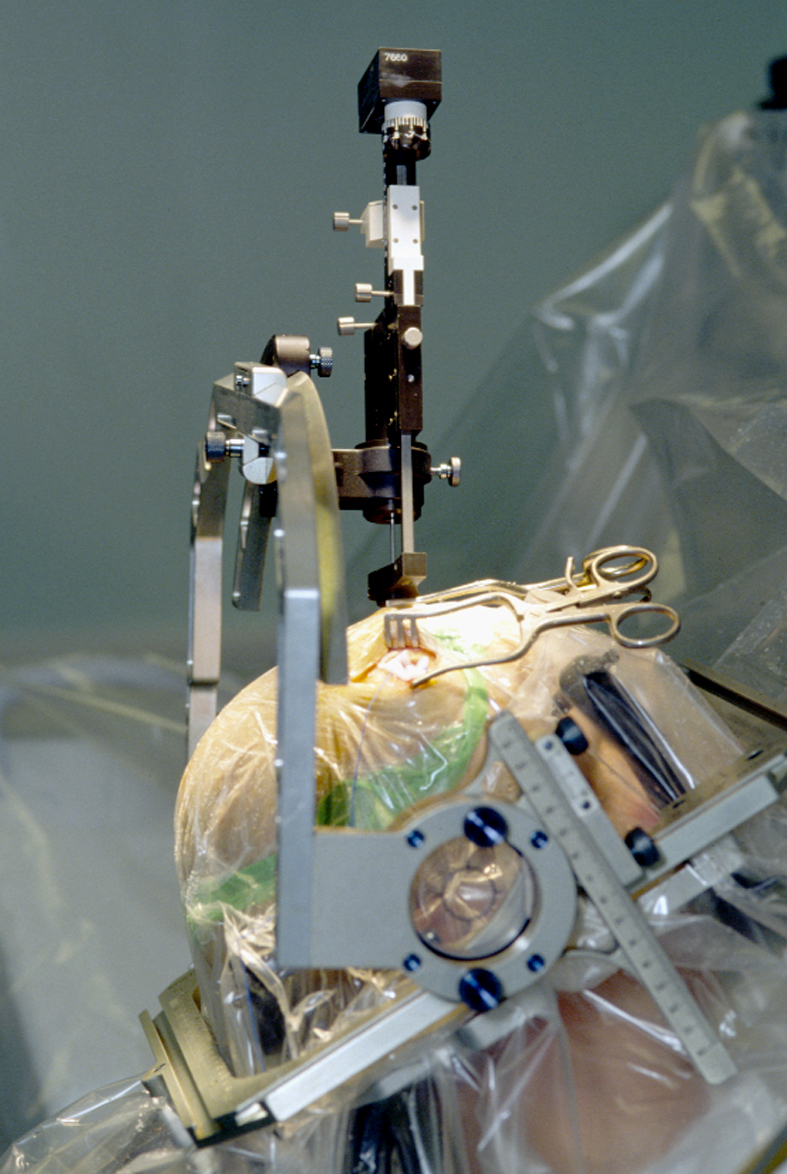
The work builds on deep brain stimulation, or DBS, a treatment where surgeons implant thin electrodes deep in the brain and run a mild current through them. It is used for both Parkinson's disease and essential tremor, two of the most common movement disorders. DBS can quiet shaking that drugs no longer control, but exactly why it works, and why it works better for some symptoms than others, has stayed murky.
Goede and colleagues used a technique called DBS network mapping. Instead of studying one patient at a time, they pooled data from multiple groups of people who already had stimulators implanted, then traced which brain circuits lit up when stimulation eased a given symptom. That let them ask a specific question. Do rest tremor and action tremor respond to the same spot on the motor map, or different ones?
The motor cortex is not a single blob. It contains regions tied to particular body parts, the hand, the face, the foot, and, between them, transition zones that seem to coordinate across body parts. The team leaned on recent maps that split the cortex this way. Rest tremor, they found, was more strongly linked to the body-part-specific regions. Action tremor pulled toward the in-between territories that connect them.
Why the distinction matters
This is not just anatomy for its own sake. Both Parkinson's and essential tremor patients can have rest tremor, action tremor, or a mix, and the symptom that ruins someone's day varies from person to person. For one patient it is the hand that will not stay still at rest. For another it is the inability to bring a spoon to the mouth.
The study reports that the way clinicians already program these devices in the real world lines up with the symptom-specific networks the researchers identified. In other words, the effective settings people arrived at through trial and error seem to be hitting the circuit that matches the patient's dominant tremor. That hints at a future where stimulation could be aimed at a symptom on purpose rather than by adjustment over many clinic visits.
The finding also held across two different disorders and different stimulation targets, which the authors say points to a shared organizing principle rather than a quirk of one condition.
What this does not settle
Worth being careful here. This is a mapping study built on data from people who were already implanted, not a trial that tested a new targeting strategy in fresh patients. It shows an association between symptom type and brain network, and it shows that current programming fits that pattern. It does not yet prove that deliberately steering stimulation toward one network beats standard care. That would need a prospective study where doctors pick targets based on the map and measure whether patients do better.
Network mapping also works at the level of populations. It describes tendencies across groups. It cannot promise that any single person's tremor will fall neatly on the expected part of the cortex. Brains vary, electrodes sit slightly differently in each skull, and symptoms overlap.
Still, the core idea is a useful one to sit with. A tremor is not one thing. The brain appears to keep separate books for a hand that shakes while resting and a hand that shakes while working, and the electrode buried in someone's head may already be reading from the right page.
Goede, L. L. et al. "Action and rest tremor map to distinct networks within the primary motor cortex." Cell Reports, 2026. doi.org/10.1016/j.celrep.2026.117404
PubMed PMID: 42213789.
Photograph: Thomasbg, CC BY-SA 3.0, via Wikimedia Commons.
Comments