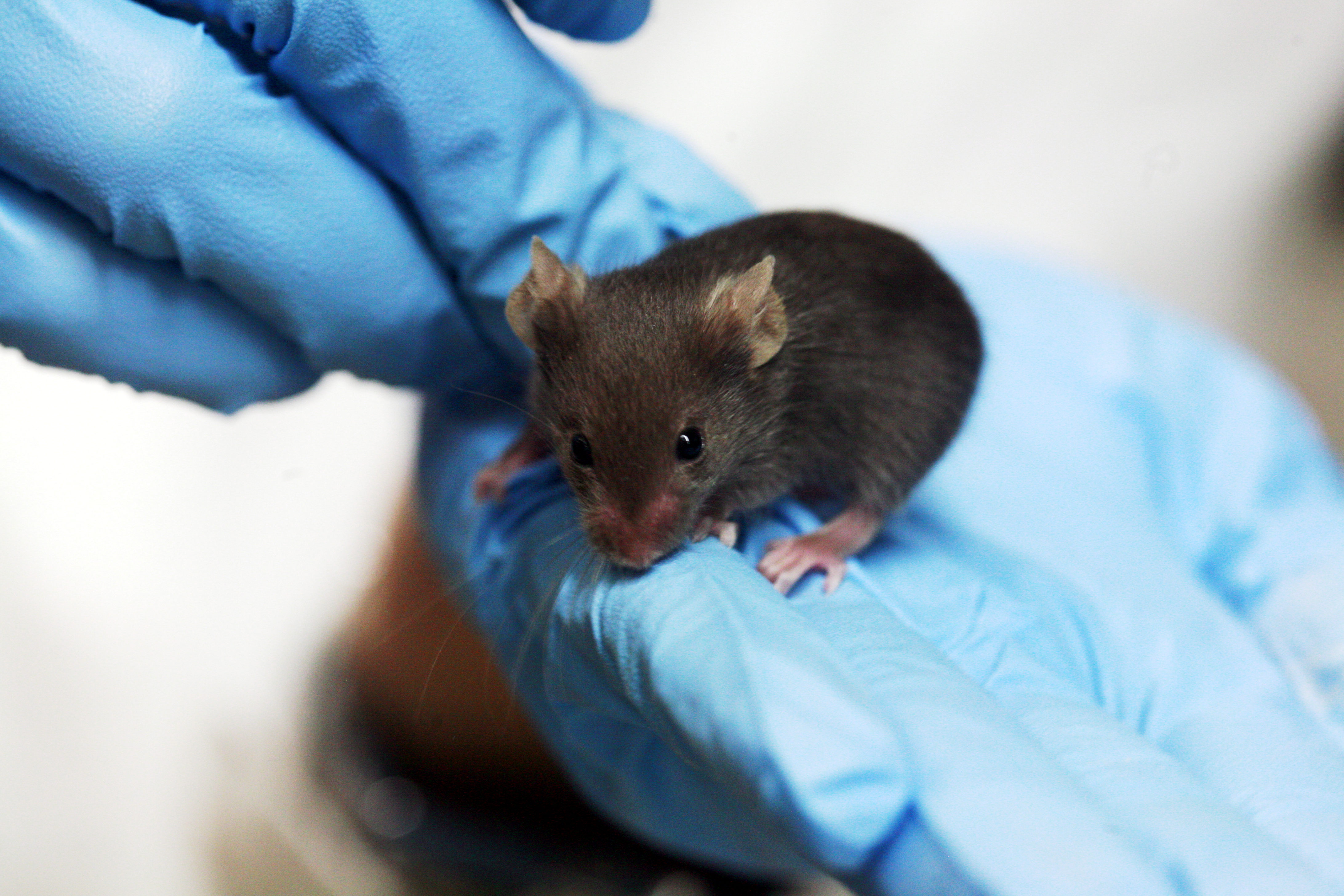
Give a mouse a reward at the end of a maze and, the first few times, a cluster of cells in its hippocampus lights up right at the moment of the payoff. Come back weeks later, once the animal has the task figured out, and something strange has happened. Those same cells barely twitch at the reward anymore. Instead they fire earlier, at the turn or the cue that reliably precedes it. The brain has quietly moved its attention from the good thing to the sign that the good thing is coming.
That shift is the heart of a new study in Nature from Mohammad Yaghoubi, Mark Brandon and colleagues at McGill University and the Douglas Hospital Research Center. The hippocampus is usually described as the brain's map-maker, a place that tracks where an animal is in space. But this work adds weight to a different idea: the hippocampus is also in the business of prediction, and it gets better at it with practice.
Following the same neurons across weeks
Most recordings of brain activity catch a snapshot. This team wanted the movie. They trained mice on a demanding reward-based task and tracked hippocampal neurons in the same animals over several weeks, watching how individual cells changed as the animals went from fumbling beginners to fluent experts.
The pattern that emerged was consistent at two levels. Across the whole population of neurons, the encoding of reward faded as the mice learned. The share of cells tuned specifically to the reward dropped. At the same time, the representation of the features that came before the reward grew stronger. So the network as a whole was reallocating its resources away from the outcome and toward the run-up.
Then they did the thing that makes this study convincing. They followed reward-tuned neurons individually over time. Those cells did not simply switch off and get replaced by other cells. Their own activity crept backward, from marking the reward itself to marking the task features leading up to it. The authors call it a backward-shifted reorganization. A neuron that used to say "reward, now" learns to say "reward, soon."
An old learning rule, written in cells
If that backward creep sounds familiar to anyone who has read about reinforcement learning in machines, that is not a coincidence. In temporal difference learning, a system updates its expectations by comparing what it predicted with what actually happened, and the signal that flags a reward tends to migrate earlier in time as the predictor becomes reliable. It is one of the oldest ideas in the field.
Yaghoubi and colleagues found that a temporal difference model of place fields reproduced what they saw in the mice. Feed the model the same kind of experience, and its simulated cells drift backward in time the same way the real neurons did. That match matters. It suggests the hippocampus is not just passively logging where the animal has been. It may be running a version of a well-known predictive algorithm, learning the transitions between states of the world so it can anticipate what comes next.
What the study does and does not show
Some caution is worth keeping in mind. This is work in mice, doing one particular reward task, and a model matching a dataset is evidence for a mechanism, not proof of it. The study tracks how the representation changes over time, but it does not demonstrate that this backward shift is what causes the animals to perform better. Whether the same reorganization plays out in other tasks, or in brains larger than a mouse's, is an open question.
Still, the picture is a satisfying one. Memory researchers have long argued about whether the hippocampus is fundamentally about space or about something more abstract. Here the two views meet. The cells that draw the map are the same cells that, given enough experience, learn to point a little way into the future. Anticipating what happens next may be less a separate job than a natural consequence of building a good model of the world and living in it long enough to test it.
Yaghoubi, M. et al. "Predictive coding of reward in the hippocampus." Nature, 2026. doi.org/10.1038/s41586-025-09958-0
PubMed PMID: 41535460.
Photograph: Rama, CC BY-SA 2.0 fr, via Wikimedia Commons.
Comments