


Epilepsy has a stubborn problem: for roughly a third of patients, the usual drugs do not fully stop the seizures. So researchers keep looking in unexpected places for a handle on the disease. One of the odder places is the colon.
A team led by scientists at the Shenzhen Institutes of Advanced Technology, working with clinicians at Shenzhen Children's Hospital, started with a simple observation. When they compared the gut bacteria of children with epilepsy to those without it, one species stood out as missing. Bacteroides fragilis, an ordinary resident of the healthy human gut, was markedly reduced in the children who had seizures. That absence was the thread they pulled.
From a missing microbe to fewer seizures
To test whether the bacterium was doing something protective, the researchers fed B. fragilis to mice and then triggered seizures two different ways: with pentylenetetrazole, a chemical that provokes convulsions, and with kainic acid, which is used to model temporal lobe epilepsy. In both models, the oral bacterium suppressed the seizures. That the effect held across two unrelated triggers is a point in its favor, because it suggests the microbe is acting on something general rather than on one specific chemical insult.
The obvious question is how a bacterium sitting in the gut could possibly influence electrical storms in the brain. The bacterium does not cross into the brain, and neither do most of the things it makes. Something has to carry the message.
A wire from the colon to the brainstem
The answer the team landed on runs along the vagus nerve, the long cable that connects the gut to the brainstem. B. fragilis, they found, switches on cells in the colon that produce the enzyme choline acetyltransferase, or ChAT. Those cells make acetylcholine, a classic signaling molecule of the nervous system. This ramps up cholinergic signaling along a gut-to-brain route the authors trace through the nodose ganglion, a cluster of sensory neurons that feeds into the vagus nerve.
To show this was the actual pathway and not a coincidence, they went at it from several directions. They recorded electrical activity in the vagus nerve directly. They blocked the signaling with drugs. And they used chemogenetics, a technique that lets researchers switch specific neurons on or off with an engineered chemical trigger. When they interfered with the colonic ChAT-to-nodose-ganglion circuit, the antiseizure benefit fell apart. The bacterium also shifted the wider gut community, with more Lactobacillus taking up residence alongside its effects.
The part most likely to matter for patients is the last one. Alongside the mouse work, the group ran a randomized clinical trial in children with drug-resistant epilepsy (registered as CHiCTR2100042203). The trial confirmed that B. fragilis had a therapeutic effect in these young patients, moving the finding out of the animal lab and into people who had already run out of good options.
What this does and does not show
A few cautions are worth stating plainly. The clinical trial establishes that the treatment helped, but the abstract does not report the size of the benefit, how many children took part, or how long they were followed, and those numbers decide how useful a therapy really is. The detailed circuit mapping, with its nerve recordings and chemogenetic switches, was done in mice, and mouse guts and brains are not human ones. Whether the same colon-to-vagus wiring carries the signal in a child remains to be nailed down. There is also the correlation trap: B. fragilis being low in children with epilepsy does not by itself prove the shortage causes seizures, though the mouse experiments push the case toward cause rather than coincidence.
What the work does offer is a concrete mechanism, not just a vague claim that gut bugs matter. It names a specific bacterium, a specific enzyme-producing cell in the colon, and a specific nerve circuit, and it ties them to a measurable drop in seizures. For a disease where a third of patients are still waiting for something that works, a treatment that a child could swallow, rather than another drug aimed straight at the brain, is worth taking seriously.
Jia, Y. et al. "Gut-brain cholinergic signaling mediates the antiseizure effects of Bacteroides fragilis." Neuron, 2026. doi.org/10.1016/j.neuron.2025.11.029
PubMed PMID: 41547348.
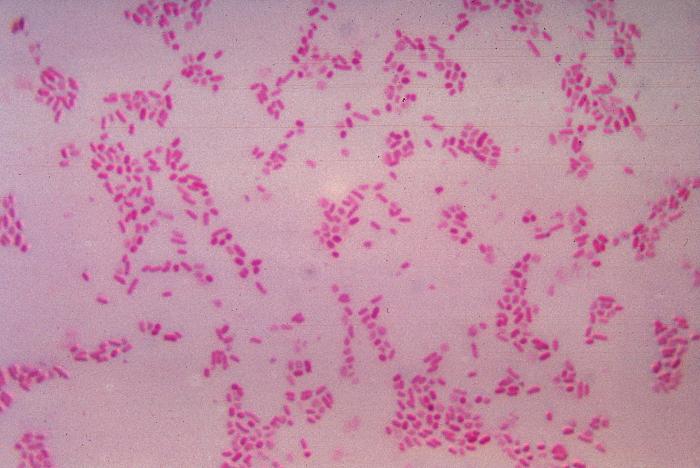
Photograph: CDC/Dr. V.R. Dowell, Jr., Public domain, via Wikimedia Commons.
Comments