


Directed evolution is one of biology's most reliable shortcuts. You make a huge pile of gene variants, throw a selection pressure at them, and let the winners reveal themselves. It won a Nobel Prize. But almost all of that work happens in bacteria, yeast, or test tubes. Plants have been left out, because the tools to run fast rounds of mutate-and-select inside actual plant cells barely existed.
A team at the Chinese Academy of Sciences has now built one. Writing in Science, Haocheng Zhu, Caixia Gao, and colleagues describe a system they call GRAPE, short for geminivirus replicon-assisted in planta directed evolution. The trick is to hijack a plant virus and make its replication depend on the gene you want to improve. Genes that do their job get copied. Genes that fail get left behind.
Borrowing a virus's copy machine
Geminiviruses replicate through a mechanism called rolling circle replication, spinning out copies of their small circular DNA genomes at high speed. GRAPE links that copying to gene function. Zhu and colleagues built replicons where the survival and amplification of a variant is tied to whether the gene it carries performs the desired activity. Load a library of variants into a leaf, let the virus do the sorting, and the useful mutations pile up in the pool that keeps replicating.
The numbers are what make it interesting. According to the paper, a single leaf can screen a very large library of variants, and a full round runs in about four days. That speed matters. Plant experiments usually mean waiting weeks for seedlings or whole generations for a trait to show up. Compressing a selection cycle to under a week changes what is practical to attempt.
Rebuilding two immune receptors
To show it works, the group went after plant immune receptors, the proteins crops use to detect invading pathogens. Pathogens fight back by evolving effector proteins that block or dodge these receptors, and the arms race never really stops.
First they took NRC3, an immune receptor that a nematode effector called SPRYSEC15 shuts down. Using GRAPE, they evolved NRC3 variants that resist that inhibition. Then they turned to the rice receptor Pikm-1. In nature, Pikm-1 recognizes only some versions of the fungal effector AVR-Pik. The team broadened its reach until it could recognize all six known alleles of that effector. That is exactly the kind of engineered robustness breeders want, because a receptor that only sees one version of a pathogen protein is easy for the pathogen to escape.
Both results come from redesigning a natural protein through iterated selection rather than guesswork, which is the whole appeal of directed evolution. The difference here is that it happened in plant cells, in the cellular context where these receptors actually operate.
What the leaf can and cannot tell you
Some caution is worth keeping. The paper is a demonstration on immune receptors in a lab plant. Whether GRAPE generalizes cleanly to every class of plant gene, or to enzymes and regulatory proteins with more complex behavior, is something later work will have to establish. Screening happens in transient leaf assays, so a variant that wins inside a replicon still has to prove it functions in a stable, whole plant grown in a field. And an evolved receptor that recognizes an effector in an experiment is not the same as a crop that resists disease in the ground, where timing, dosage, and other defenses all come into play.
Still, the platform itself is the headline. GRAPE gives plant scientists something they mostly lacked: a fast, scalable way to run directed evolution without leaving the plant cell. The authors frame it as generalizable across many genes, and the two receptor makeovers are a proof of concept for a much longer list of possible targets, from disease resistance to traits that have nothing to do with immunity. A virus that once damaged plants has been turned into a tool for improving them.
Zhu, H. et al. "Engineered geminivirus replicons enable rapid in planta directed evolution." Science, 2025. doi.org/10.1126/science.ady2167
PubMed PMID: 41037587.
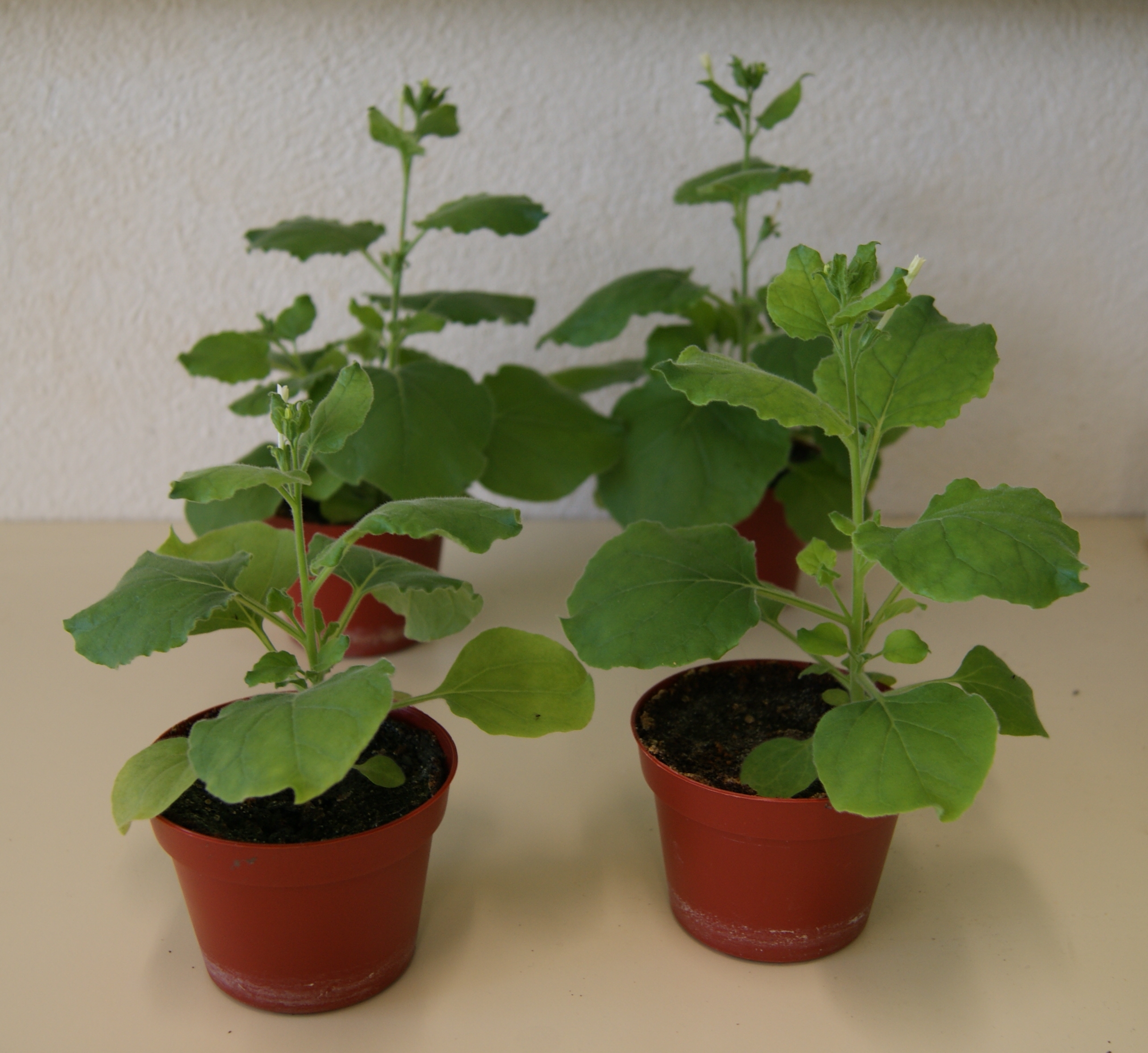
Photograph: Chandres, CC BY-SA 3.0, via Wikimedia Commons.
Comments