


Most gene-editing headlines are about DNA. But you don't always have to touch the genome to fix a problem. RNA, the working copy the cell reads out from DNA, can be edited too. And because those edits are temporary, they carry a different kind of appeal: change the message, not the master file.
A team led by Wensheng Wei has pushed that idea forward with a tool they call LEAPER 3.0, published this month in Cell. The trick behind it is that the cell already owns the machinery. Human cells make enzymes called ADAR that swap one RNA letter for another, converting adenosine (A) into inosine (I), which the cell then reads as guanosine (G). LEAPER doesn't deliver an editing enzyme at all. It delivers a short guide RNA that grabs the ADAR you were born with and points it at the exact spot you want changed.
Recruiting an enzyme you already have
The appeal of this approach is safety. Many editing systems require you to introduce a foreign protein into cells, which raises the odds of an immune reaction and complicates delivery. Borrowing an endogenous enzyme sidesteps that. The guide molecules, called ADAR-recruiting RNAs or arRNAs, are just RNA. They pair up with the target transcript, form a double-stranded stretch, and ADAR does the rest.
That was the promise of earlier versions of LEAPER. The problem was that nobody fully understood the rules. Some target sites edited well and others barely edited at all, and it wasn't clear why. Guides were often designed by trial and error. When you don't know the mechanism, you can't design around it.
Reading the interface with AlphaFold 3
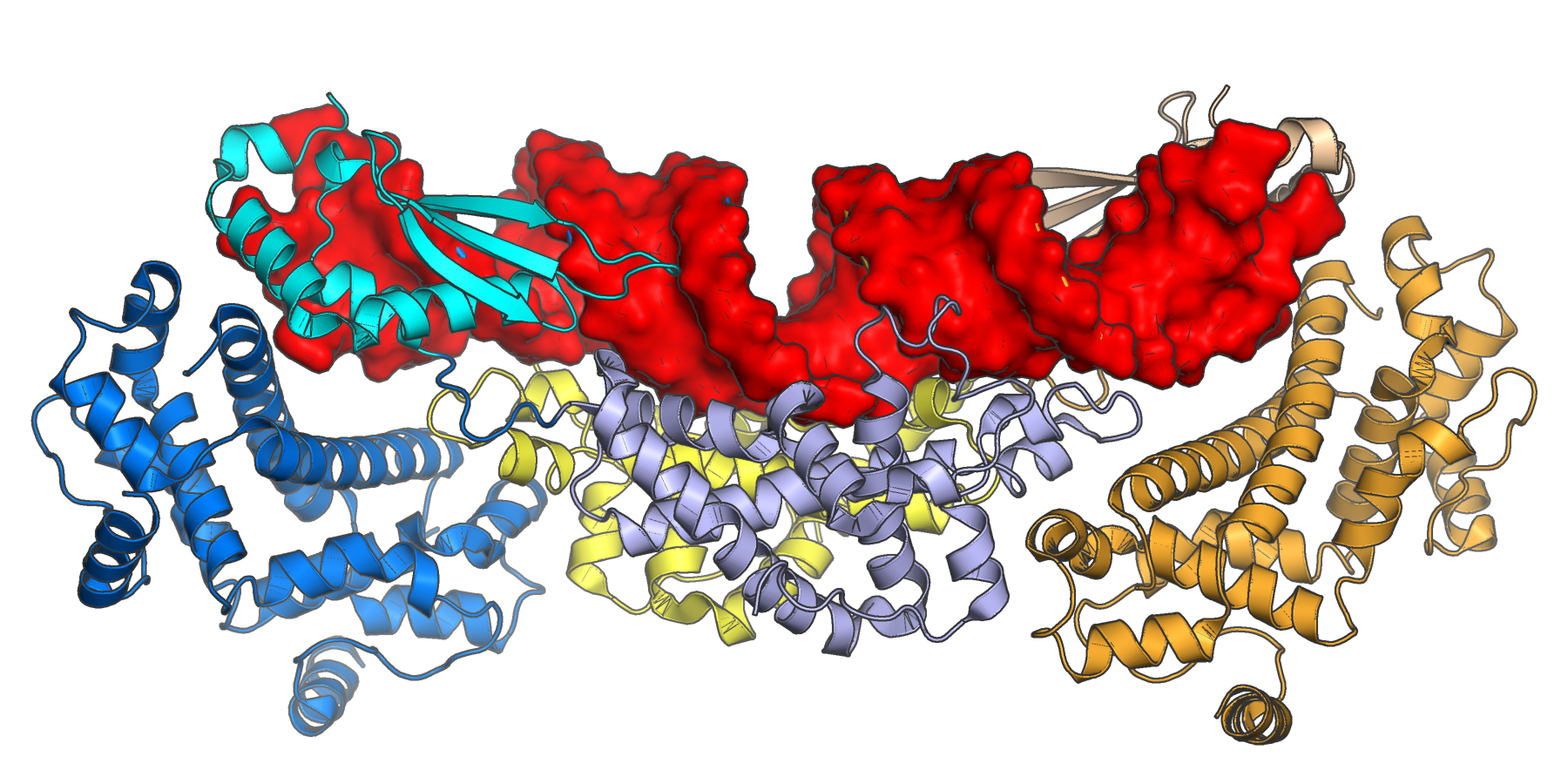
So the group went after the mechanism directly. They combined structural predictions from AlphaFold 3 with a run of biochemical and cellular experiments to map how ADAR1 and ADAR2 actually grip double-stranded RNA. That gave them a picture of the molecular interface, the physical contact zone where enzyme meets substrate, rather than a list of guesses.
With that map in hand, they redesigned the arRNAs. Three things improved. First, they expanded the range of editable sequences to reach sites that had been refractory before, meaning positions the old guides simply couldn't touch. Second, they suppressed bystander editing, the unwanted extra edits that ADAR tends to make on other adenosines sitting inside the same double-stranded region. Third, and this is the hard one, they achieved single-nucleotide discrimination. When two editable A's sit right next to each other, the new system can pick one and leave its neighbor alone.
That kind of precision matters. Off-target edits are the thing that keeps RNA and DNA editors out of the clinic. An editor that hits the wrong adjacent letter can change a protein in ways you never intended.
What it does and doesn't settle
This is a molecular-engineering and mechanism paper, so it's worth being clear about the boundaries. The work establishes design principles and shows gains in editing efficiency, range, and precision. It does not report a treatment for any disease, and the abstract points to cell-based and biochemical assays rather than results in animals or people. A tool that behaves well in cultured cells still has to clear delivery, durability, and safety hurdles before it means anything for patients. Turning a cleaner editor into a therapy is a separate, long road.
Still, the shape of the advance is the interesting part. Instead of engineering a better enzyme, the researchers engineered a better guide by first figuring out how the natural enzyme works. AlphaFold 3 did real work here, not as a novelty but as a way to see a binding interface that would otherwise take painstaking structural biology to resolve. That combination, structure prediction feeding rational design, is becoming a standard move in this field.
A-to-I editing can already correct a meaningful slice of the single-letter mutations behind human genetic disease. The value of LEAPER 3.0 is that it makes the borrowed-enzyme strategy more controllable, and control is the currency that decides whether any of this reaches a clinic.
Song, D. et al. "RNA structure programs endogenous ADAR for precise and efficient editing." Cell, 2026. doi.org/10.1016/j.cell.2026.04.047
PubMed PMID: 42269608.
Structure image: Opabinia regalis, CC BY-SA 4.0, via Wikimedia Commons.
Comments