


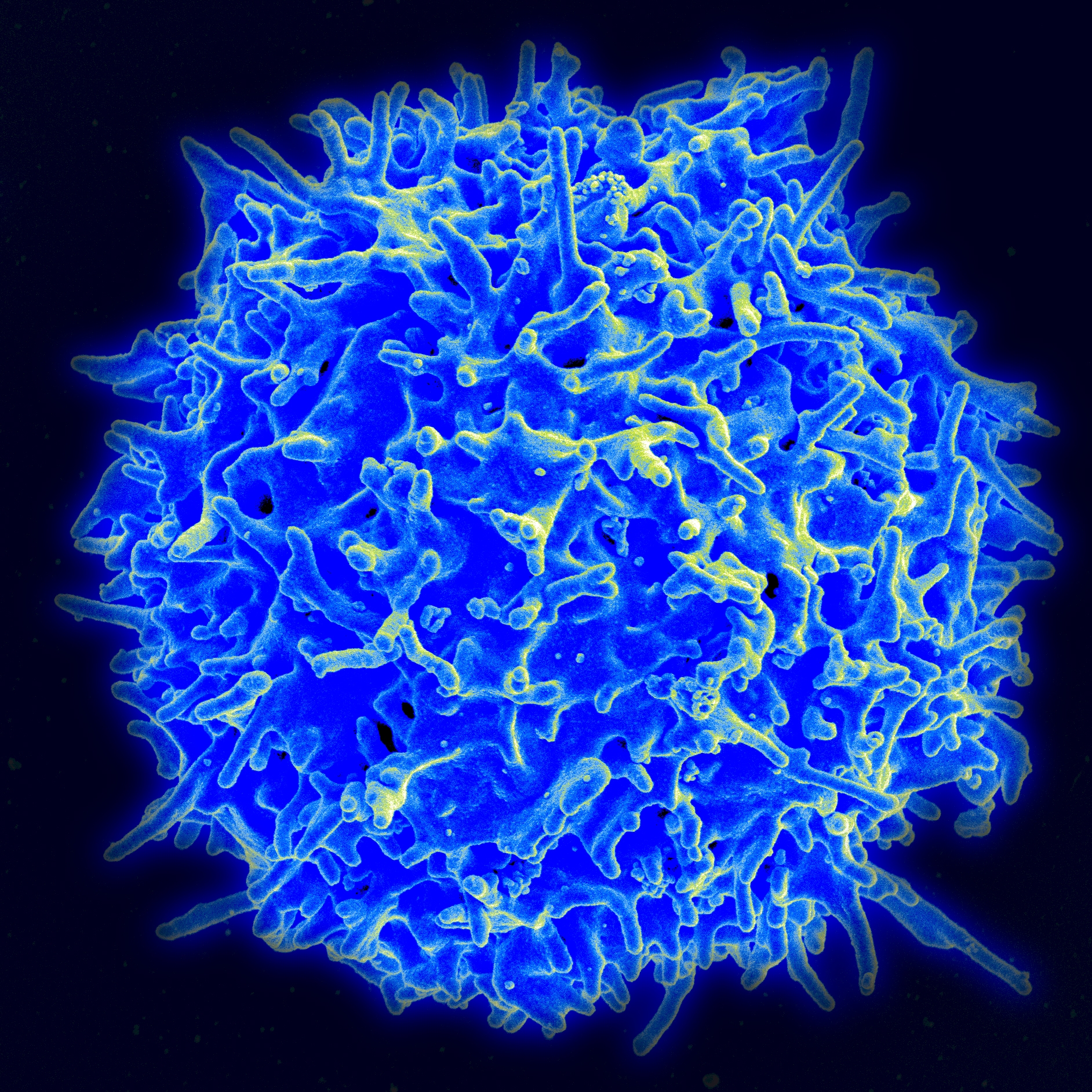
Making a CAR-T cell today is closer to bespoke tailoring than to pharmacy. Doctors draw a patient's blood, ship the T cells to a specialized facility, engineer them to hunt cancer, grow them for weeks, and infuse them back. The therapy works. It has cured people with leukemias and lymphomas that nothing else touched. But the price tag runs into the hundreds of thousands of dollars, and the wait can be longer than a sick patient has.
A study published in Nature on 18 March asks a blunt question: what if you skipped the factory entirely and built the cells inside the body?
The team, led by William Nyberg and Justin Eyquem at UCSF and the Gladstone Institutes, with CRISPR co-inventor Jennifer Doudna among the senior authors, reports doing exactly that in mice. They generated therapeutic numbers of CAR-T cells in vivo, and the engineering landed where they aimed it.
Why "where" matters as much as "how"
Getting a new gene into a T cell inside a living animal is not the hard part anymore. Several groups have done versions of it. The trouble is control. Most in-body methods either express the gene only briefly, so the effect fades, or they splice the DNA in at random spots across the genome. Random insertion is a problem you do not want with a gene that tells a cell to proliferate and kill. Land in the wrong place and you risk switching on something that should stay off.
Nyberg and colleagues went after site-specific integration instead. They wanted the CAR gene parked at one defined address in the genome, and only in T cells. That precision is the whole point of the paper. It is the difference between spray-painting a wall and writing at a specific line on a specific page.
To pull it off they built a two-vector delivery system. One vehicle carries the CRISPR-Cas9 machinery as a ready-made ribonucleoprotein, packaged inside an enveloped delivery particle that they tuned to home in on T cells. The second, an adeno-associated virus, ferries in the DNA template that gets copied into the cut site. Cas9 makes the incision at the chosen locus; the donor DNA supplies the new instructions. Both vectors were optimized for T-cell targeting and for how efficiently they hit their mark.
What actually happened in the mice
The researchers used humanized mouse models, animals carrying human immune cells so the results mean something for human disease. They inserted a CAR transgene into a T-cell-specific locus and watched CAR-T cells appear inside the animals. The expression was stable, not the flash-and-fade seen with transient methods, and it stayed confined to T cells because that is where the delivery was aimed.
They tested it across three settings: a model of B-cell aplasia, blood cancers, and solid tumors. In each, the in-body approach produced CAR-T cells at what the authors call therapeutic levels. Solid tumors are worth flagging on their own, since they have been a stubborn wall for conventional CAR-T therapy.
If this held up in people, it would rewrite the logistics of an entire class of medicine. No apheresis, no weeks of culturing, no cold-chain shipping of living cells. You would deliver the engineering tools and let the body assemble the therapy. That is the version of cell therapy that could actually reach a rural clinic instead of a handful of academic hospitals.
The distance between a mouse and a clinic
This is a demonstration in animals, and the gap to human treatment is real. Humanized mice approximate a human immune system, but they are not one. Delivering CRISPR components safely and specifically inside the human body remains the field's hardest unsolved problem, and off-target editing, immune reactions to the viral vectors, and long-term safety of an in-body integration event all need far more scrutiny than a single study can give. The authors do not claim otherwise; they frame the work as a pathway, not a product.
Still, the direction is clear. For years the promise of programmable cell therapy came bundled with an industrial process most patients could never access. Putting the manufacturing step inside the patient, at a controlled genomic address, is a genuinely different way to think about the problem.
Nyberg, W. et al. "In vivo site-specific engineering to reprogram T cells." Nature, 2026. doi.org/10.1038/s41586-026-10235-x
PubMed PMID: 41851456.
Photograph: NIAID/NIH, Public domain, via Wikimedia Commons.
Comments