

A mouse's front teeth grow for its entire life. If the animal stopped wearing them down, the incisors would keep pushing out, curl, and eventually make eating impossible. The usual explanation is boringly mechanical: teeth grind against teeth, and the surfaces that meet get filed flat. But that story leaves out an obvious question. How does the animal know how much to gnaw, and where?
A team at the University of Michigan has now answered that with a piece of wiring. Writing in Neuron, Xin-Yu Su, Bo Duan, and colleagues describe a circuit that reads the touch of tooth against tooth and converts it into the urge to chew. Their conclusion is blunt: keeping the teeth aligned is not a passive by-product of eating. It is an active behavior the brain manages on purpose.
From a nerve ending in the gum to a motor command
The circuit starts at the base of the incisor. Wrapped around each tooth is the periodontium, the soft tissue that anchors it in the jaw, and threaded through that tissue is a specific kind of sensor. The researchers identified these as S100b-positive low-threshold mechanoreceptors, nerve endings tuned to gentle mechanical pressure. When the tooth presses against its opposite number, these receptors fire.
Their signal lands on a small population of neurons in the hindbrain, in a region called the spinal trigeminal nucleus oralis. The cells that matter here make a protein called somatostatin, and they act as a switchboard. From this one relay, the touch signal splits two ways. One branch runs straight to the motor neurons that close the jaw, driving the physical act of gnawing. The other branch takes a longer route through the parabrachial nucleus and ends in the ventral tegmental area, a hub of the brain's reward machinery.
That second branch is the surprising part. When the researchers activated the pathway, they measured dopamine being released in the nucleus accumbens, the same signal the brain uses to mark something as worth doing. Gnawing, in other words, feels good to the animal, and the sensation on the tooth is what turns the reward on.
Break the wire and the bite falls apart
To test whether the circuit was actually load-bearing, the team disrupted it. The effect was not subtle. Animals stopped gnawing, and their teeth drifted out of alignment into severe malocclusion. Push the circuit the other way, and the drive to chew went up. The behavior tracked the wiring closely enough that the researchers argue dental alignment is a touch-dependent process the nervous system controls, not just a consequence of teeth happening to rub together.
That reframing carries a clinical suggestion. In humans, malocclusion is treated as a structural problem, a matter of crowded or crooked teeth to be nudged into place. The Michigan work hints that at least part of it may be a sensorimotor issue instead, a breakdown in the loop that connects what a tooth feels to what the jaw does. The authors go so far as to call it a sensorimotor-motivational integration disorder.
What this does and does not show
The obvious caution is the species. This is mouse anatomy, and a rodent's ever-growing incisors are a special case that human teeth do not share. People do not gnaw to file down teeth that never stop erupting, so the exact circuit here has no direct human counterpart. Whether a comparable touch-to-motivation loop shapes human jaw behavior is an open question the paper does not settle.
The reward finding also needs care. Dopamine release in the accumbens shows the circuit can engage the motivation system, but it does not prove the animal experiences gnawing as pleasurable in any rich sense. And the malocclusion seen after disruption was measured in the lab over the animals' development, not tracked across a full natural lifespan.
Still, the basic result is clean. A single nerve type in the gum, a single relay in the hindbrain, two output branches, and a behavior that keeps a lifelong problem in check. It is a tidy example of how the brain can wrap a maintenance chore in a reward so the body keeps doing it. The mouse does not know its teeth would otherwise grow into a problem. It just knows that chewing feels right.
Su, X.-Y. et al. "A touch-guided neural circuit regulates motivated gnawing to maintain dental alignment." Neuron, 2026. doi.org/10.1016/j.neuron.2026.01.021
PubMed PMID: 41812659.
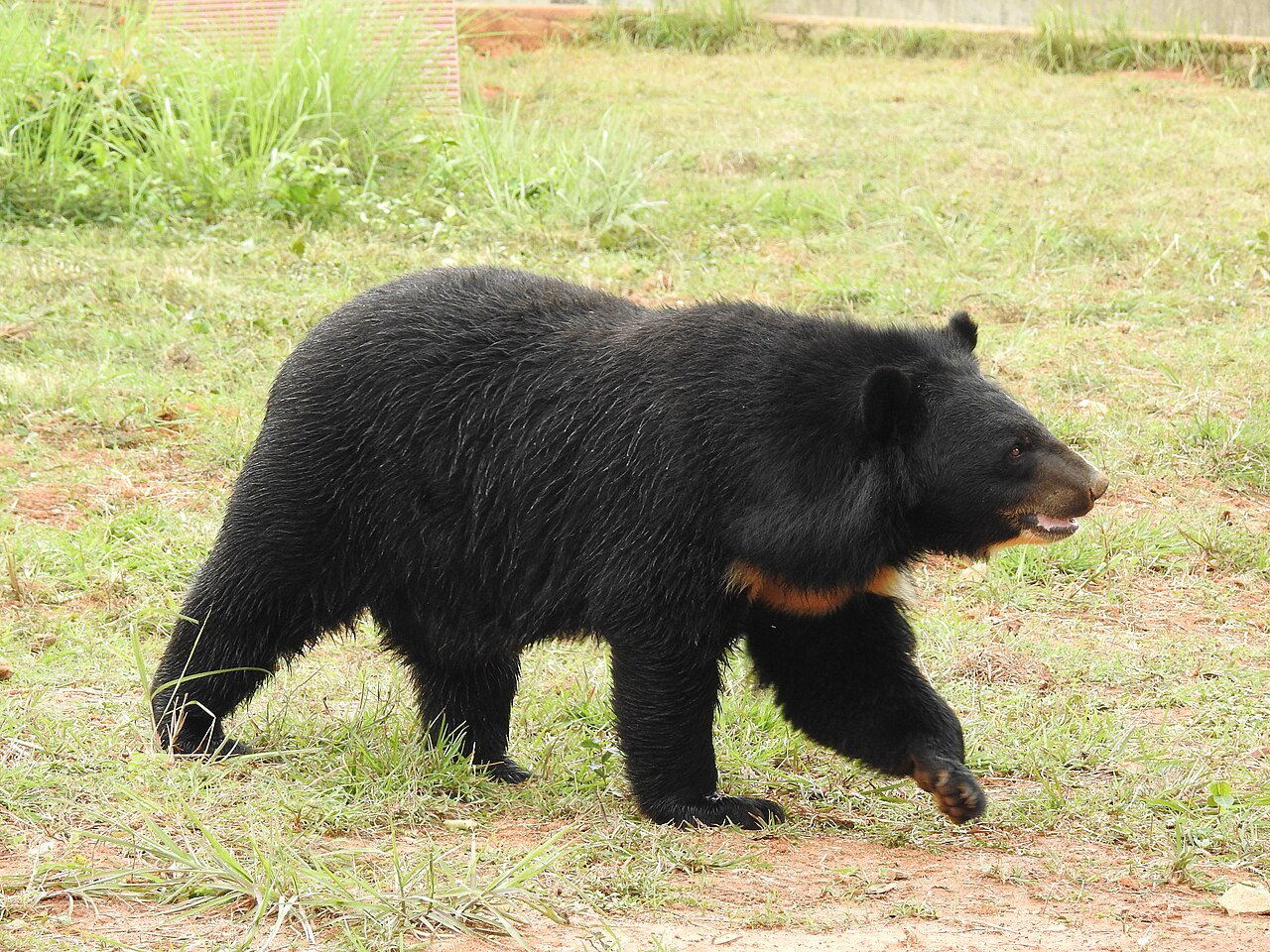
Photograph: AleXXw, Public domain, via Wikimedia Commons.
Comments