
Northeastern Africa sits between sub-Saharan Africa, the Levant and the Arabian Peninsula, which makes it one of the more consequential places to know the population history of. It is also one of the harder ones. Human remains from the relevant period are scarce, and the molecular approach that would normally settle such questions does not work there: nearly every attempt to recover endogenous ancient DNA from the region has failed, and the little that exists comes from individuals no older than the Mid-Holocene.
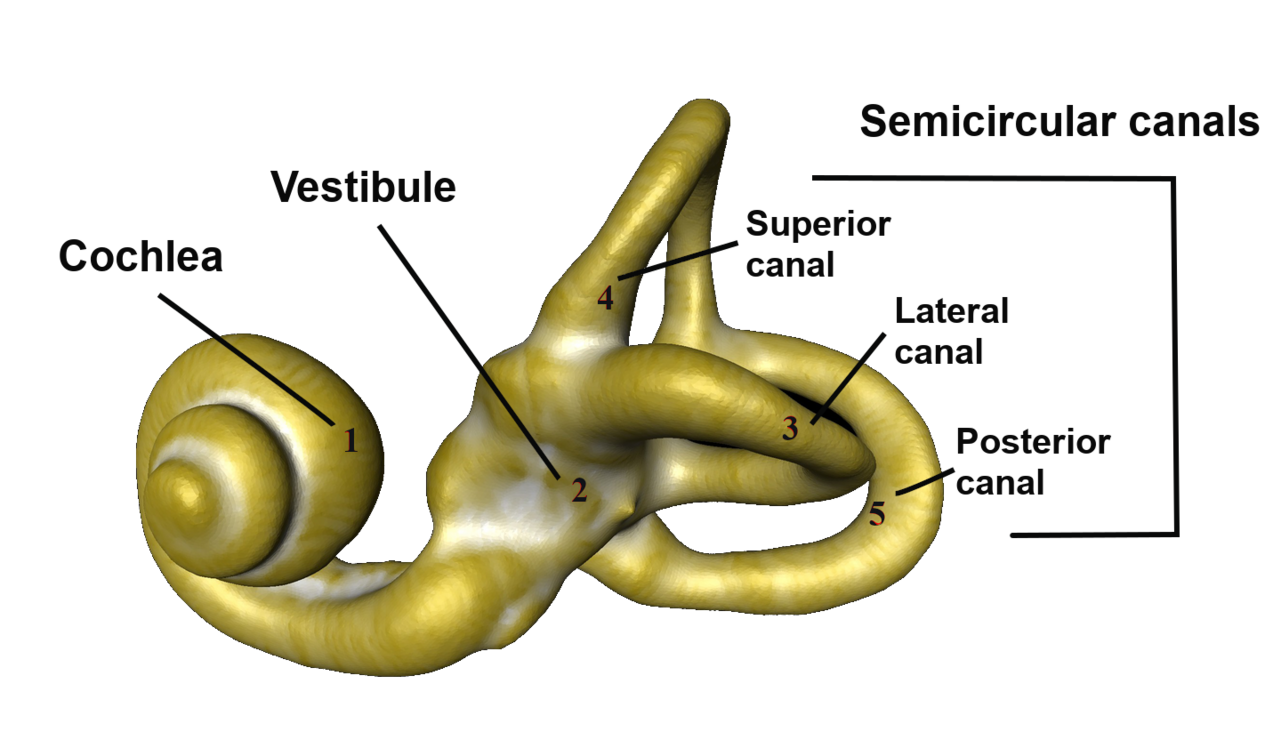
A group led from the University of Bordeaux worked around the absence rather than waiting it out. They measured the shape of the bony labyrinth (the hollow inner-ear structure inside the temporal bone) in 148 individuals spanning roughly 44,000 to 3,000 years ago, drawn from the Nile Valley, the Horn of Africa and Central Africa, alongside comparative Pleistocene fossils from Africa and Eurasia and recent South Africans.
Why it matters: The labyrinth is largely formed before birth and changes little afterwards, which makes its shape a reasonable proxy for ancestry. Where DNA does not survive, bone that encodes population affinity is the difference between a region having a reconstructable history and having none.
Two findings, one of them expected
The first is continuity. Foragers of the Middle Nile Valley resemble each other across a long stretch of time and resemble earlier African Homo sapiens fossils, which points to deep regional ancestry rather than repeated replacement.
The second is a break. Local Neolithic food producers show distinctly different labyrinth shapes, consistent with a major demographic shift beginning around 8,000 years ago: the arrival of farming accompanied by the arrival of people, not merely of practices. That conclusion is not new; dental morphology and the sparse ancient DNA already suggested it. Its value here is as a check on the method: a technique that failed to recover a transition everyone agrees happened would not be worth trusting on anything else.
The authors ran that check explicitly, comparing labyrinth results against enamel-dentine junction measurements on the same populations and in some cases the same individuals. The two agreed. They also disagreed in an informative way: groups overlap more in labyrinth shape than in tooth shape, suggesting the inner ear is the more evolutionarily conserved structure and the less sensitive one. That makes it better suited to deep lineage continuity than to fine-grained recent distinctions, a limitation and a specification at once.
The subgroup that sits outside
The striking result is a set of thirteen Early Holocene Nile Valley foragers whose labyrinths fall outside the range of variation of the rest of the sample, and which carry congenital inner-ear anomalies consistent with a possible syndromic condition. In the shape analysis they land near Neandertals, which the authors are careful to note is a position in morphospace and not a statement of relatedness.
Their proposed explanation is demographic. Small or subdivided populations, whether through prolonged endogamy, drift, or isolation under environmental constraints, raise the odds that a rare variant becomes common locally. The region's climate cycled between humid phases that allowed movement and arid ones that fragmented populations into refugia, which supplies a plausible mechanism.
What is notable is how the paper handles that plausibility. As Martin and colleagues write in Nature Communications, the present anatomical evidence alone cannot distinguish among demographic isolation, structured interaction networks, founder effects, or other evolutionary mechanisms. The pattern is real and the candidate explanations are listed without one being chosen.
Individuals, not just populations
Two smaller results show what this resolution buys. At Shaqadud in Central Sudan, two Neolithic individuals buried near each other with similar dates fall on opposite sides of the divide: one grouping with Nile Valley Neolithic food producers, the other with Mesolithic foragers. And at Wadi Shaw in the Sudanese Western Desert, an individual radiocarbon-dated to about 3,500 years ago shows an intermediate morphology, extending the documented presence of forager-related groups in that area by roughly a millennium.
Both point the same way: the Neolithic transition was not a clean replacement but a long period in which populations of different ancestry lived alongside each other.
What the study can't say yet
The inference from morphology to ancestry is a proxy relationship, not a measurement of it. Labyrinth shape tracks population affinity well, which is why it is used, but it is not DNA and cannot resolve admixture proportions, dates of divergence, or direction of gene flow.
The pathology has more than one possible cause. The authors state that inner ear anomalies can arise through different genetic or developmental pathways and that skeletal evidence does not let them distinguish among these with certainty — so "possible syndromic conditions" is doing real work in that sentence.
Coverage is also uneven. The Nile Valley sample supports the strongest claims; the Horn of Africa and Central Africa samples are small enough that the high diversity reported there is a signal worth following rather than a conclusion, and the authors say more data will be needed to confirm it.
Quick questions
Why the inner ear specifically? The bony labyrinth reaches its adult form early and changes little with age, diet or activity, so its shape reflects inherited variation rather than an individual's lifetime.
Does this replace ancient DNA? No. It is a substitute where DNA has not survived, and it answers a narrower set of questions. Its main use is regions and periods that molecular methods cannot currently reach.
What's the one-line takeaway? Inner-ear shape in 148 individuals recovers deep continuity among Nile Valley foragers and a sharp break at the Neolithic transition around 8,000 years ago, in a region where ancient DNA almost never survives.
Martin et al. "Bony labyrinth morphology reveals deep population history and isolation among Homo sapiens in prehistoric northeastern Africa (44-3 ka)." Nature Communications, 2026;17(1). doi.org/10.1038/s41467-026-76423-5
PubMed PMID: 42586986.
Image: Bony labyrinth (labelled), José Braga and Ross Whitwam, CC BY-SA 4.0, via Wikimedia Commons.
Comments