The standard story gives the asteroid most of the credit. Sixty-six million years ago it wiped out the dinosaurs and, the telling goes, cleared the stage for flowering plants to spread into the forests we know today. A paper in Science, published June 25, pushes part of that story earlier, with evidence that flowering plants had already gotten serious about spreading their seeds well before the impact.
A forest caught where it stood
Fossil plant sites are usually a mess, the pieces carried off and shuffled by water before they were buried. The deposit at the center of this study is different. Dated to 74.6 million years ago, in the Jose Creek Formation of New Mexico, it preserves a tropical forest more or less where it grew. That let a Berkeley-led team take stock of what the forest was making with rare confidence.
Big seeds, early
They counted close to 80 distinct kinds of diaspores, the packages plants use to send their offspring out into the world, from tiny seeds to fleshy fruit. The surprise was scale. Both the average size and the range of sizes ran large, on par with forests from the age that followed the extinction. Big diaspores usually mean animals are doing the carrying and the canopy is dense and layered. Finding them this early says those arrangements were already running.
What it does and doesn't say
It is one exceptional site, and reading a plant's dispersal habits off the size of a fossil seed leaves room for argument. The work does not downgrade the extinction or pretend modern rainforests existed in the Cretaceous. Its claim is narrower and still pointed: the ingredients, large specialized seeds and the animals that move them, were in place before the asteroid, which drags a key stretch of plant evolution back further than the textbooks tend to put it.
Lee, J. et al. “Diversification of angiosperm reproductive strategies predated the end-Cretaceous extinction.” Science, 2026. doi.org/10.1126/science.adw9457
PubMed PMID: 42348704.
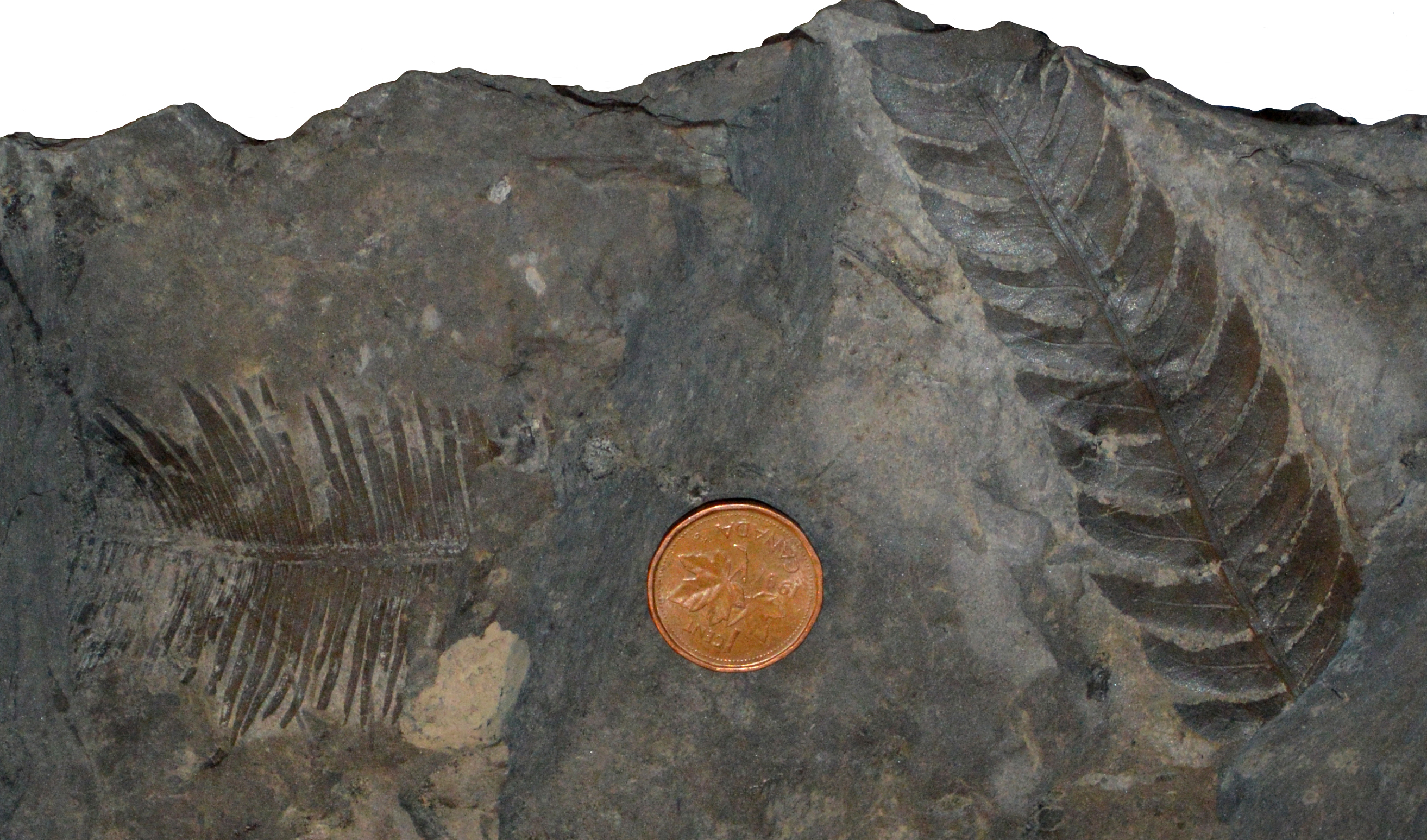
Photograph: “Fossilized seed fern” by Gowened, CC BY-SA 3.0, via Wikimedia Commons.
Comments