

The reason nobody could say how the human intestine keeps Candida albicans in its harmless form is that the decisive experiment is unavailable in mice. The fungus does not normally colonise mouse intestine, and rodents entirely lack the Vδ2 T cell, which in primates is one of the most common T-cell lineages with defined antigen specificity. Any mechanism involving both has had to be inferred from models missing one side.
Working with living human colon tissue instead, a UK-led group has now shown that colonic cultures left to themselves frequently grew their own resident fungi, while the same tissue supplemented with a single bacterial metabolite did not. The metabolite has no antifungal activity of its own. It activates the Vδ2 cells, which induce the cytokine IL-22, and IL-22 is what holds the fungus down. In tissue from patients with Crohn's disease the circuit failed at both ends: the cells were scarce, and those that remained responded poorly.
Why it matters: Candida albicans lives quietly in most human guts and sits on the World Health Organization's critical priority pathogen list because of what it does when that quiet ends. This points to a specific, human-only brake on it, and to a reason the brake might slip in inflammatory bowel disease.
The study comes from Mathew et al. at the Blizard Institute, Queen Mary University of London, with collaborators at the University of Aberdeen, King's College London and Cardiff University, published in PLOS Biology on 2 November. Industry ties are worth stating: the senior author declares consultancy fees and research funding from ImCheck Therapeutics and TC BioPharm, and two co-authors declare biotech founder and patent interests.
A signal fungi cannot counterfeit
The metabolite is HMB-PP, made by a wide range of human commensal bacteria but not by fungi, and sensed by Vγ9Vδ2 T cells through the surface protein BTN3A. The asymmetry is the point: the immune system reads a bacterial molecule and acts on a fungal problem.
In colonic organ cultures with intact epithelium, the main target of IL-22 signalling, standard conditions produced frequent outgrowth of endogenous fungi. Adding HMB-PP stopped it, across thermotolerant moulds as well as yeasts; C. albicans was isolated most often, 11 of 17 isolates. Blocking antibodies then separated the arms of the response: neutralising interferon gamma had little impact, while blocking IL-22 severely disrupted suppression of intestinal Candida isolates, the reference strain SC5314 and a Trichoderma mould. HMB-PP is not the antifungal agent; it is the trigger for one.
Where the relay breaks
Mucosal tissue from Crohn's patients contained only trace numbers of Vδ2 cells, which did not expand significantly on HMB-PP treatment and failed either to limit endogenous fungi or to protect cultures spiked with SC5314. The team then enriched Vδ2 cells from blood and measured their ability to push naive CD4 cells into making cytokines. Cells from patients still acquired a co-stimulatory profile, but their antigen-presenting phenotype was significantly impaired in active compared with inactive disease, and IL-22 induction was poor.
The comparison carries baggage worth naming. The control group was 28 donors with a mean age of 46, the Crohn's group 43 donors with a mean age of 31, a gap the authors themselves test and report as significant at p = 0.0005. Control samples were macroscopically healthy tissue; Crohn's samples came from actively inflamed sites. The contrast is between older uninflamed tissue and younger inflamed tissue, not between disease and health alone.
The strains that got through
Candida isolates from Crohn's tissue showed more exposed beta-glucan and greater hyphal extension, though that extension was not significantly correlated with the epithelial damage they caused, and expression of the toxin gene ECE1 varied widely without tracking donor status. Whole-genome sequencing found variants in one or more of eight core filamentation regulators in every gut-derived strain, with no significant difference between groups, so environment rather than genotype appears to be sorting the phenotypes.
Proteomics on one exemplar strain per group, matched for donor age, sex and minimal treatment, sharpened that. Under gut-like low oxygen the Crohn's strain upregulated more than 750 proteins while the healthy-donor strain upregulated fewer than 100, and its upregulated programme included filamentous growth and negative regulation of immune response, where the control strain's leading theme was symbiont modulation of host immunity. In a gut-on-a-chip under flow and peristaltic stretch, the Crohn's strain bound the epithelium within two hours, filamented, and crossed into the vascular channel within 24 hours, while the control strain adhered weakly. Both, though, eventually reached the model vasculature.
The most informative result is a control. Spiked into healthy colonic biopsy cultures, the aggressive Crohn's strain was still suppressed by HMB-PP-activated Vδ2 cells. What is missing in disease is the host side of the exchange.
What the study can't say yet
Nobody was treated, and nothing here shows that restoring the circuit changes the course of Crohn's disease. The proteomic and chip comparisons rest on a single strain from each group, chosen as representative rather than sampled, and the chip contains no immune cells, which the authors flag as the next thing to build. The cause of the Vδ2 deficit is also unsettled in a way that matters clinically: the authors note prior reports that azathioprine, a standard Crohn's therapy, selectively depletes these cells, so some of the shortfall may be treatment rather than disease. On the central ambiguity the authors are direct: At present, we cannot resolve whether loss of fungal control in CD is due mainly to functional impairment or numerical deficits in the Vδ2 T cell compartment, although our data clearly demonstrate that both features are present.
Quick questions
Could feeding people the bacterial metabolite help? Not on this evidence. The signal works only through cells that are scarce and poorly responsive in active disease, and no patient was given any.
Why could this not have been done in mice? Mice have no Vδ2 T cells and are not naturally colonised by C. albicans, so both halves of the interaction are absent. The authors argue that alternative model systems will be needed.
What is the one-line takeaway? In human gut tissue a molecule made by commensal bacteria licenses a T cell rodents do not have to keep a resident fungus from turning invasive, and in Crohn's disease that licence is largely missing.
Mathew L. et al. "Fungal suppression by bacterial metabolite-activated human intestinal γδT-cells is disrupted in Crohn's disease." PLOS Biology, 2026. doi.org/10.1371/journal.pbio.3004080
PubMed PMID: 42970564.
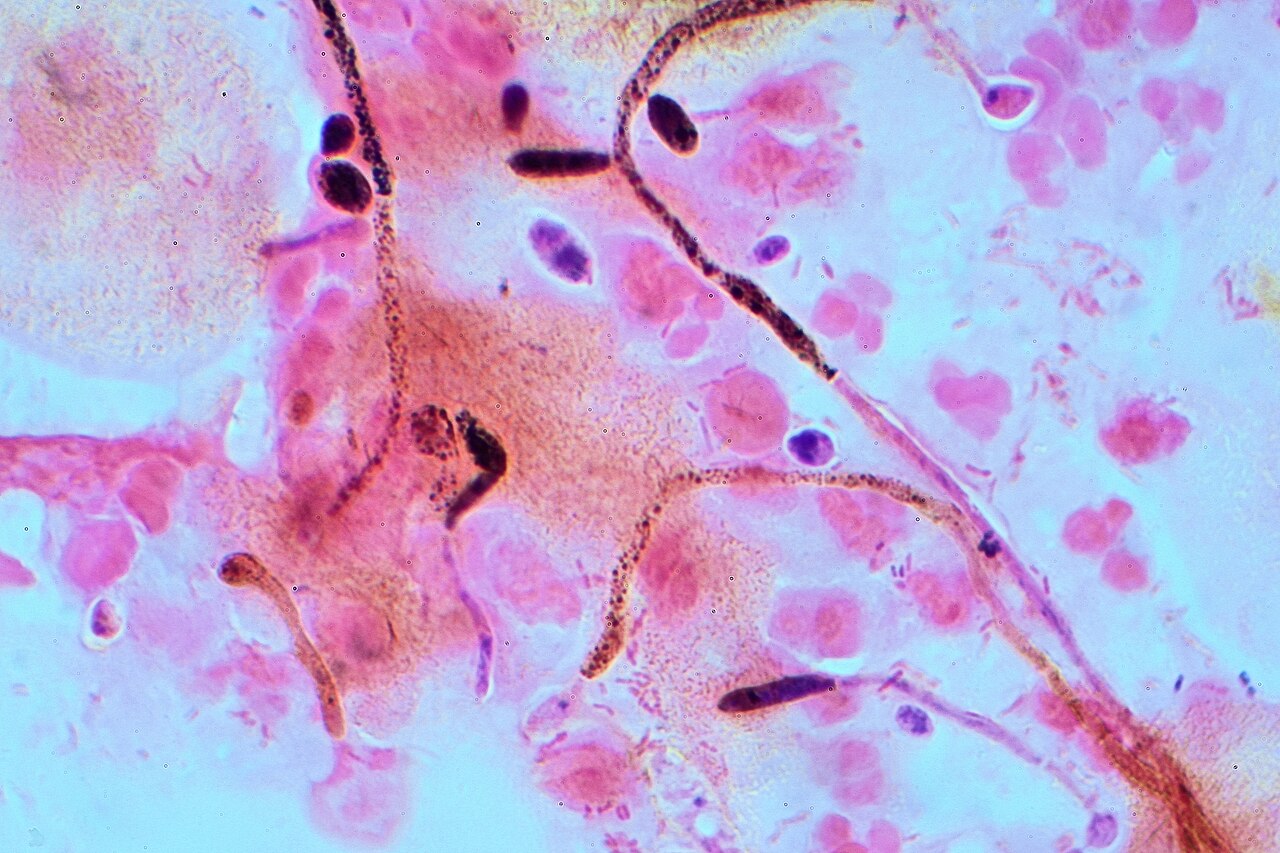
Image: Gram-stained Candida albicans. Graham Beards, CC BY-SA 4.0, via Wikimedia Commons.
Comments