

A bacterium that causes leaf disease spends its productive life in the apoplast, the watery space between cells, where the plant has few good options left. The limiting step is the journey before that. Pseudomonas syringae cannot drill through the waxy cuticle, so it enters through stomata, the adjustable pores a leaf uses for gas exchange. Plants know this. Pattern-triggered immunity closes the pores about an hour after infection begins. The bacterium answers with coronatine, a phytotoxin made by some strains, which reopens them by roughly four hours. Stomatal defence is therefore not a wall but a timer, and the question is who controls the clock.
New work in Science Advances reports a second, slower layer that extends that timer. An intracellular immune receptor in Arabidopsis thaliana called CAR1 recognises AvrE1, a protein the bacterium injects into plant cells, and its activation holds stomata shut past the four-hour point at which coronatine would otherwise have reopened them. The effect is strictly positional: push bacteria into the leaf with a needleless syringe, bypassing the pores, and deleting CAR1 changes nothing.
Why it matters: Almost all control of bacterial leaf disease addresses what happens after the pathogen is inside. A defence that works at the entrance is a different lever, and AvrE1 is carried by nearly every P. syringae strain surveyed, which makes it awkward for the pathogen to abandon.
Tamar Av-Shalom and colleagues at the University of Toronto, with collaborators at the Ohio State University, report the result in Science Advances (Av-Shalom et al.). The authors declare no competing interests; the two corresponding authors hold Discovery Grants from what the paper calls the National Science and Engineering Research Council of Canada.
Two routes in, and only one of them needs the gene
The experiment separating them is crude, which is its virtue. The team sprayed plants with P. syringae pv. tomato DC3000 carrying extra copies of avrE1 on a plasmid, or the same strain with an empty vector. On sprayed wild-type leaves the avrE1 strain reached roughly 300-fold lower numbers after three days than the empty-vector control, and on car1-1 knockout plants it grew about 100-fold higher than on wild type, so most of that restriction was CAR1's doing. Repeated by syringe, the avrE1 strain was still around 30-fold down against the control, so AvrE1 trips some immunity inside the leaf too, but the knockout no longer rescued it. With the pores bypassed, CAR1 was irrelevant. Each condition rests on eight plants per treatment, with replicates split across at least two different days to absorb environmental variation.
A receptor stationed at the pore
Of 167 NLR or NLR-like genes surveyed in a public expression atlas, nine were significantly higher in guard cells than in mesophyll; CAR1 ranked ninth among them, at about 3-fold. Quantitative PCR on guard-cell-enriched epidermal fragments agreed, while the comparison receptor RPM1 showed no such enrichment. Driving CAR1 from two guard-cell-specific promoters in the knockout background restored the response, though on first-generation transgenic plants.
The apertures follow the predicted script. After spraying with the empty-vector strain, stomata were open at zero hours, closed at one, and open again at four. With the avrE1 strain the reopening did not occur, and in car1-1 plants the two strains were indistinguishable. Roughly 50 to 100 stomata were imaged per sample, a large number of pores drawn from a much smaller number of plants, so the real replication is the handful of biological repeats, not the count on the axis.
The layer is strictly additive. In bak1-4 plants, which lack the co-receptor required for FLS2- and EFR-mediated surface immunity, AvrE1-triggered immunity vanished under spraying, and the same held in plants lacking FLS2 itself, the flagellin receptor. CAR1 does not close stomata by itself; it stops already-closed ones from reopening.
What it is worth against strains from the wild
AvrE1 is close to universal, present in 487 of 494 P. syringae strains in an earlier survey. Of the family's 47 alleles, 22 are putatively functional or spread across multiple strains, and a prior screen found 16 of those elicit immunity in the Col-0 reference line, covering 344 of 478 strains that carry one. The authors tested three strains with such an allele, the coronatine pathway, and no other known triggers. Sprayed, all three grew better on car1-1 than on wild type, from about 2-fold for DC3000 to about 10-fold for PtoICMP2844, and produced more chlorotic tissue. Infiltrated, none differed.
What the study can't say yet
CAR1 is an Arabidopsis gene, and the survey across other plants is sequence rather than function. Orthologs look conserved within the Brassicaceae, at 79 to 87 percent amino acid identity, while candidates elsewhere in the rosid lineage fall below 45 percent, far enough that recognition is an open question. No crop was tested.
The largest numbers come from avrE1 supplied on a multicopy plasmid, and the authors are explicit that the extra dosage is what makes the phenotype so clean. DC3000 carries an immunity-eliciting allele of AvrE1 and remains a successful pathogen of wild-type Arabidopsis, presumably because other effectors suppress the response. Against natural strains the advantage is 2- to 10-fold, not 300. Spray assays ran under domes at about 95 percent humidity, which favours infection and is not a field, and the symptom readout is image-based quantification of yellowed leaf tissue at seven days, not a yield measurement. Extreme outliers were removed per treatment before testing. How CAR1 senses AvrE1 is unresolved: the effector's cytosolic domain binds many kinases and phosphatases, and the authors say only that they speculate it responds to phosphorylation-based signalling. Their own reading of the stand-off is that PtoDC3000 is forced to perform a tight balancing act of maintaining AvrE1 virulence function while negating its ETI potential.
Quick questions
Could this be bred into crops? Not directly. The gene and the assays are Arabidopsis, recognition outside the mustard family is untested, and nothing here was measured as yield or field disease.
Why keep a protein the host can detect? Because AvrE1 also does the bacterium's work once inside, forming channels that make the apoplast wet and nutrient-rich. Dropping it would cost the pathogen the environment it needs.
One-line takeaway? A guard-cell-enriched immune receptor keeps stomata closed at least to the four-hour mark, past the point where the bacterium's toxin reopens them, and the whole advantage disappears once the bacteria are placed inside the leaf.
Av-Shalom et al. "Effector-triggered stomatal immunity prevents leaf invasion by bacterial pathogens." Science Advances, 2026. doi.org/10.1126/sciadv.aei5129
PubMed PMID: 42981410.
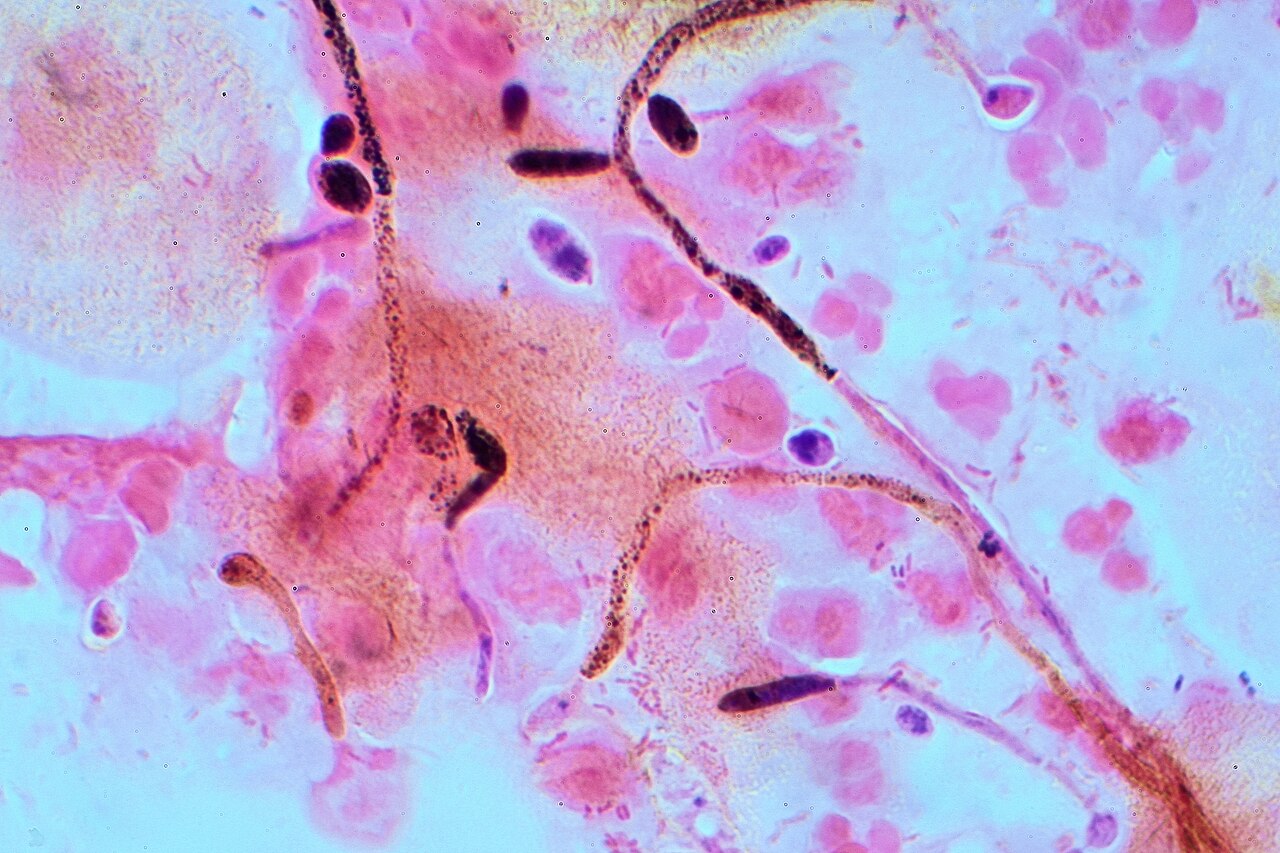
Image: leaf epidermis showing stomata and guard cells. Emilio Ermini, CC BY 4.0, via Wikimedia Commons.
Comments