

The hard part of feeding methanol to a bacterium is not getting the methanol in. It is the first thing the cell makes out of it. Nearly every route from a one-carbon compound into biomass runs through formaldehyde, which crosslinks DNA to protein, drives proteins out of solution and pushes up reactive oxygen species. The usual response is iterative metabolic engineering or adaptive laboratory evolution, which the authors describe as time-consuming, strain-specific and hard to generalise.
A group working in Escherichia coli tried something structural instead. They changed a single amino acid in MreB, the actin-like cytoskeletal protein that maintains the rod shape of most Gram-negative bacteria, and the cells became short and wide rather than long and thin. Those reshaped cells tolerated formaldehyde better and consumed roughly fifteen times more methanol than their parent strain. The more informative result is the control: a drug that produces much the same shape produced almost none of the metabolic gain.
Why it matters: One-carbon compounds such as methanol and formate are a promising feedstock for sustainable biomanufacturing, and what holds the idea back, on the paper's own account, is the microbe rather than the chemistry. If cell geometry is a tunable input to metabolism, it is a lever that sits outside the pathway and might be pulled in more than one organism.
The work was done by Chen et al. at Shanghai Jiao Tong University, with a collaborator at Shanxi Normal University, and published in Science Advances. The authors declare no competing interests, and funding is public, from the National Natural Science Foundation of China and two provincial and municipal bodies.
One substitution, one shorter cell
MreB is essential, so the team could not simply delete it. They put a single chromosomal copy under a constitutive promoter and screened previously reported shape-altering variants for growth under formaldehyde. Most did nothing. One substitution, alanine to arginine at position 53, had never been tested against this kind of stress and stood out: at 1 mM formaldehyde the engineered strain grew at 0.31 per hour against the control's 0.19, a 63% increase at P below 0.01.
The geometry moved by a lot. Mean cell length fell from 1.29 to 0.71 micrometres while mean width rose from 0.37 to 0.53, leaving the length-to-width ratio at 39% of the control's. The envelope changed with it: peptidoglycan was modestly thicker, and after six hours in 6 mM formaldehyde membrane permeability measured by dye uptake reached 30.5% in the control against 7.3% in the reshaped strain. DNA-protein crosslinks and protein aggregation were both lower. A structural model put the substitution on a surface sheet without changing the fold, but the altered ATP-binding environment it predicts is a docking calculation, and the authors say polymerisation dynamics and ATP binding still need measuring.
The drug made the shape and not the metabolism
This is where the paper earns its claim. A22 is a well-characterised compound that perturbs MreB, and applied to wild-type cells it shortens and rounds them. It also improved formaldehyde tolerance nearly fivefold. So the physical change alone buys something. But when the same cells were asked to assimilate methanol, A22 bought nothing at all: treated and untreated wild-type cultures consumed negligible methanol over four days. The engineered strain, by contrast, consumed about 200 mM of 450 mM methanol in that window against the control's 13 mM, and reached 9.2 times the final culture density.
The transcriptional and metabolite data say why. In the engineered background the pentose phosphate and Entner-Doudoroff entry genes were up enormously, zwf by 2325-fold and edd by 330-fold, with measured increases in NADPH and the NADPH to NADP ratio; electron transport complexes I and IV came down while II and III went up; the ROS-scavenging enzyme sodB rose sixfold. Three regulators rose together, the envelope stress sigma factor RpoE 3.4-fold, the carbon-flux regulator Cra 2.4-fold and the acid-resistance activator GadE 7.9-fold, and suppressing any one of them by CRISPR interference or deletion dropped growth and methanol use to control levels. Shape, on this reading, is the trigger for a transcriptional programme that takes time, not the cause of the metabolic gain itself.
How far it travelled
The engineered strain held up across eleven daily passages and in a five-litre fed-batch run, consuming 1027 mM methanol and 402 mM xylose over 100 hours. Swapped onto two unrelated synthetic routes it still helped, yielding 4.6-fold more glycolate from formaldehyde and 46 mM of formate consumed against 1 mM. The equivalent substitution in the native methylotroph Bacillus methanolicus widened its cells and raised methanol consumption from 115 to 215 mM, which the authors call partial recapitulation; overexpressing the unmutated protein did nothing in either organism, which is the control that matters.
What the study can't say yet
The Escherichia coli result is not methylotrophic growth. Methanol was a co-substrate alongside 50 mM xylose and casamino acids, in a background deliberately stripped of formaldehyde detoxification and of pentose phosphate pathway genes, so that neither strain grew at all without methanol. That is a selection device, not an industrial organism, and no product titre is reported from the large run, only substrate consumed. How a change in cell shape reaches the envelope stress sigma factor is unresolved; membrane tension is offered as a hypothesis, and a second surveillance system the authors name was not assayed. Whether the three regulators act in sequence or in parallel is also open. On the trade-off, they are explicit that the long-term evolutionary stability, ecological fitness, and performance across different growth environments require further evaluation before industrial implementation, having run no competitive fitness assay under unstressed conditions.
Quick questions
Does this mean shape controls metabolism? No. Shape plus time does. The drug experiment separates them: a fast envelope effect that protects against formaldehyde, and a slower transcription-dependent rewiring that the drug never triggers.
Could the same trick work in other bacteria? Possibly, since MreB is conserved in rod-shaped species, but the one other organism tested showed a smaller effect, and two species is not a trend.
What is the one-line takeaway? A single substitution that made Escherichia coli short and wide also made it a far better methanol eater, and the authors' own control shows the shape is a trigger rather than the mechanism.
Chen Y., Peng J., Guo L., Tan Z. “Engineering bacterial morphology through MreB remodeling enhances one-carbon metabolism for sustainable bioproduction.” Science Advances, 2026. doi.org/10.1126/sciadv.aej6280
PubMed PMID: 42950050.
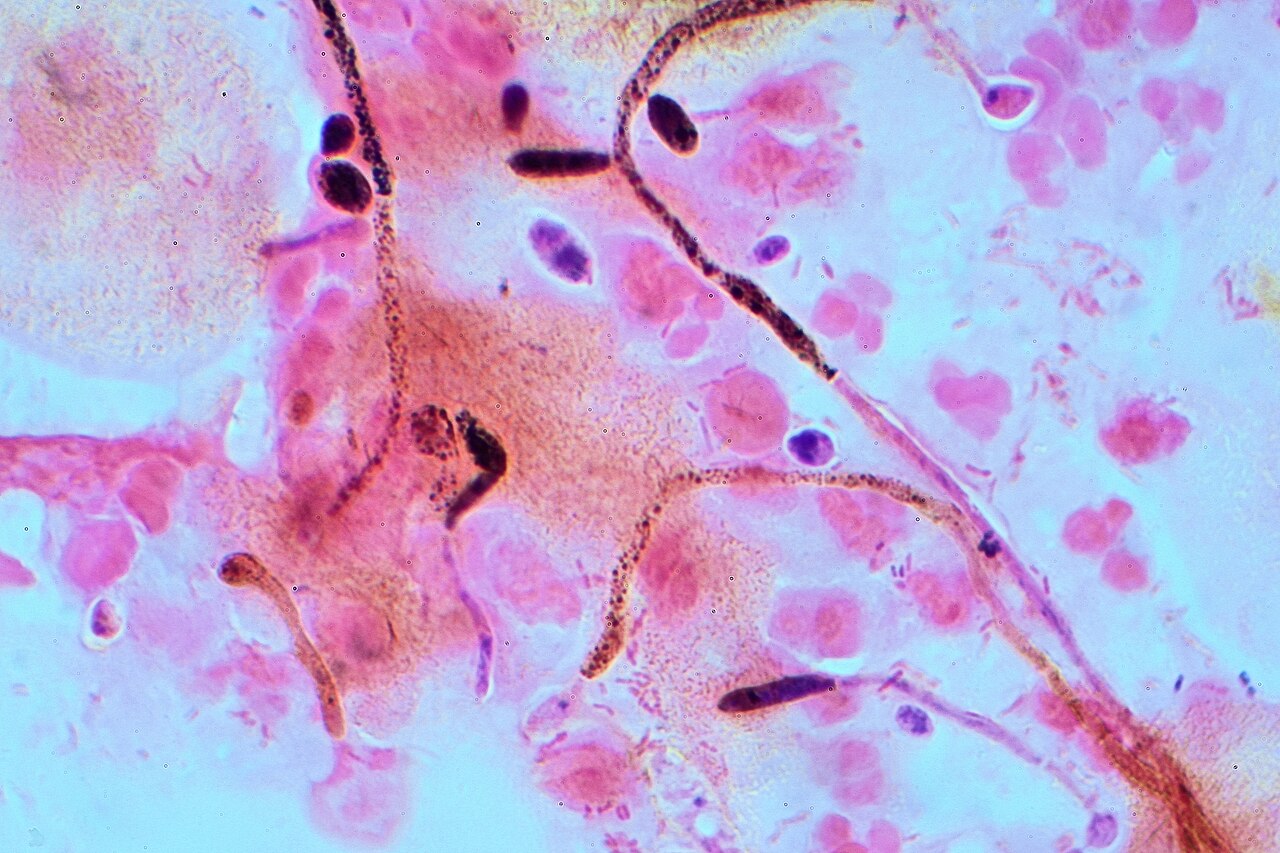
Image: Escherichia coli, colourised scanning electron micrograph. NIAID, CC BY 2.0, via Wikimedia Commons.
Comments