That mosquitoes prefer some people is not folklore. Body temperature, exhaled carbon dioxide and the chemical mix coming off the skin are all established cues, and they vary between individuals. The less obvious part is that the smell of a person is not entirely made by that person. Skin is covered in bacteria that feed on sweat and sebum and release their own volatile compounds, so a portion of what a mosquito is detecting is microbial output. Which raises a testable question: is the gap between the heavily bitten and the largely ignored partly a difference in which microbes they carry?
A group at the Academy of Military Medical Sciences in China tested 37 volunteers for mosquito attractiveness, sorted them into 22 high-attractiveness and 15 low-attractiveness individuals, and sequenced the bacteria on their forearms and palms. Two closely related Bacillus species stood out in the low-attractiveness group. The study then did what most microbiome correlations never do: it applied those bacteria to a different animal and checked whether the effect followed.
Why it matters: Conventional repellents are chemicals applied to skin that wear off in hours. If part of a person's attractiveness to mosquitoes is set by which bacteria live on them, then a longer-lasting approach becomes conceivable, and the compounds those bacteria make are candidate repellents in their own right.
The study, by Gu et al. at the Academy of Military Medical Sciences, appears in Nature Communications. Five authors are listed as contributing equally.
From a correlation to a causal test
The human stage produced a list rather than an answer. Comparing the two groups, ten species differed; Staphylococcus epidermidis and other taxa were more abundant on the heavily bitten, while two Bacillus species, their wider family, and one marine-derived bacterium were more abundant on the rarely bitten.
For the causal step the team moved to three cynomolgus monkeys. Having first checked that back skin was microbially representative of other body sites in these animals, they applied the two Bacillus species topically and ran attraction assays with female Aedes aegypti. Attraction to treated skin fell relative to controls at every time point tested. That is a genuine advance on a correlation, because adding the bacterium changed the outcome.
Separate mouse experiments then asked what the bacteria were emitting. Four volatile compounds rose with Bacillus treatment: p-Cresol, decanoic acid, and two less well characterised molecules. Tested individually for repellency, three of the four cleared the conventional benchmark of four hours of effective protection, with decanoic acid lasting longest. The one that did not clear it was p-Cresol, which is the compound the abstract names first.
The problem the authors raise about their own data
The discussion contains an admission that deserves more prominence than it gets. The sequencing involved an amplification step, and the authors state that inherent amplification bias inevitably distorted the compositional profile of human skin microbiota. The consequence is specific and awkward: This technical bias led to an overrepresentation of Bacillus taxa, accounting for more than 60% of the overall microbial abundance, which fails to reflect the actual proportion of Bacillus species in native human skin microbial communities.
So the very organism identified as the protective signature was inflated by the method used to find it. The authors argue that relative differences between the two groups remain comparable even if absolute proportions are wrong, which is a reasonable defence of the comparison and not a defence of the abundance figures. It also means the human half of the study establishes less than it appears to, and the monkey experiment is carrying most of the evidential weight.
A second item from the same discussion is worth flagging for anyone imagining a product. Alongside the intended Bacillus, the intervention was accompanied by enrichment of Streptococcus and other taxa that the authors themselves note are potentially associated with skin infections and scarlet fever. Deliberately reshaping a skin community has consequences beyond the target organism.
What the study can't say yet
No person was treated. The authors are explicit: The present study did not conduct validation assays on Anopheles or Culex mosquitoes, nor did it verify the relevant findings in human cohorts. The mosquitoes were a single laboratory strain of one species, which is the dengue and Zika vector but not the malaria one, and the causal experiment rested on three animals.
Durability is untested in the direction that matters. The authors acknowledge that the natural persistence and ecological competitiveness of these strains on human skin remain to be determined, which is the whole premise of a microbial approach being better than a spray. They also caution that Interspecies variation in the primate skin microbiome may limit direct extrapolation of our NHP findings to humans. There is no comparison against DEET or any established repellent, so the effect has no benchmark; the authors list that as future work.
Quick questions
Could I put a probiotic on my skin and get bitten less? Nothing here supports that. The bacteria were applied to monkeys, the strains' ability to persist on human skin is unmeasured, and the intervention shifted other species in ways the authors flag as a concern.
Why test monkeys instead of people? Applying live bacteria to human skin raises approval and safety questions that a correlational study does not, and a primate allows controlled colonisation. The cost is that primate skin communities differ from ours.
What is the one-line takeaway? Two Bacillus species more common on rarely bitten people reduced mosquito attraction when applied to three monkeys, and the volatile compounds they produce repelled mosquitoes in mice, though the human sequencing that identified them overcounted those same bacteria and no human has been tested.
Gu et al. "Mosquito repellency mediated by skin commensal Bacillus species via volatile metabolite reprogramming." Nature Communications, 2026. doi.org/10.1038/s41467-026-78356-5
PubMed PMID: 42897181. Full text: PMC13680614.
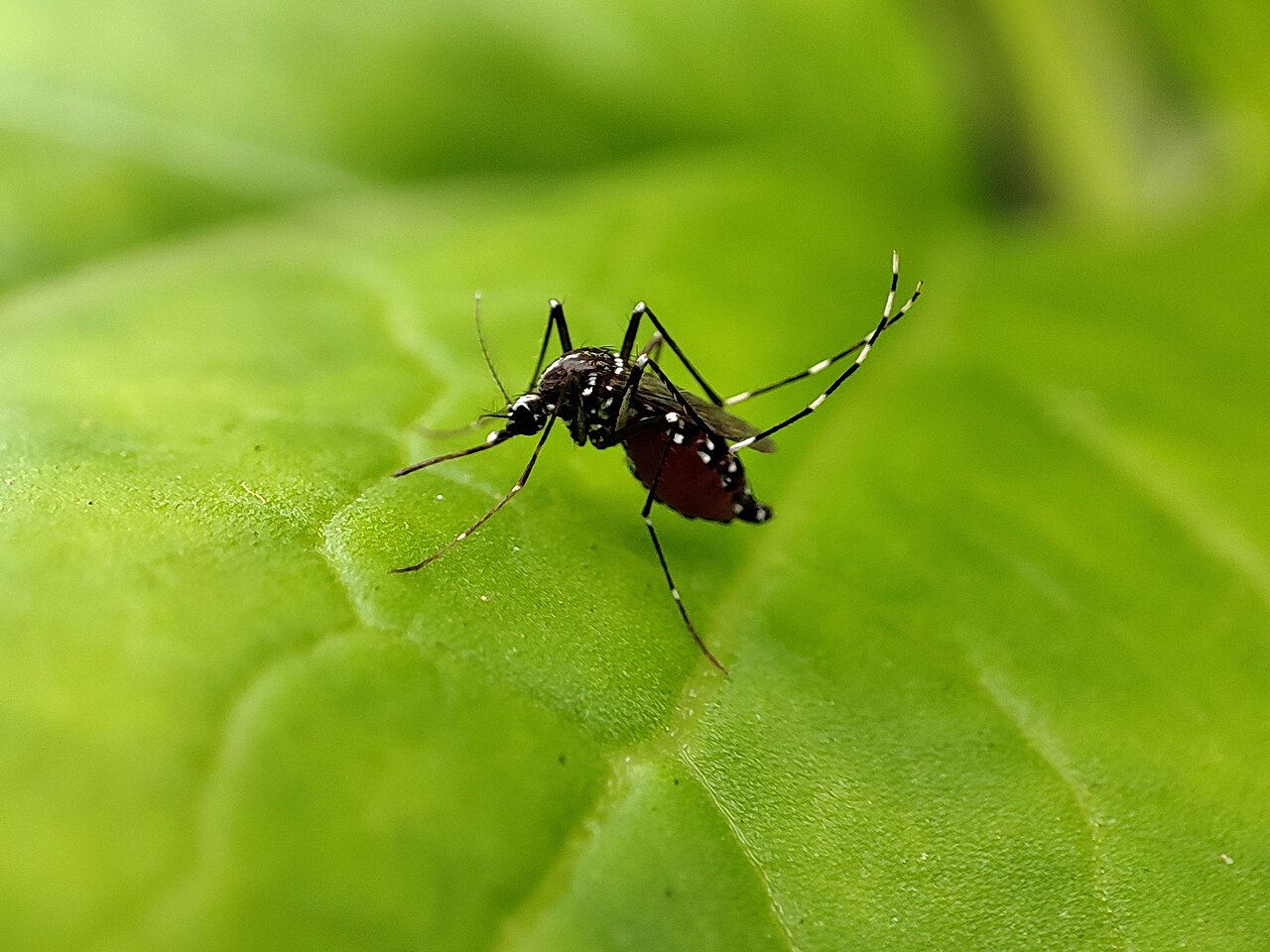
Image: Aedes aegypti on a leaf. Wee Hong, CC BY-SA 4.0, via Wikimedia Commons.
Comments