

For a decade, oncologists have known that the mix of bacteria in a patient's gut can quietly decide whether a cancer immunotherapy works. Patients whose tumors shrink under PD-1 blockade tend to carry different microbes than patients whose tumors keep growing. That correlation has been repeated in study after study. What nobody could point to was a single organism doing the work, and a clear account of how a bug living in the colon could change what happens inside a tumor several organs away.
A team led by researchers at Japan's National Cancer Center has now pulled one such organism out of the crowd. Writing in Nature, they describe a bacterium they call YB328, a member of a little-studied genus named Hominenteromicrobium, which they fished out of the stool of patients whose melanoma had responded to immune checkpoint therapy. On its own, in mice, YB328 made the same class of drugs work better. And the researchers traced a physical chain of events connecting the gut to the tumor.
Following the messenger cell
The chain runs through a type of immune cell called a dendritic cell. Dendritic cells are the couriers of the immune system. They pick up fragments of a threat, then carry that information to the T cells that do the killing. The particular subset here, tagged in the lab as CD103+CD11b+ conventional dendritic cells, patrols the lining of the gut.
When YB328 was present, these dendritic cells lit up. More striking, they did not stay put. The team watched them leave the intestine and travel to the tumor, where they lingered on tumor-specific CD8 T cells, the cells trained to recognize and destroy cancer. That prolonged contact seemed to prime the T cells and even pushed them to display more PD-1, the very molecule the drugs are designed to unblock. In other words, the bacterium was stocking the tumor with better-briefed immune scouts, and those scouts left the T cells more responsive to the therapy.
A bug that wins by default
The most practical result came from a swap. The researchers took fecal samples from patients who had not responded to PD-1 blockade, transplanted them into mice, and then added YB328. The addition rescued the response. Non-responder microbiomes, spiked with this one strain, started behaving like responder microbiomes.
The authors describe YB328 as acting in a dominant way, meaning it did not need a friendly bacterial community around it to have an effect. It could tip the balance even inside a microbiome that was, on its own, doing nothing helpful. Across several different mouse cancer models, adding the strain improved how well checkpoint drugs shrank tumors. And when the team went back to human data, patients carrying more YB328 had more of those migrating dendritic cells inside their tumors and were more likely to respond to PD-1 therapy across a range of cancer types.
What the study can't say yet
This is a mechanism established mostly in mice, and that matters. The human side of the work rests on associations, patients with more of the bacterium tended to do better, which is exactly the kind of correlation that first raised these questions and cannot by itself prove cause. The clean rescue experiments, where adding the strain flipped an outcome, were done in animals.
There is also a gap between "this strain helps" and "give patients this strain." A live bacterium is not a pill you can standardize easily. Dose, how well it settles into a given person's gut, whether it behaves the same against tumors other than melanoma, and how it interacts with the thousands of other microbes already living there are all open. Hominenteromicrobium is barely characterized, so even basic questions about its biology are still being worked out. And the study does not establish safety in people, which is its own long road.
What the work does deliver is a target. For years the microbiome-and-immunotherapy story has been frustratingly diffuse, a matter of whole-community fingerprints and fecal transplants with unpredictable contents. Here is a single strain, a specific cell it activates, and a route those cells travel to reach the tumor. That is the kind of concrete handle that makes a bacterium testable as a drug rather than a statistical hunch, and it gives the field something narrow enough to attack.
Lin et al. "Microbiota-driven antitumour immunity mediated by dendritic cell migration." Nature, 2025. doi.org/10.1038/s41586-025-09249-8
PubMed PMID: 40659786.
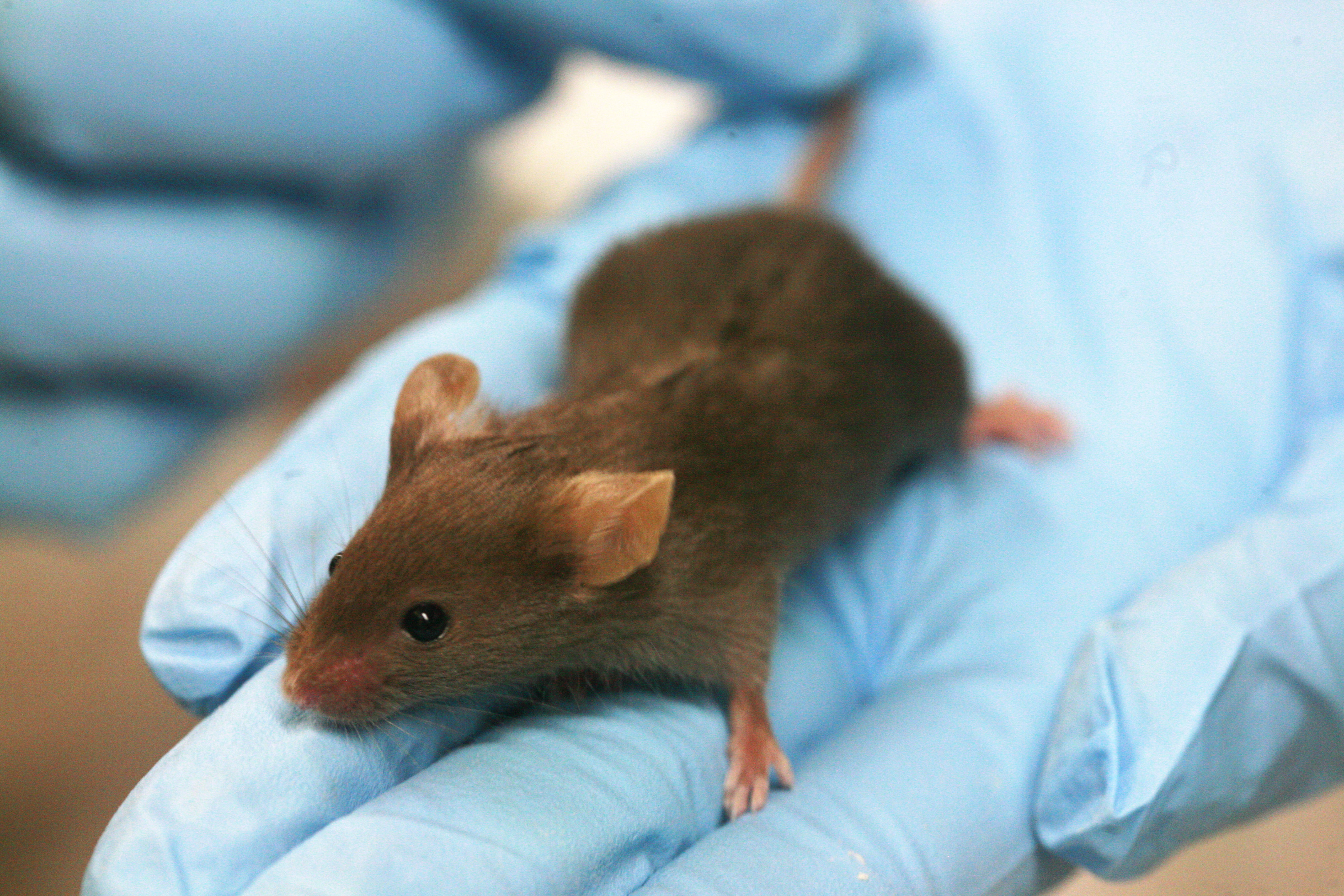
Photograph: Rama, CC BY-SA 2.0 fr, via Wikimedia Commons.
Comments