

Fusarium graminearum has a trick. Before it settles into a wheat head and rots the grain, the fungus nudges the plant's chemistry in its own favor. It pushes the local environment toward alkalinity, making the tissue less acidic, and that shift helps the infection take hold. The disease it causes, Fusarium head blight, is one of the most damaging problems in wheat farming worldwide. It cuts yields and leaves behind toxins that make the grain unsafe.
A study published in Cell Host & Microbe describes a countermove that comes not from the plant or from a sprayed chemical, but from the bacteria already living on the wheat head. When the fungus arrives and starts raising the pH, a particular group of bacteria surges in number. And some of them do exactly what the plant needs. They acidify.
Reading the community on an infected head
The researchers, led by groups at Nanjing Agricultural University, started by watching what happens to the microbial community on wheat heads during infection. They profiled the microbes and read their gene activity through metatranscriptomics. One signal stood out. Pseudomonas species became strongly enriched on infected heads, far more than on healthy ones.
That enrichment could have been a bystander effect. To find out whether these bacteria mattered, the team isolated 595 bacterial strains from infected wheat heads, including 196 Pseudomonas isolates. Then they tested what those isolates could do. Certain enriched Pseudomonas strains produced organic acids, the kind that lower pH. In the lab, those acids counteracted the pH upshift the fungus was driving.
Here is the part that ties it together. The wheat head itself seemed to be selecting for the acid-makers. In experiments, the specific host-acidifying Pseudomonas strains were the ones that got promoted in the tissue. The plant, under attack, tilts its own surface toward the bacteria that can reverse the chemistry the fungus depends on. It reads less like a coincidence and more like a defense that runs through a third party.
From petri dish to the field
Lab acids are one thing. A real wheat field is another. So the team ran field trials with the host-acidifying Pseudomonas strains. According to the paper, those strains effectively controlled Fusarium head blight in the field. That jump matters, because plenty of promising biocontrol microbes work beautifully in a dish and then fall apart outdoors, where weather, competing microbes, and plant variation all interfere.
The mechanism is what makes this interesting beyond one crop. The bacteria are not poisoning the fungus directly. They are changing a shared environmental condition, pH, that the fungus has learned to manipulate. It is a fight over the chemistry of the neighborhood rather than a fight between two organisms. That framing, host pH as a battleground that microbes can tip either way, is a different way to think about protecting a plant.
What this does and does not settle
The work is specific to wheat heads and to this fungus, and the acidifying effect is one route among many that phyllosphere microbes might use. The study does not claim these bacteria will replace fungicides, and field results in one set of trials do not guarantee the same performance across every climate, soil, or wheat cultivar. Long-term questions remain about whether repeated use would keep working as the pathogen adapts, and about how a deliberately boosted Pseudomonas population interacts with the rest of the microbial community over a season. Organic acid production also varies from strain to strain, so scaling this up means picking and maintaining the right isolates.
What the paper does show, cleanly, is a symbiosis with teeth. The plant hosts a crowd of microbes on its surface. When a pathogen tries to rig the local chemistry, some of those residents push back by resetting the pH, and doing so protects the host. It is a reminder that a plant's health is not decided by the plant alone. The bacteria riding on its leaves and heads are part of the immune story, and here they turned an attacker's own strategy against it.
Xu, Y. et al. "Keystone Pseudomonas species in the wheat phyllosphere microbiome mitigate Fusarium head blight by altering host pH." Cell Host & Microbe, 2025. doi.org/10.1016/j.chom.2025.10.016
PubMed PMID: 41265441.
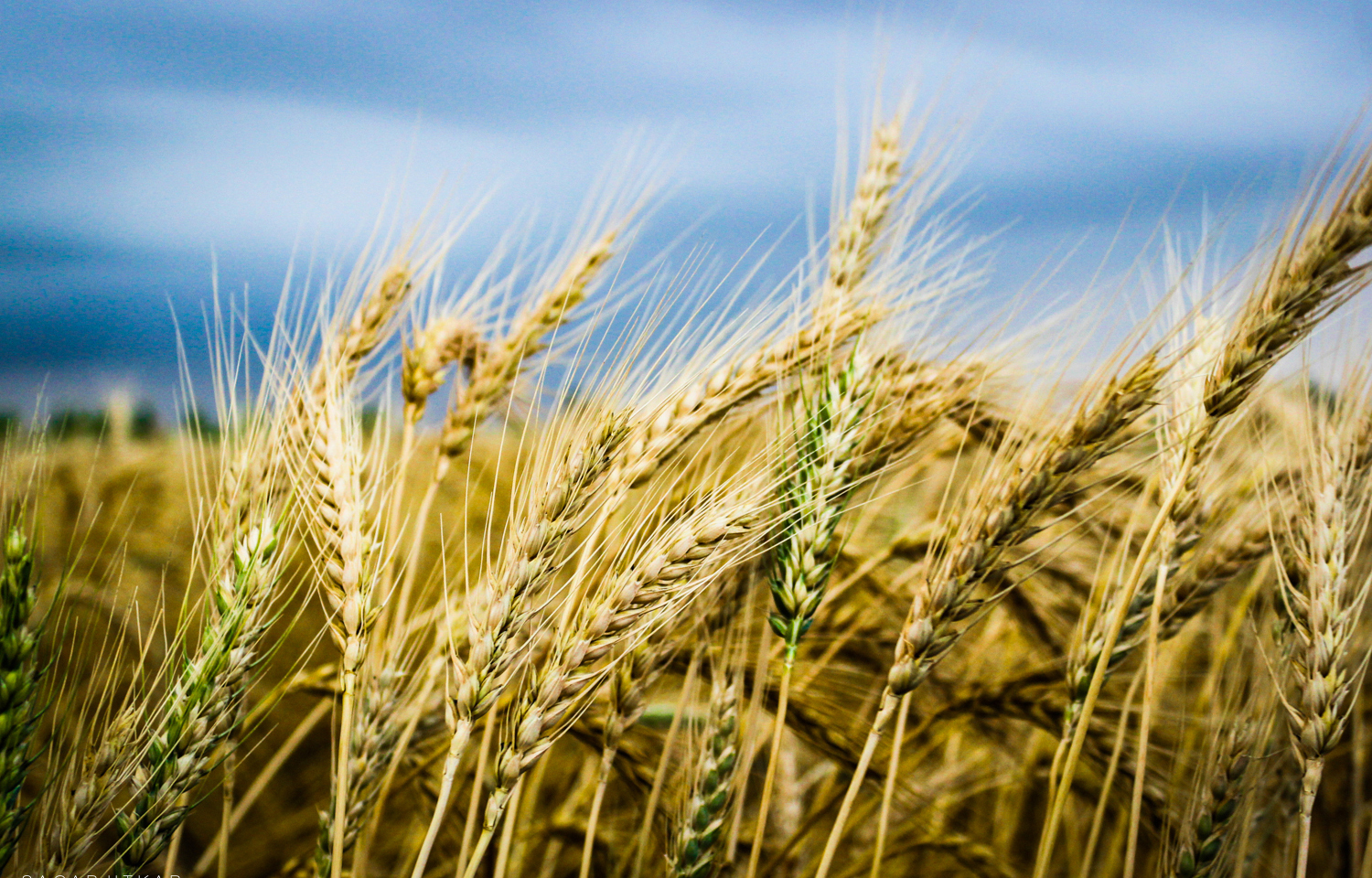
Photograph: Sagarjitkar, CC BY-SA 4.0, via Wikimedia Commons.
Comments