


Huntington's disease is one of the cruelest cases in genetics because the timing is so predictable. The number of CAG repeats in a person's HTT gene largely sets the age at which symptoms arrive. And yet, among people carrying almost identical mutations, some stay well for a decade or two longer than the math says they should. Something else is going on in their cells. Finding out what has become a kind of treasure hunt.
A team led by Katherine Croce and Ai Yamamoto at Columbia, working with the long-running US-Venezuela Huntington's cohort assembled by Nancy Wexler, went looking for that something. Writing in Neuron, they report a single-letter change in a gene called WDFY3 that is linked to a delayed onset of up to 23 years. That is not a rounding error. That is the difference between getting sick in your forties and getting sick in your sixties.
From a human outlier to a mouse that stays healthy longer
A statistical association in people is a starting point, not proof. The interesting part is what happened next. The researchers took the exact same variant and engineered it into mice carrying Huntington's mutations. The protection carried over. In two different mouse models of the disease, the animals with the variant held onto healthy brain tissue and normal behavior longer than their littermates.
The gene WDFY3 makes a protein the field calls Alfy. Its job is housekeeping. Alfy acts as an adaptor in selective autophagy, the process cells use to wrap up damaged or clumped proteins and haul them off for disposal. The protective variant works by turning up Alfy production. More Alfy means more clearance of the sticky aggregates that build up in sick neurons.
To check that Alfy was really the active ingredient, the team skipped the variant entirely and just overexpressed the protein directly. That alone reproduced the benefit. It is a clean piece of causal logic: the variant raises Alfy, and raising Alfy is enough to protect.
Why this reaches past Huntington's
Here is the part that makes neurologists sit up. Huntington's, Parkinson's, and Alzheimer's look like separate diseases, but they share a bad habit. In each, a specific protein misfolds and accumulates where it should not. Huntington's has mutant huntingtin. Parkinson's has alpha-synuclein. Alzheimer's has tau.
When the researchers raised Alfy levels, the protection was not limited to huntingtin. Cells were also shielded from toxicity driven by phosphorylated alpha-synuclein and by AT8-positive tau, the two proteins at the center of Parkinson's and Alzheimer's pathology. One clearance pathway, several diseases. That is the kind of shared node drug developers dream about, because a therapy aimed there might help across a whole class of disorders rather than one at a time.
It also flips the usual framing. Most neurodegeneration research hunts for what goes wrong. This work started from people whose biology went unexpectedly right and traced their good luck back to a mechanism you could try to copy with a drug.
The distance between a mouse and a clinic
Worth keeping steady here. The 23-year delay is an association drawn from human genetic data, and associations can hide confounders. The causal proof, the strongest part of the paper, comes from mice and cell models, and mouse brains are forgiving in ways human brains are not. Cranking up a housekeeping protein sounds harmless until it isn't; autophagy is tightly regulated for a reason, and more is not automatically better in every tissue or over a lifetime. No one has shown that boosting Alfy is safe or effective in a living person.
What the study does deliver is a target with an unusually strong pedigree. It emerged from human genetics, it held up when transplanted into animals, and it generalized beyond the disease where it was found. Turning that into a drug that safely nudges autophagy in the human brain is a long road. But knowing where to aim is most of the problem, and this points somewhere concrete.
Croce, K. R. et al. "A rare genetic variant confers resistance to neurodegeneration across multiple neurological disorders by augmenting selective autophagy." Neuron, 2025. doi.org/10.1016/j.neuron.2025.08.018
PubMed PMID: 40945514.
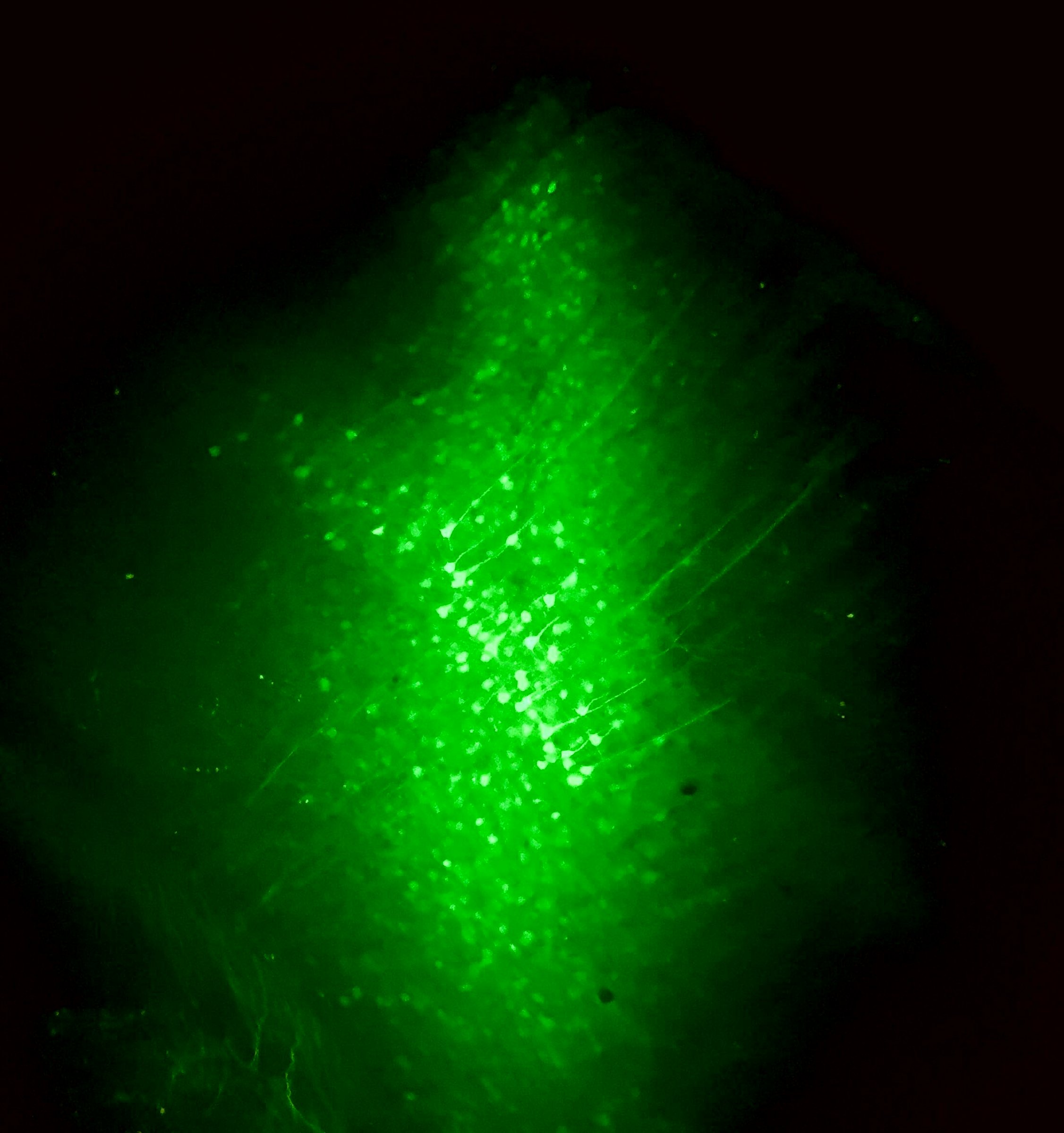
Photograph: Luisa Demarchi, Ilaria Bertocchi, Alessandra Oberto, CC BY-SA 4.0, via Wikimedia Commons.
Comments