
Your eyes spend every waking hour bathed in light and get nothing out of it. Photons stream through the cornea, the clear dome at the front of the eye, and are spent entirely on vision. The tissue doing the transmitting takes no energy from the light it passes along. It simply weathers it, and light is not a gentle guest: it drives the slow oxidative chemistry that wears corneal cells down over a lifetime.
A team working across Singapore and Hangzhou asked the question nobody had answered. What if the eye could take something back? They stripped the light-harvesting membranes out of plants, packaged them at nanoscale, and installed them inside mammalian corneal cells. Shine visible light on those cells now and they do something no animal cell is supposed to do: run the light reactions of photosynthesis, producing the same energy-carrying molecules a leaf makes.
Why it matters: This turns light from something the eye merely endures into something it can spend. If the effect holds up, the light already falling on a damaged cornea could help power its own repair, without a drug, an injection, or an edit to a single gene.
The work, led by Xing et al. at the National University of Singapore and Zhejiang University, centres on the thylakoid, the stacked and folded membrane inside a chloroplast where the light reactions actually happen. Thylakoids are the part of a plant that catches photons and turns them into chemical currency. The team extracted them intact and built them into a nanoscale package they call LEAF, short for light-reaction enriched thylakoid NADPH-foundry.
What a borrowed organelle actually does
Inside the corneal cell, LEAF behaves less like cargo and more like a resident. It integrates with the host cell and, driven by light, runs an intact photosynthetic electron transport chain, the molecular bucket brigade that shuttles electrons and, at the end of the line, produces NADPH and ATP. ATP is the cell's general-purpose energy currency. NADPH is the one that matters most here: it is the molecule a cell spends to keep its internal chemistry in a repaired state, mopping up the reactive oxygen species that light and metabolism constantly generate. Supplying it restores what biologists call redox balance.
The second effect happens outside the cell, and it is the more surprising of the two. Some of the photosynthesized NADPH is exported into the surrounding environment, where it raises the activity of the eye's own antioxidant enzymes and lowers reactive oxygen species in the nearby tissue. The transplanted machinery does not only feed its host. It changes the chemistry of the neighbourhood.
An ancient bargain, redone on purpose
There is a deep echo here. Every mitochondrion in your body, the compartment that burns sugar for energy inside each of your cells, descends from a free-living bacterium that an ancestral cell swallowed and never digested. Chloroplasts have the same origin story. Those were accidents of deep time that took hundreds of millions of years to settle into partnerships. This is the same bargain struck deliberately, in a dish, in a matter of hours: an animal cell acquiring a plant-derived compartment and drawing real benefit from it. The authors call what they have made a photosynthetic neo-organelle, and describe the relationship as endosymbiosis-like.
As they write, These results establish a strategy for using light as an energy input in mammalian metabolic systems. A decade ago that sentence would have read as fantasy.
What the study can't say yet
This is cell and tissue work. No animal was treated for a disease, no person received anything, and the abstract reports no numbers on how much energy the transplanted machinery actually contributes or how long the effect lasts. That second question is the sharp one. Thylakoids are structures the researchers moved, not instructions the cell can read, so a corneal cell cannot build more of them. Whatever LEAF is installed is all there will ever be, and how quickly it degrades inside living, dividing tissue is not answered here.
It is also worth being precise about what photosynthesis in the eye does and does not mean. This is the light reactions only, the photon-catching half that makes NADPH and ATP. Nobody is being fed by sunlight. The benefit shown is local and chemical, better redox balance and less oxidative stress in corneal tissue, which is a plausible route toward treating corneal disease and a very long way from an animal that runs on light.
Quick questions
Does this mean people could photosynthesize? No. Only the light-capturing half of photosynthesis was transplanted, and its output is used locally to steady the cell's chemistry rather than to make food. You would still need breakfast.
Why the cornea, of all places? It is the one tissue with the right combination: transparent, exposed to light all day, and troubled by exactly the kind of oxidative stress that the borrowed machinery's main product is good at countering.
What's the one-line takeaway? Plant light-harvesting membranes can be moved into mammalian cells and keep working, turning light into usable chemistry inside an eye, with durability and any real treatment still ahead.
Xing et al. "Transplanting light-dependent reactions for mammalian eye photosynthesis." Cell, 2026. doi.org/10.1016/j.cell.2026.04.034
PubMed PMID: 42143020.
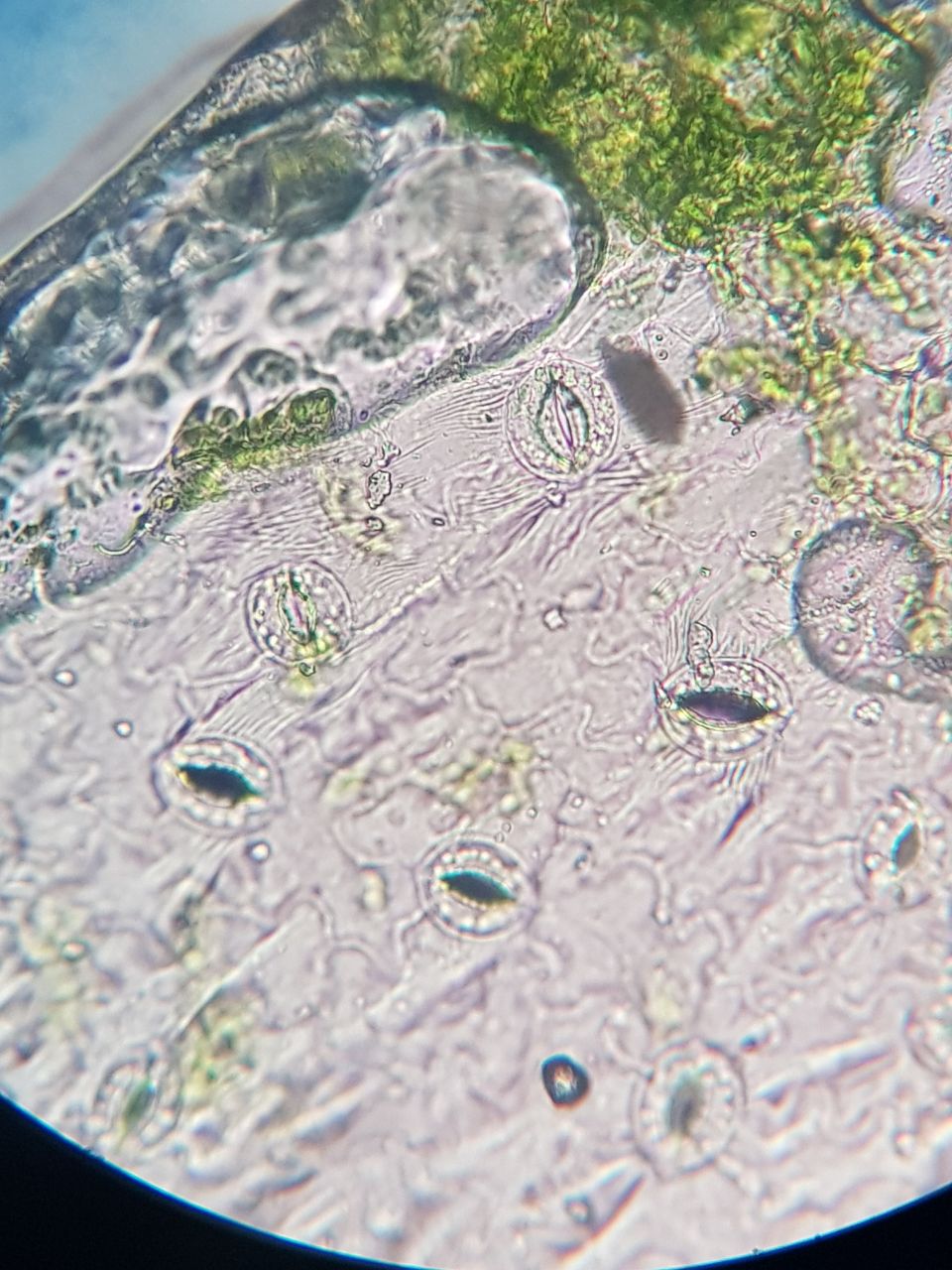
Image: Chloroplasts in a geranium leaf, light micrograph at 400x magnification. BioGenZambrano, CC BY-SA 4.0, via Wikimedia Commons.
Comments