
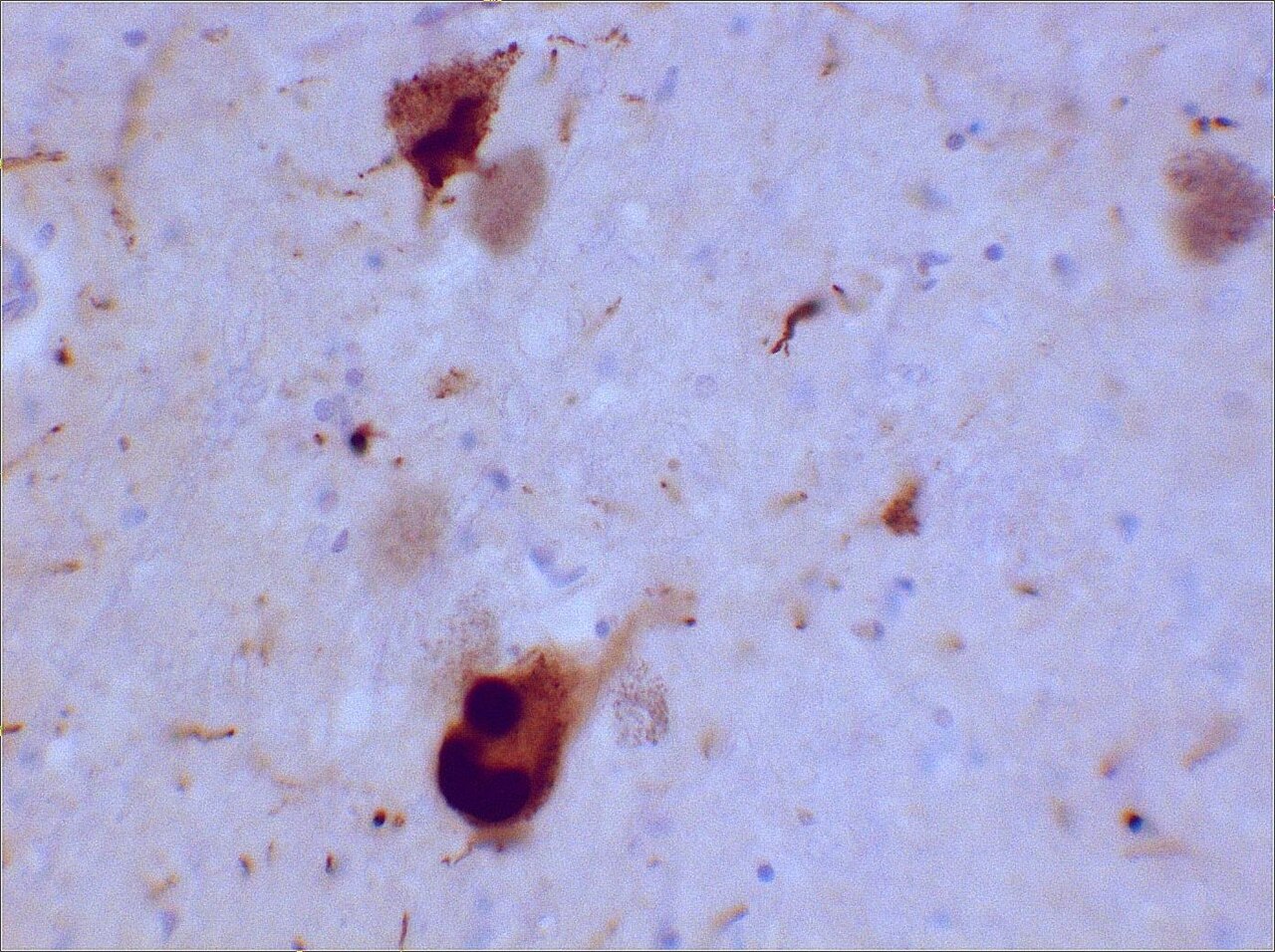

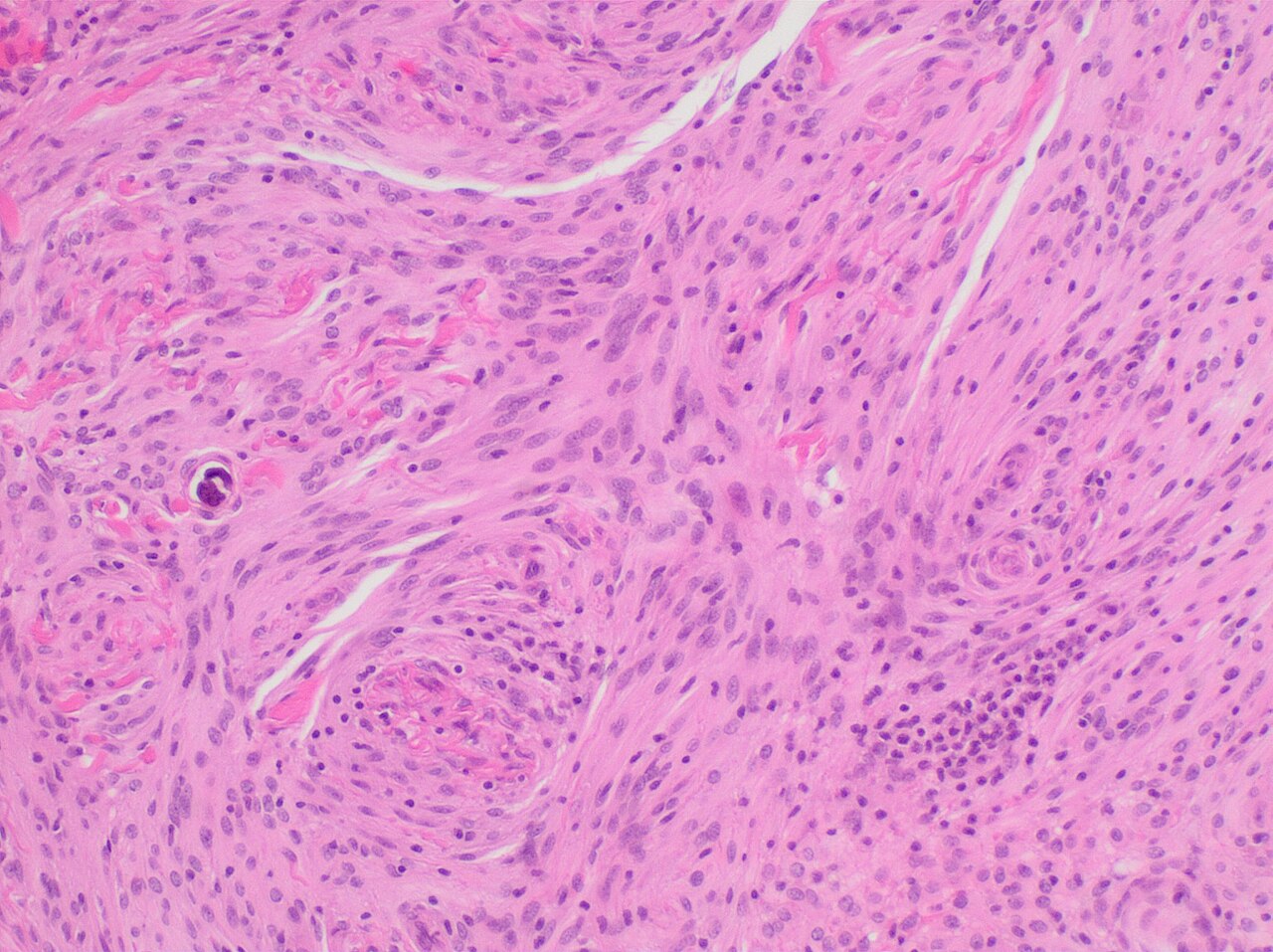
Meningioma is the most common primary brain tumour in adults, and most cases behave well. A minority turn aggressive, and predicting which has been a persistent clinical problem, made harder by the fact that no recurring genetic mutation marks out the dangerous ones.
What does distinguish them is DNA methylation, the chemical tags cells attach to DNA to control which genes are read. Methylation profiling has become a standard way to sort brain tumours into groups that behave differently, and it works well enough to be used in practice. A team in Tübingen, with collaborators in Copenhagen, set out to ask whether those patterns are causing anything or merely labelling it.
Why it matters: A classifier tells you which box a tumour goes in. It does not tell you what to do about it. As Merk and colleagues put it in Nature Communications, it remains unclear to what extent distinct DNA methylation patterns are functionally relevant for the aggressive clinical behaviour of meningiomas.
A gradient, not two boxes
Profiling a large cross-sectional cohort plus a longitudinal one, they found a hypermethylation signature that tracks outcome and splits tumours into two clusters. Those clusters mostly agreed with existing grading, which is reassuring but not new.
The more useful finding is that the split is an approximation. Underneath it lies a continuous methylation gradient tied to a continuous and nonlinear risk gradient, and models using the continuous version predicted outcome better than either the WHO grade or the molecular group did.
That matters most exactly where the clinical need is. Grade 2 tumours are the awkward middle, some behaving mildly and some not, and the signature successfully separated them into different outcome groups. It did not manage the same for two other intermediate categories, which the authors attribute to small numbers in those subgroups and say larger multicentre cohorts are needed to resolve.
Present at the start, or acquired along the way
The longitudinal samples let them ask whether the features of aggressive disease appear during progression or are there from the first operation. The answer differs by feature type.
Chromosomal copy number changes were plastic, accumulating and shifting as tumours progressed. Methylation was not. Malignant tumours were already separated from benign ones and from normal meninges by their methylation pattern together with a set of co-occurring chromosomal changes. The reading the authors offer is that this combination provides the background on which a high-grade tumour can develop, with copy number changes then selected during progression.
What the methylation is doing
Among 744 genes hypermethylated in the higher-risk cluster, two categories stood out: protocadherins, mostly from gene clusters on chromosome 5, and various transcription factors.
These behaved in opposite directions, which is worth pausing on. Methylation is usually described as switching genes off, and for the protocadherins it did. For several transcription factors, hypermethylation went with higher expression instead, matching earlier reports of certain developmental genes being both hypermethylated and upregulated in aggressive meningioma. The tag does not have one fixed meaning.
The protocadherin arm is where they pushed to mechanism. Protocadherins are cell surface adhesion proteins, and one of their jobs is holding β-catenin in place. β-catenin is a growth signal that only acts once it reaches the nucleus. In meningioma cells, protocadherins from one cluster influenced where β-catenin sat, and in patient tumours strong nuclear β-catenin staining went with worse outcomes.
That produces a chain with each link supported: methylation silences protocadherins, silenced protocadherins let β-catenin reach the nucleus, nuclear β-catenin marks bad outcomes. It is the first version of this story where the middle step is more than an inference.
What the study can't say yet
The chain is assembled from different kinds of evidence rather than tested end to end. The methylation-to-outcome link comes from patient cohorts, the protocadherin-to-β-catenin link from cells, and the β-catenin-to-outcome link from staining. Nobody has restored protocadherin expression in a tumour and shown that progression slows. The authors note that further work is needed to dissect the role of protocadherins, including validation in a suitable model system.
The proposed mechanism is also probably not the only one. Protocadherins bind a range of adhesion and cytoskeletal partners, and the paper raises contact inhibition as another route by which losing them could matter, without pursuing it.
On the clinical side, the signature's advantage is currently a statistical one over existing systems in this cohort. Whether it holds in independent cohorts, and whether it would change what a surgeon or oncologist actually does, is untested. And the two intermediate categories it failed to stratify are underpowered rather than shown negative, which means that gap is unresolved rather than closed.
Quick questions
What is DNA methylation? Chemical tags added to DNA that influence whether nearby genes are read. Patterns are stable enough to identify tumour types and, here, to grade risk.
Why does a gradient beat two groups? Because risk is continuous. Forcing tumours into two bins discards information, particularly for the ones in the middle where a prediction is most needed.
What's the one-line takeaway? A methylation signature grades meningioma risk on a continuous scale better than existing systems, and part of what it measures is the silencing of protocadherins, which normally keep a growth signal out of the nucleus.
Merk et al. "DNA methylation profiling identifies long-range epigenetic silencing of clustered protocadherins as a key determinant of meningioma progression." Nature Communications, 2026;17(1). doi.org/10.1038/s41467-026-77170-3
PubMed PMID: 42668313.
Image: Histopathology of meningioma, Mikael Häggström, CC0, via Wikimedia Commons.
Comments