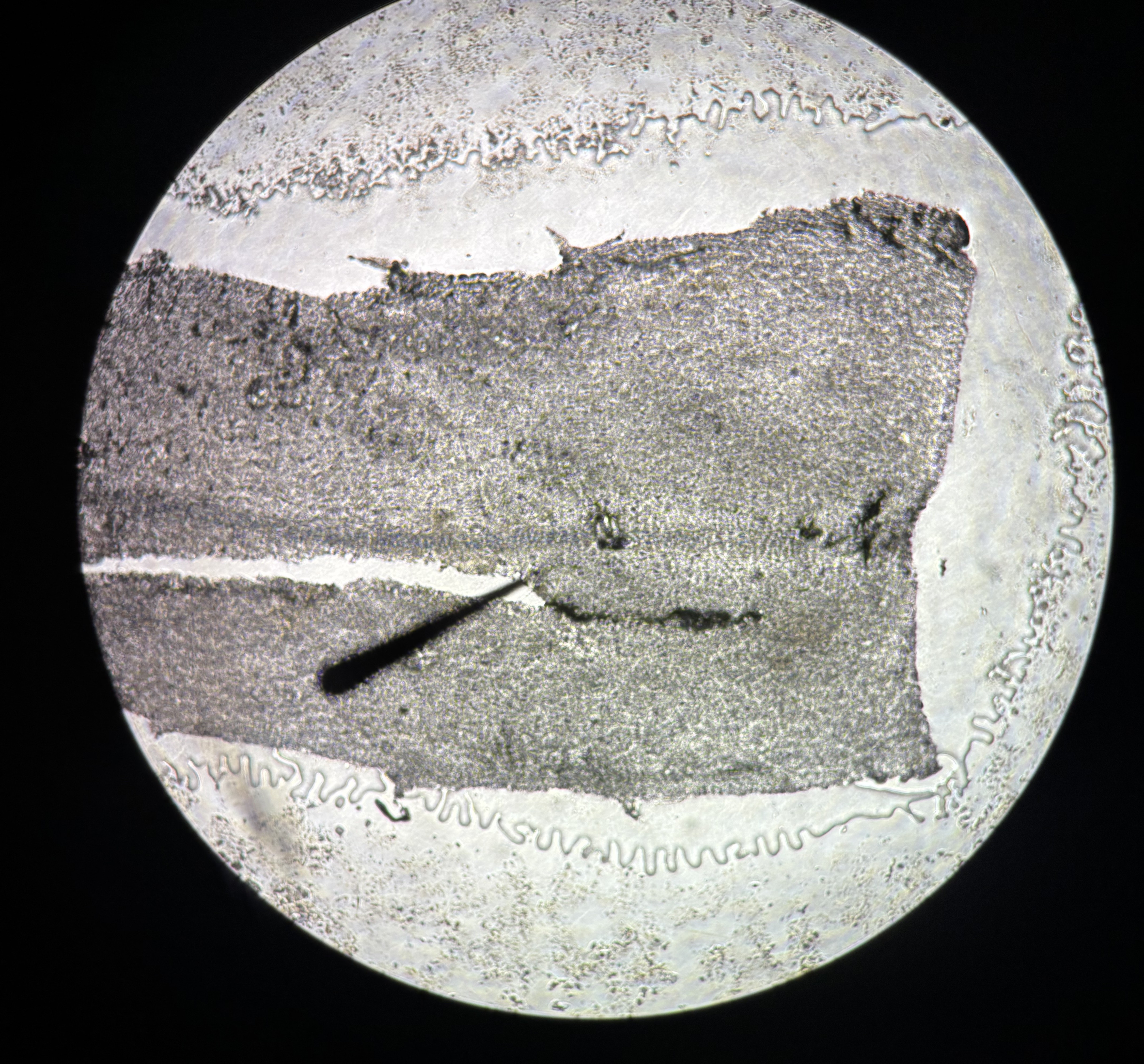
On the underside of almost every leaf sit thousands of microscopic mouths. Each one is a stoma, a pore flanked by two curved cells that swell and shrink to open and close it. When the pores gape, the leaf breathes in carbon dioxide for photosynthesis and loses water to the air. When they clamp shut, the plant conserves water but starves its own sugar factory. The plant is constantly negotiating this trade, and for decades one part of the negotiation stayed hidden.
The two cells that guard each pore respond to light on their own. But older experiments hinted that they also take orders from the green tissue deep inside the leaf, the mesophyll, where most photosynthesis actually happens. Something seemed to travel from that inner tissue to the surface and nudge the pores wider. Nobody could name the substance. A team led by researchers at Penn State University and the Hebrew University of Jerusalem now says they have caught it, and it turns out to be something familiar: sugar.
Reading the fluid between the cells
The trick was to sample the right place. Leaves have a hidden compartment called the apoplast, the watery space outside the cells and between their walls. If the mesophyll is shouting instructions to the guard cells, the message has to pass through this space. So the team drew out apoplastic fluid from Arabidopsis, the lab world's favorite weed, and from broad bean, and tested whether it could change how stomata behaved.
It could. Fluid collected from leaves lit with red light made stomata open wider than they otherwise would. Red light drives photosynthesis, so this was a clue that whatever the fluid carried was a product of the leaf's own sugar-making. The researchers then ran a broad chemical survey of that fluid and cataloged 448 different compounds floating in it. Two things stood out because their levels climbed under red light: sugars, and a small organic acid called maleic acid. When the team added those back to leaves, stomata opened more. The concentrations that worked matched the concentrations the plant actually produces.
How the sugar throws the switch
Finding a correlation is one thing. The study went further and traced the machinery. A guard cell opens by pumping ions across its membrane, pulling in water and swelling like a filling balloon. A proton pump in the membrane, an enzyme called an H-ATPase, sets that process in motion, and it has to be switched on by a chemical tag called a phosphate group.
Using antibody staining, the researchers saw that sucrose, common table sugar, increased the phosphorylation of that pump. In plain terms, sugar flipped the pump into its active state. They also went down to the level of single cells with a technique called patch clamp, which measures the tiny electrical currents crossing a membrane. There, sucrose blocked a slow current of negative ions leaving the cell. Losing those ions is part of how a guard cell deflates and shuts the pore. By blocking that leak while boosting the intake pump, sugar pushes the balance toward staying open. The guard cell hoards its solutes, holds its water, and keeps the pore ajar.
The logic fits the plant's situation. When the mesophyll is busy photosynthesizing, it is producing sugar and demanding a steady supply of carbon dioxide. A sugar signal that keeps the pores open is a way for the factory floor to tell the front door to stay unlocked while business is good.
What the study can't say yet
This is careful lab work, and it comes with the limits of lab work. The experiments lean on Arabidopsis and broad bean, two plants chosen for convenience, not on the wheat or rice that feed people. Whether the same sugar signal operates the same way in crops, and under the messy conditions of a real field, is an open question. The measurements were also made under controlled red light. Sunlight is a mixture, and a plant in a field is juggling heat, drought, wind, and shifting clouds all at once. Maleic acid showed up as a second active ingredient, and its role is less worked out than sugar's. The study identifies the messengers and part of the mechanism, but it does not close the book on how the whole conversation is wired.
Still, it answers a question that had lingered for a long time. Plant physiologists had proposed a mesophyll-to-guard-cell signal since at least the last century without a chemical name to attach to it. Naming it matters beyond satisfying curiosity. Stomata sit at the exact point where a plant trades water for carbon, which makes them a lever for two problems that will only get harder: growing food with less water, and understanding how vegetation handles a warming, drying climate. If sugar is one of the hands on that lever, researchers now know where to reach.
Zait et al. "Apoplastic metabolomics reveals sugars as mesophyll messengers regulating guard cell ion transport under red light." Nature Plants, 2025. doi.org/10.1038/s41477-025-02078-7
PubMed PMID: 40855242.
Photograph: JHern OW, CC0, via Wikimedia Commons.
Comments