
Plants cannot run from an infection or call for help. What they have instead is a set of internal alarm chemicals, tiny peptides the plant makes and releases when its tissue is damaged or attacked. A peptide drifts to a neighboring cell, docks onto a receptor sitting in the cell membrane, and the receptor flips a switch that ramps up defense. The problem for scientists has always been figuring out which peptide talks to which receptor. Soybean alone carries hundreds of candidate peptides and hundreds of candidate receptors, and most of those conversations have never been traced.
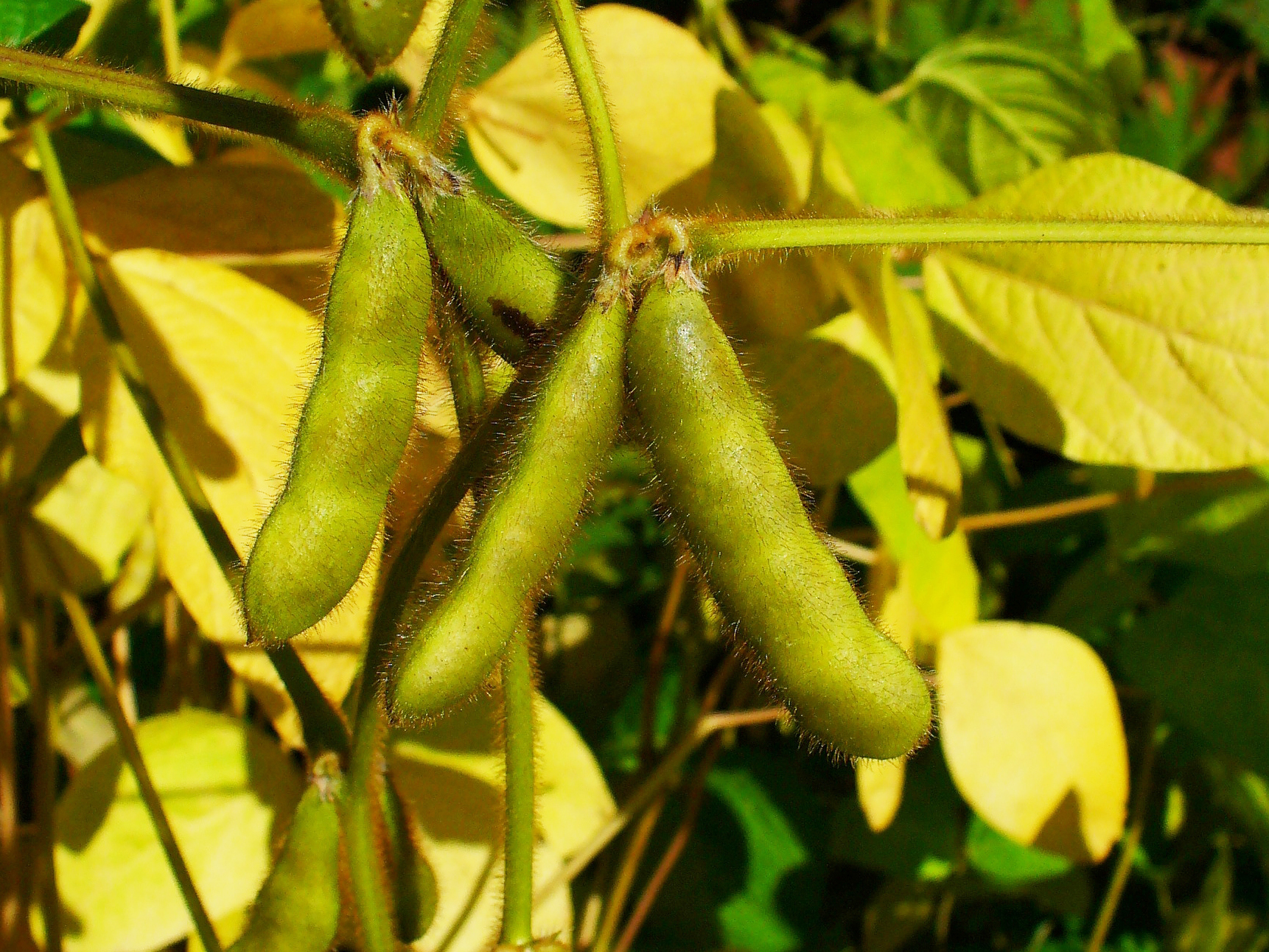
A team led by Liping Yu and colleagues at the Chinese Academy of Sciences decided to stop guessing and start pairing at scale. Working in soybean, one of the planet's most valuable protein crops, they built a pipeline to test peptides against receptors in bulk. The payoff was a clean match: a peptide and a receptor that, when brought together, put the whole plant on a war footing and shut down infection by a broad spread of pathogens.
Pairing peptides with their receptors, at scale
The core idea sounds simple and is anything but. The researchers took a large collection of soybean signaling peptides and a large collection of the plant's membrane receptors, then ran a comprehensive matching effort to see which pairs actually bind and fire. Out of that work came 63 confirmed peptide-receptor pairs, a map of internal signaling that did not exist before.
One pair stood out. Two closely related peptides, named GmPEP914 and GmPEP890, set off a strong immune response when applied to soybean tissue. The team traced them to their docking partners, a set of receptors they call GmP98R1 and GmP98R2. Using lab binding assays alongside AI-based structural modeling, they showed the peptides latch onto these receptors with nanomolar affinity, which is a tight, specific grip rather than a loose or accidental one. Most of that grip came down to the very last chemical residue at the tail end of each peptide, the part the receptor reads like a signature.
What the switch actually does
When GmPEP914 binds its receptor, the plant does not fight one specific invader. It raises a general defense that suppressed a broad spectrum of pathogen infections in the team's tests. That breadth matters. A lot of crop protection, whether bred-in resistance genes or sprayed chemicals, targets a narrow enemy, and the enemy tends to evolve around it. A signal that turns up the plant's own baseline immunity is harder for any single pathogen to sidestep.
The researchers also found that this peptide-receptor module is not a soybean quirk. The same GmPEP914 to GmP98R pairing shows up conserved across Fabales and Cucurbitales, two large plant groups that include beans, peas, cucumbers, melons, and squash. When a signaling system survives across that much evolutionary distance, it usually means the plant cannot afford to lose it. That conservation also hints the same lever might be reachable in other crops, not just soybean.
What the study can't say yet
This is lab and molecular work, not a field trial. The immune responses were measured in controlled infection tests, and the paper does not claim a yield gain on a working farm across a full growing season. Turning up a plant's defenses is rarely free either. Immune activation often carries a growth cost, energy the plant spends on guarding instead of filling pods, and the study does not settle how a constantly primed plant would trade off against grain output. Whether these peptides could be sprayed on a crop, or whether the trait would need to be bred or engineered in, is also an open practical question. And a signal conserved across many species could interact with the surrounding microbes and beneficial partners in ways a petri dish will not reveal.
Even with those caveats, the reason this lands is the method as much as the molecule. Instead of chasing one peptide at a time, the group showed you can match plant signals to their receivers wholesale and pull out a useful one. That approach could be pointed at drought signaling, nutrient sensing, or immunity in other crops. The immediate prize is a defined handshake that switches on soybean's own immunity against many pathogens at once. The larger prize may be a faster way to find the next hundred handshakes.
Yu et al. "Large-scale pairing identifies a soybean phytocytokine-receptor module conferring disease resistance." Nature Plants, 2025. doi.org/10.1038/s41477-025-02086-7
PubMed PMID: 40830272.
Photograph: H. Zell, CC BY-SA 3.0, via Wikimedia Commons.
Comments