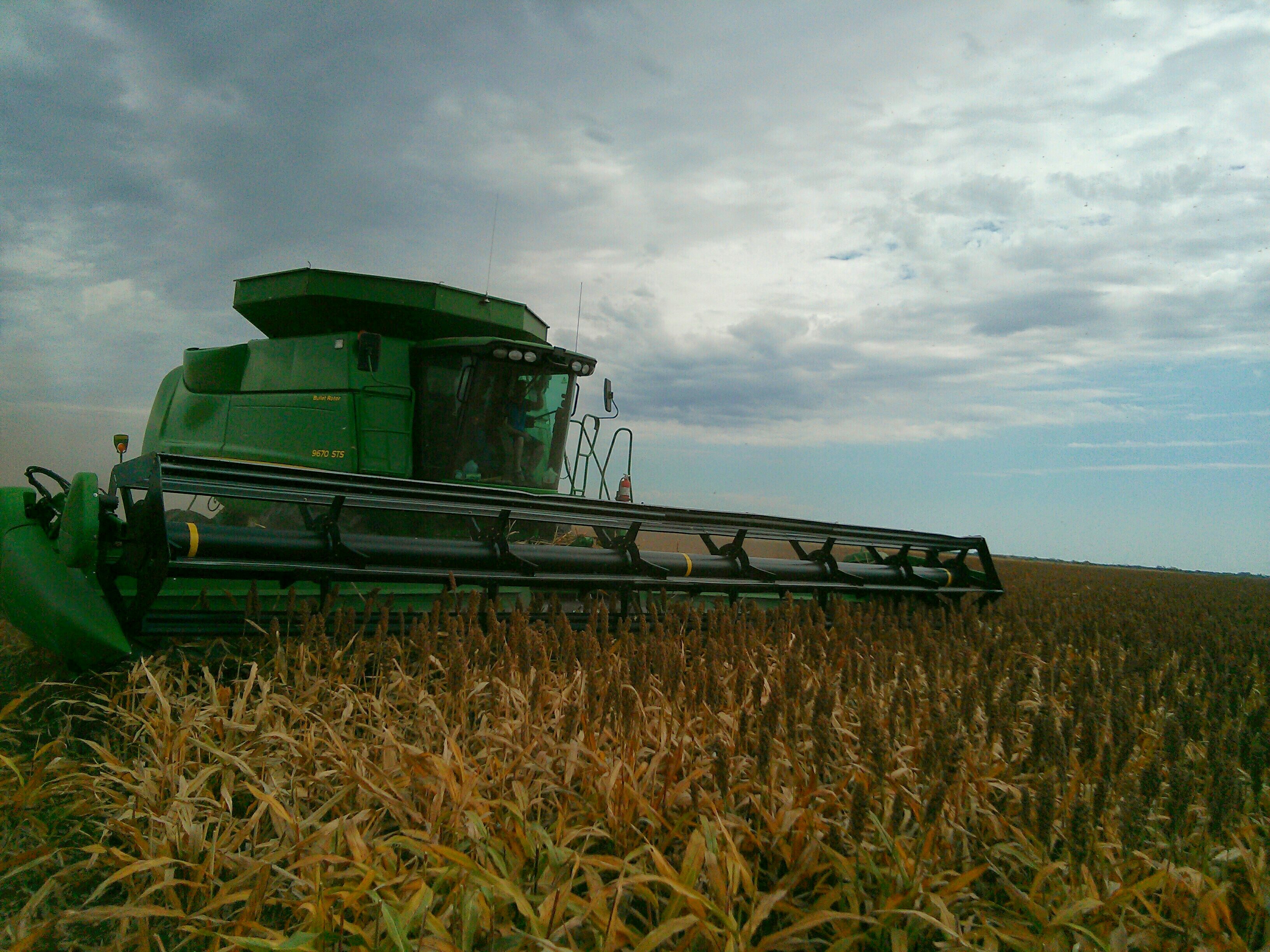
Walk through a smallholder farm in Mali or northern India and you will not find the uniform, engineered fields that the green revolution produced for wheat, rice and maize. You will find sorghum. It is grown by farmers who save their own seed, plant local varieties suited to their soil, and harvest a grain that tolerates heat and drought better than almost any other cereal. That patchwork of local cultivars is exactly what makes sorghum hard to study with a single reference genome. A new paper in Nature argues the answer is to stop relying on one genome and build many.
Geoffrey Morris and a large international team assembled a pangenome for sorghum: not a single reference sequence but 33 of them, stitched together to capture the DNA that varies from one lineage to the next. They paired that with a diversity panel spanning 1,984 cultivars and landraces. The point was to see the parts of the genome that a single reference hides, especially the large structural rearrangements where whole chunks of DNA are inserted, deleted or shuffled.
Why one genome was never enough
A conventional reference genome is a fine map of one plant. The trouble is that when you compare thousands of other plants against it, anything that is genuinely missing or rearranged in the reference becomes invisible. For a crop as diverse as sorghum, that blind spot is large. The pangenome approach lets researchers see variation that is present in some lineages and absent in others, which is often where interesting traits live.
The team put this to work on SHATTERING1, a gene tied to domestication. Wild grasses shatter, meaning they drop their seeds to disperse them, which is useful for the plant and ruinous for a farmer trying to harvest grain. The researchers found multiple nested and deeply diverged structural variants at this gene. Those variants line up with the idea that sorghum was not domesticated once in a single place but at several centers, and the genetic record of that multicentric origin is written into the structure of the DNA itself.
Tracing gene flow and a poison in the leaves
Domestication was not the end of the story. Using landscape genomics, the team reconstructed how gene flow and secondary contact between populations produced the tangled genetic mosaic seen in today's breeding networks. Modern sorghum carries the fingerprints of populations meeting, mixing and separating again.
Then came a proof of concept. The researchers connected structural variation in a biosynthetic gene cluster to how much dhurrin a plant's leaves contain. Dhurrin is a cyanogenic glucoside, a compound that can release cyanide. It matters because sorghum leaves can be toxic to grazing animals under the wrong conditions, and the concentration varies between varieties. Being able to trace that trait back to a specific structural difference in the genome is the kind of link breeders need if they want to select for it deliberately rather than by trial and error.
What the map does not settle
A reference is a starting point, not a finished product. Thirty-three genomes capture far more variation than one, but they still sample only a slice of sorghum's global diversity, and rare variants in underrepresented landraces can slip through. Linking a structural variant to a trait like dhurrin content is a strong lead, yet showing correlation in a diversity panel is not the same as proving the variant causes the effect in the field, where soil, weather and management all intrude. The authors frame the resource as a framework meant to accelerate discovery, and much of the payoff depends on breeders and geneticists building on it. Still, for a crop that feeds hundreds of millions of people and rarely gets this kind of genomic attention, having a map that finally shows the structural terrain is a meaningful shift.
Morris, G. P. et al. "A sorghum pangenome reference improves global crop trait discovery." Nature, 2026. doi.org/10.1038/s41586-026-10229-9
PubMed PMID: 41813899.
Photograph: Thesagemarmot, CC BY-SA 3.0, via Wikimedia Commons.
Comments