

CRISPR made it easy to change a letter of DNA. Changing a whole paragraph has stayed hard. If you want to flip a stretch of chromosome end over end, or delete a block a million bases wide, or stitch two chromosome arms together, the standard tools get clumsy fast. They work inefficiently, they cap out at a certain size, and they tend to leave behind small chunks of foreign sequence at the seams. Molecular biologists call those leftovers scars, and they are more than cosmetic. A scar can sit in the wrong place, get read by the cell, and quietly change how a gene behaves.
A team led by Chao Sun and Caixia Gao at the Institute of Genetics and Developmental Biology in Beijing has now built a set of tools that tackles the whole problem at once. Writing in Cell, they describe two systems, called PCE and RePCE, that can rearrange DNA from the kilobase scale up to the megabase scale, in both plants and human cells, and finish the job without leaving a scar.
Rebuilding an old workhorse
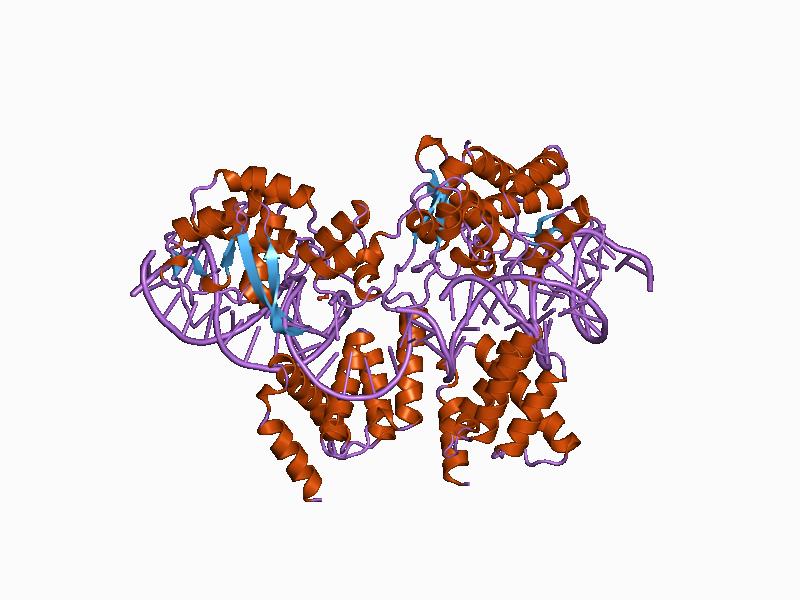
The core of the approach is an enzyme that has been in the lab toolbox for decades. Recombinases like Cre recognize short landing-pad sequences in DNA, called Lox sites, and swap the DNA between two of them. Cut, shuffle, rejoin. The trouble is that this reaction runs in both directions. As soon as Cre puts a piece of DNA in, it can pull it back out, so the edit you want keeps undoing itself. And every reaction leaves one of those landing pads sitting in the genome afterward.
The team went after both weaknesses by re-engineering the parts. Through high-throughput screening they found Lox landing pads that are roughly ten times less likely to run backward, which locks in the change. Then they turned to the enzyme itself. Using a machine-learning method they call AiCE, they redesigned Cre and produced variants that recombine DNA about 3.5 times more efficiently than the natural version. To deal with the leftover landing pad, they added a separate step borrowed from prime editing, using a guide molecule they call a Re-pegRNA to trim the seam clean. The result is an edit with no trace of the machinery that made it.
Flips in rice, flips in human cells
The demonstrations are the part that lands. In rice, the group engineered a 315,000-base inversion, turning a large block of chromosome around, and the plants came out resistant to a herbicide. They fused chromosomes together with no scar at the junction. In human cells, they pulled off a 12-million-base inversion at a site tied to disease, roughly the length of a small chromosome arm being flipped in place.
Those numbers matter because the field has mostly been stuck at the small end. Prime editing and base editing are precise but work best on short edits. Larger structural changes, the kind that underlie many inherited disorders and a lot of crop traits, have been much harder to make on purpose. Being able to insert, delete, replace, invert, or translocate long stretches, and to do it cleanly, opens doors in both plant breeding and the study of human structural variants.
What the study can't say yet
A clean edit in a dish is not the same as a safe edit in a body. The human work here was done in cultured cells, not in a patient, and the leap from one to the other is exactly where many editing technologies stall. Delivering these tools into the right tissue, in enough cells, without triggering the immune system, is a separate and unsolved problem the paper does not claim to solve.
There is also the question of what happens elsewhere in the genome. A recombinase that flips millions of bases is powerful, and power cuts both ways. The authors report improved precision, but any tool that makes large rearrangements needs careful accounting of off-target activity before it goes near the clinic, and the full picture of unintended edits takes time and independent replication to establish. Whether the herbicide-resistant rice performs in a real field, rather than a growth chamber, is its own multi-year question.
Still, the direction is clear. For years the ambition in genome engineering has been to move from editing single letters toward editing at the scale of whole chromosome regions, deliberately and without debris. This work is a concrete step in that direction, and it does it in two very different kinds of cells. The scars, at least, are gone.
Sun C, Li H, Liu Y, et al. "Iterative recombinase technologies for efficient and precise genome engineering across kilobase to megabase scales." Cell, 2025. doi.org/10.1016/j.cell.2025.07.011
PubMed PMID: 40763736.
Photograph: Jawahar Swaminathan and MSD staff at the European Bioinformatics Institute, Public domain, via Wikimedia Commons.
Comments