
Rice feeds more than half the planet, and a long list of fungi are lined up to take a share. Blast fungus scorches leaves. Sheath blight rots the stem base. False smut, brown spot, bakanae, head blight. Breeders usually fight these one at a time, stacking resistance genes against one pathogen and watching another walk in. A study in Nature takes a different route. It found a single rice gene that many of these fungi rely on, and showed that turning it off shuts several diseases out at once.
The gene encodes a protein called SnRK1beta1A. It is one subunit of SnRK1, an energy-sensing enzyme complex that plants use to manage stress and metabolism. On its own the name means little. What matters is what happens during infection. When a fungus attacks, rice ramps up production of SnRK1beta1A. That extra protein does not help the plant defend itself. It does the opposite.
A door six fungi learned to open
The researchers, led by a team at China Agricultural University with collaborators at the Yazhouwan National Laboratory, traced how the fungi exploit this. They identified an effector-like protein they named Gas2, and found versions of it across the different pathogens. These are not closely related fungi following one shared ancestor's trick. They arrived at Gas2 separately, through convergent evolution, because it works.
Gas2 grabs onto SnRK1beta1A and protects it. Normally the plant would tag surplus SnRK1beta1A with ubiquitin and send it for destruction. Gas2 blocks that, so the protein sticks around, and it also helps push SnRK1beta1A into the cell nucleus. There, the accumulated subunit suppresses SnRK1alpha1, a different subunit already known to switch on broad defense in rice. So the fungi do not need to smash the plant's immune system. They just jam one dial that keeps it turned down.
That framing is the interesting part. SnRK1beta1A behaves as what plant pathologists call a susceptibility gene: a host component that pathogens depend on rather than fight. Its usefulness to the fungus is exactly what makes it a target for breeders.
Knock it out, keep the yield
The obvious worry with disabling a plant's own gene is collateral damage. Energy-sensing machinery sounds like the kind of thing a plant would rather keep. Susceptibility genes often carry a cost, trading disease resistance for weaker growth or lower yield, which makes them hard to use in real farming.
Here the team reports that rice lines with SnRK1beta1A disrupted resisted several of the fungal diseases and still grew and yielded normally in the field under ordinary farming conditions. That combination, broad resistance without an obvious penalty, is what separates a lab curiosity from something a breeding program can actually use.
The wider appeal is the strategy, not just the one gene. Most engineered resistance leans on the plant recognizing a specific pathogen, which pathogens evolve around. Removing a shared dependency flips the pressure. A fungus cannot easily abandon a host protein it has come to rely on, and because several unrelated fungi converged on the same target, one edit reaches all of them.
What still needs testing
Field results in one setting are a start, not a guarantee. Yield held up under normal conditions, but rice grows across a wide span of climates, soils and stresses, and a gene knockout that looks free in one trial can show its bill under drought, heat or nutrient limitation. It also remains to be seen how durable this resistance is over many seasons, since pathogens are persistent and sometimes find a second route.
There is also the reach of the finding. The work centers on rice and a specific set of fungi. Whether the same susceptibility logic transfers to wheat, maize or other staples, and whether their pathogens lean on comparable host proteins, is an open question the paper points toward rather than answers. Still, the core idea travels well. Instead of arming a crop against each enemy in turn, find the thing they all need and take it away.
Yuan, G. et al. "Inactivating SnRK1beta1A promotes broad-spectrum disease resistance in rice." Nature, 2026. doi.org/10.1038/s41586-026-10273-5
PubMed PMID: 41882350.
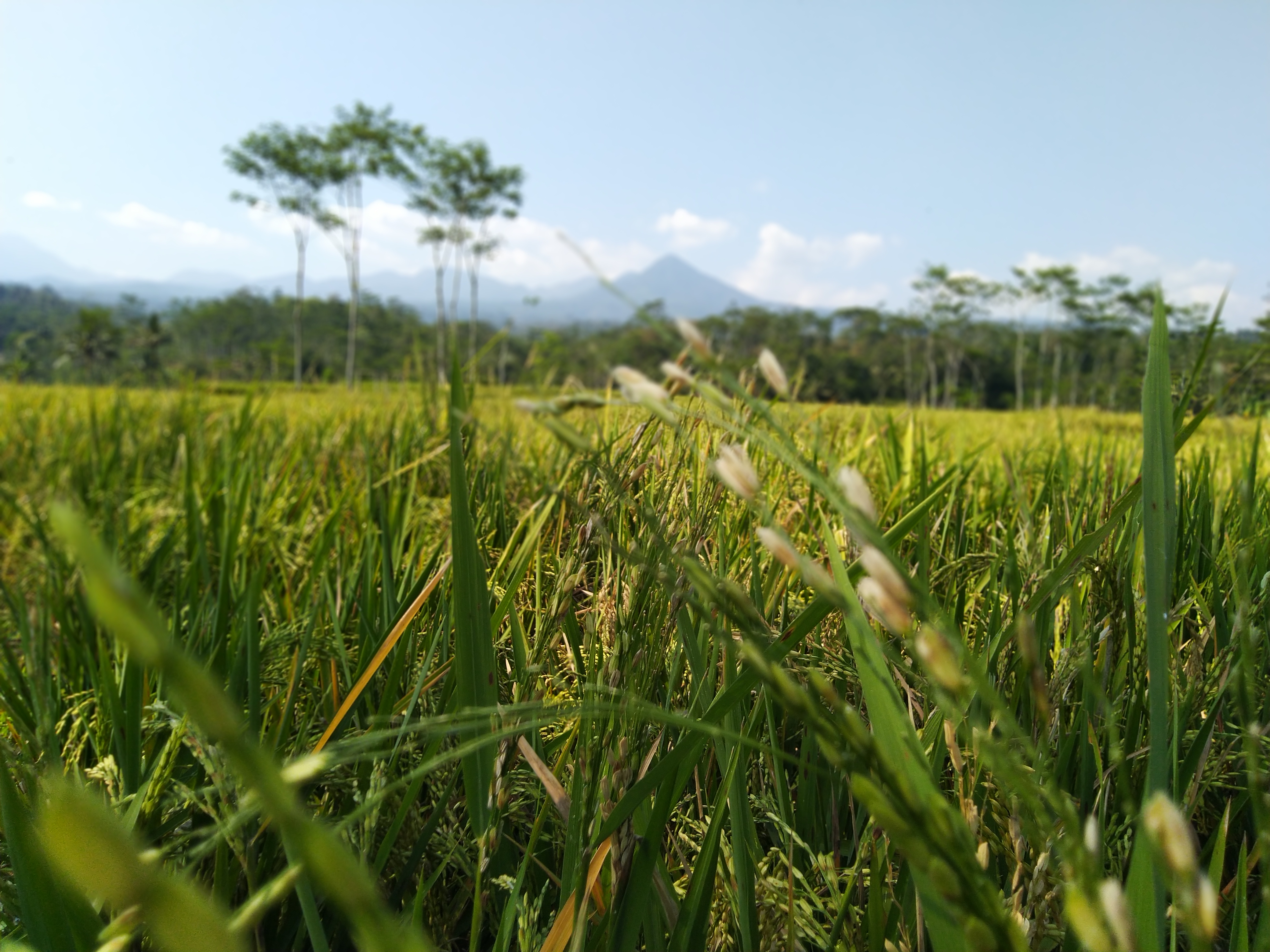
Photograph: Syariful Msth, CC BY-SA 4.0, via Wikimedia Commons.
Comments