
Bacterial blight can strip a rice paddy of a third of its harvest. The pathogen behind it, Xanthomonas oryzae, has shadowed rice cultivation for as long as farmers have grown the crop, and breeders have spent decades hunting for genes that hold it off. A new study in Nature explains something odd about that hunt: one of rice's most useful resistance genes survives in one branch of the species and has vanished from another. And when the researchers tried to move it back where it was missing, the plants paid a heavy price.
The gene is called Xa48. It encodes an immune receptor of the NLR family, the kind of protein that sits inside a plant cell watching for the molecular signatures of invaders. Hui Lin and colleagues showed that XA48 detects a bacterial protein named XopG, an ancient effector the pathogen injects into rice cells. Once XA48 spots XopG, it kicks off a defense cascade by tearing down two transcription factors, OsVOZ1 and OsVOZ2, that otherwise dampen the immune response.
A gene kept in one lineage, lost in another
Here is where the story turns. Cultivated rice splits into two big subspecies, indica and japonica. The team found that Xa48 is retained in indica but was lost in japonica during domestication. The downstream partner gene tells a parallel story. Indica plants carry two versions of OsVOZ1 that work with XA48, while japonica holds only one. So the whole immune module was selected in an asymmetric way, kept intact on one side of the family tree and dismantled on the other.
Why would a plant throw away a working defense? The researchers found the answer when they tried to reverse the loss. Reintroducing Xa48 into japonica rice badly reduced yield. The XA48 receptor and the resident japonica version of OsVOZ1 turned out to be incompatible, and that clash spilled over into the plant's reproductive development. In other words, the resistance gene was not free. It carried a cost that only showed up in the wrong genetic background, which offers a plausible reason domestication quietly edited it out.
Stacking two kinds of immunity
That tension between protection and productivity is the central problem in breeding for disease resistance. A gene that guards the crop but shrinks the harvest is a hard sell. The team's way around it was to combine defenses rather than rely on one. Plants have two broad immune tiers: pattern-triggered immunity, which reacts to general microbial features, and effector-triggered immunity, the sharper response that XA48 represents. By stacking XA48-based effector-triggered immunity together with resistance driven by a second receptor, XA21, the researchers rebuilt the kind of broad-spectrum protection seen in wild rice.
Wild rice matters here because it never went through the yield-focused bottleneck of domestication. It kept immune combinations that cultivated varieties shed. The study frames this as a route for breeders: instead of dropping a single powerful gene into a crop and hoping it behaves, assemble matched sets of immune components, borrowing the pairings that wild relatives never lost.
What the work does and doesn't settle
The findings come from controlled experiments on defined rice lines, so a few things are worth keeping in view. The yield penalty was measured in the specific case of moving Xa48 into japonica; how the stacked XA48-plus-XA21 approach performs across many field environments, soil types, and pathogen strains is a separate question that this paper does not fully answer. Bacterial populations also evolve, and effectors like XopG can change, so any resistance built on recognizing them needs monitoring over time. The mechanism linking the XA48-OsVOZ1 incompatibility to reproductive defects is described but leaves room for more detail.
Still, the core insight is clean. A crop's immune system is not a pile of independent switches you can flip on at will. The genes come in modules that were shaped, kept, or discarded together, and the history of that selection constrains what breeders can safely do now. Reading that history, rather than fighting it, may be the more reliable path to rice that resists blight without giving up grain.
Lin, H. et al. "Asymmetric selection of a rice immune module and rebuild of disease resistance." Nature, 2026. doi.org/10.1038/s41586-026-10361-6
PubMed PMID: 41951741.
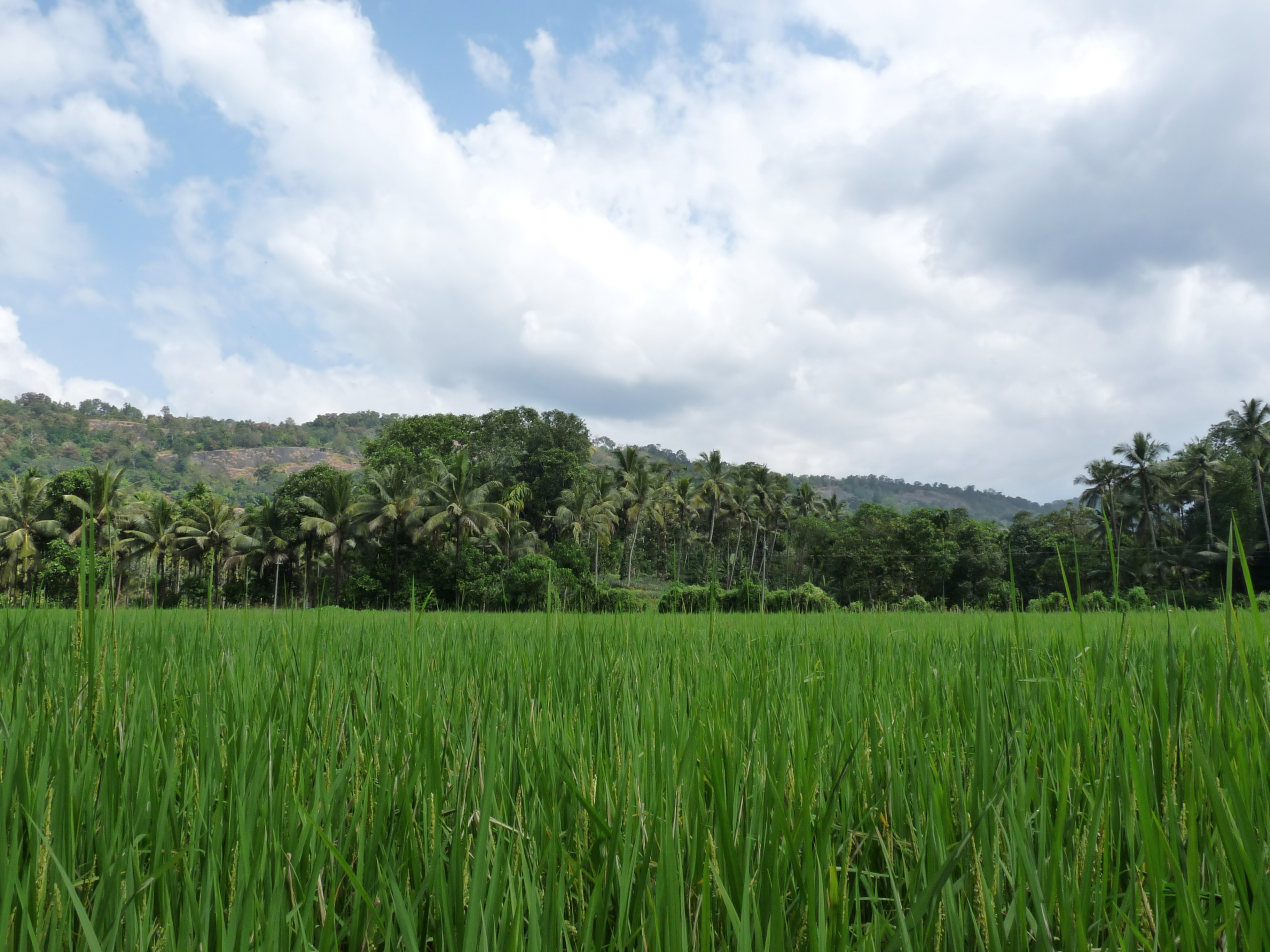
Photograph: Jeevan Jose, Kerala, India, CC BY-SA 4.0, via Wikimedia Commons.
Comments