

Every plant carries a set of molecular tripwires on the outer surface of its cells. One of the best studied is a receptor called FLS2, which grabs onto a short stretch of flagellin, the protein that builds a bacterium's whip-like tail. When FLS2 catches that fragment, it sets off an alarm and the plant mounts a defense. It is an elegant system, and bacteria have spent a long time learning to beat it. Many of the worst plant pathogens carry flagellin with a few amino acids swapped out, just enough that FLS2 no longer notices them. The tripwire is still there. The intruder has simply changed shape so it never touches the wire.
A group led by Cyril Zipfel at the University of Zurich decided to figure out why some versions of FLS2 can still spot these altered fragments when the standard version cannot. Their paper, published in Nature Plants in late July, reads less like a discovery story and more like an engineering teardown. They took receptors apart, tested the pieces, and wrote down the rules for how recognition works.
Two receptors that see what others miss
The researchers started with two natural FLS2 variants that already had a wider range than the reference receptor from the lab plant Arabidopsis. One came from a wild legume, the other from soybean. Both could detect flagellin fragments that the standard FLS2 lets through. The question was what, exactly, gave them that extra reach.
By swapping small sections between the broad receptors and the blind one, the team narrowed the difference down to a handful of amino acid positions. Change those few spots in an otherwise unresponsive FLS2 and it gained the ability to recognize fragments it had been missing. This is the kind of result that is easy to state and hard to earn. Receptors are large proteins, and pinning a change in behavior to specific residues means ruling out everything else.
Two ways to fix a blind receptor
What makes the work useful is that the fix was not a single trick. The team found two separate strategies, and they solve different problems.
The first works on flagellin variants that FLS2 grips too weakly. Here the answer was to tune the contact points where the receptor meets the fragment, tightening the fit around the exact spots where pathogens tend to mutate. The second strategy targets a different obstacle. Some altered fragments do not just fail to trigger the receptor; they actively block it, sitting in the binding site without setting off the alarm. To beat those, the researchers strengthened the bond between FLS2 and a partner protein called BAK1, which the receptor needs to relay its signal inward. A firmer handshake with BAK1 let the receptor push through the interference and respond anyway.
They also found changes that improved recognition through mechanisms they could not fully explain, and they folded those in too. Combining the tricks produced a receptor with a noticeably broader detection range than any of the starting versions.
Why the arms race framing matters
The reason this line of work draws attention is durability. A lot of crop disease resistance rests on single genes, and pathogens tend to break those defenses within a few growing seasons by mutating whatever the plant is watching for. If breeders could instead deploy receptors engineered to recognize the escape variants in advance, the resistance might hold up longer. The paper frames its results as design principles for exactly that: a recipe for building pattern recognition receptors that catch a wider slice of what a pathogen can throw at them, potentially through precise gene editing rather than moving whole genes between species.
What the study can't say yet
The experiments here were done in controlled systems, not in fields. Recognizing a flagellin fragment in a lab assay is a necessary step, but it is not the same as a crop resisting an actual infection under real pressure, where a pathogen has many ways to interfere and where a hair-trigger immune response can cost the plant growth and yield. The authors are studying the receptor's front end, the part that binds. Whether an engineered receptor translates that binding into effective, well-regulated defense in a living crop is a separate question the paper does not settle.
There is also the matter of the pathogen's next move. Bacteria adapt. A receptor tuned to today's escape variants invites tomorrow's, and a flagellin fragment can only be changed so much before the bacterium's tail stops working, but that ceiling has not been mapped for these engineered receptors. The value of the work is not a finished product. It is a clearer set of rules for how the binding surface does its job, which turns receptor design from trial and error into something closer to deliberate construction.
Zhang et al. "Reverse engineering of the pattern recognition receptor FLS2 reveals key design principles of broader recognition spectra against evading flg22 epitopes." Nature Plants, 2025. doi.org/10.1038/s41477-025-02050-5
PubMed PMID: 40721668.
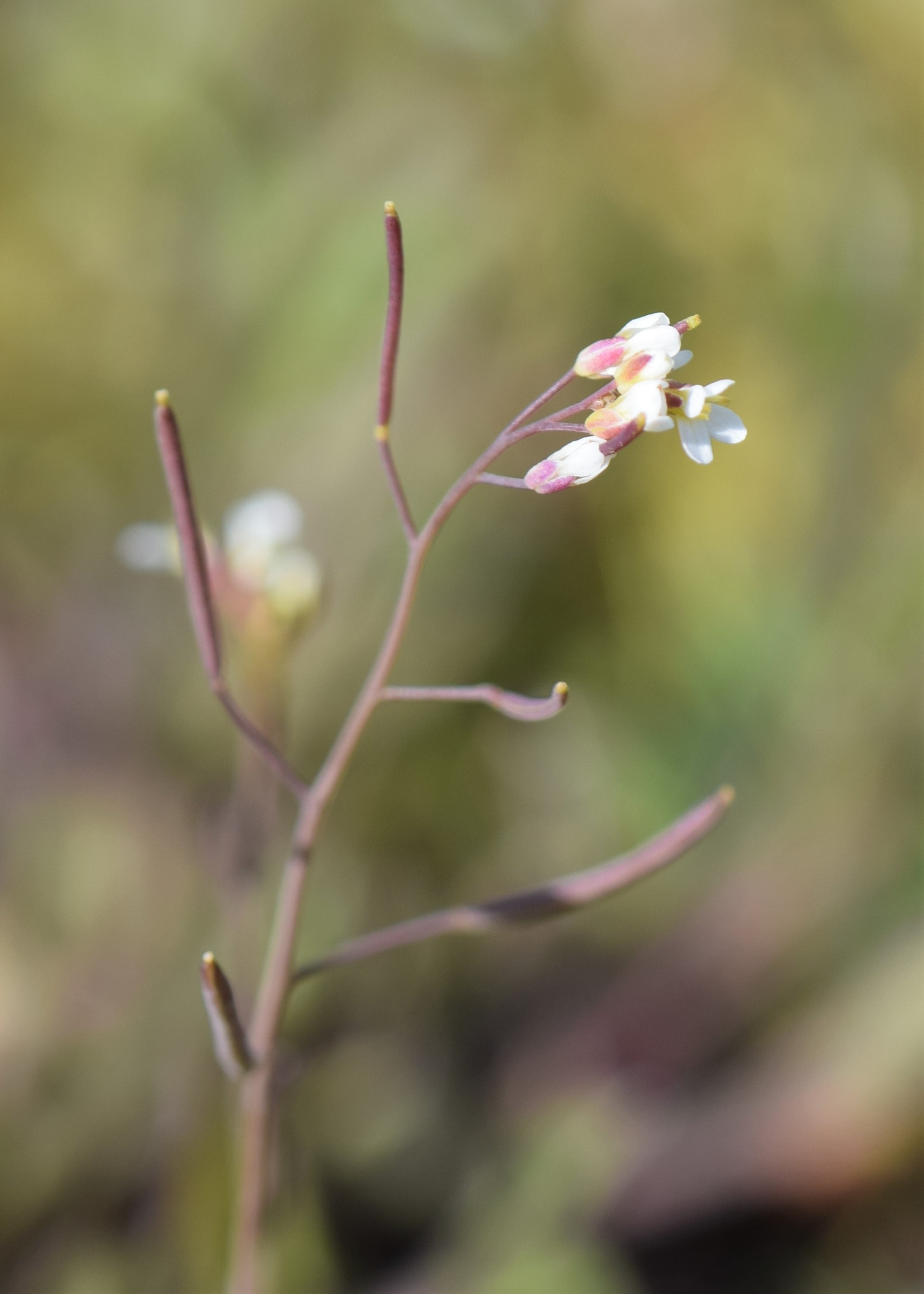
Photograph: Krzysztof Ziarnek, Kenraiz, CC BY-SA 4.0, via Wikimedia Commons.
Comments