


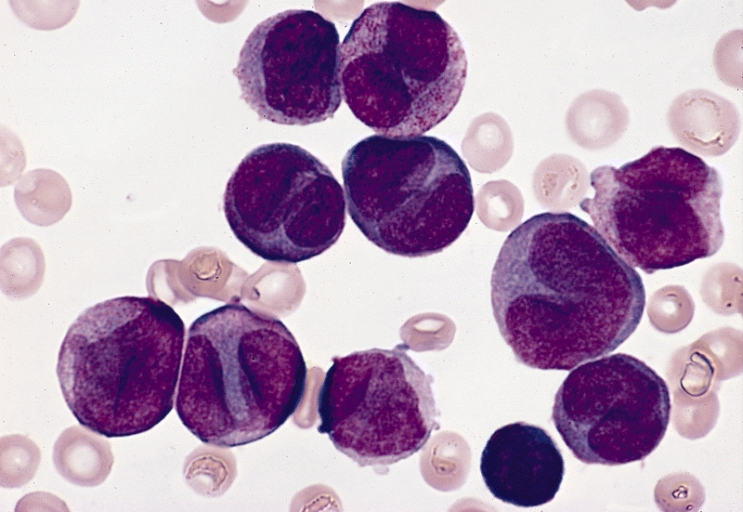
When someone arrives at a hospital with acute leukemia, the clock is already running. The disease can turn dangerous in days, and the right treatment depends on knowing exactly which kind it is. Getting that answer usually means a battery of lab tests: cell staining, flow cytometry, chromosome analysis, gene panels. Each adds days. During that wait, doctors sometimes have to start treating before they fully know what they are treating.
A team based at Dana-Farber Cancer Institute and the Broad Institute wanted to compress that timeline. Their approach reads a different kind of signal in the cancer cell: not the genes themselves, but the chemical tags sitting on top of the DNA. The result, described in Nature Genetics, is a system that can name a leukemia subtype in roughly two hours.
Reading the marks, not just the mutations
The tags in question are methyl groups, small chemical additions that cells use to switch stretches of DNA on and off. The pattern of these marks across the genome, the methylome, turns out to be a kind of fingerprint. Cells of the same lineage carry similar patterns, and cancers of the same subtype tend to cluster together.
To build a reference, the researchers assembled methylation profiles from 2,540 samples and sorted them into 38 distinct methylation classes. When they lined these classes up against the standard pathology diagnoses, the two mostly agreed. But the methylation map also pulled apart cases that looked alike under a microscope, exposing biological differences that the usual genetic categories missed.
How it did on real cases
On top of that reference they trained a neural network with a memorable name: MARLIN, short for methylation- and AI-guided rapid leukemia subtype inference. The trick is that MARLIN does not need a dense, expensive methylation readout. It works from sparse data, the kind you can generate quickly with nanopore sequencing, a portable technology that reads DNA strand by strand and streams out results as it goes.
The team ran two kinds of tests. First they looked backward, feeding MARLIN nanopore data from cases with known diagnoses. Among high-confidence predictions, the tool agreed with the conventional diagnosis in 25 of 26 cases.
Then came the harder test: real time. For patients who arrived with suspected acute leukemia, the researchers sequenced a fresh sample and let MARLIN make a call on the spot. It produced accurate predictions in all five of those cases, and it typically did so within two hours of receiving the sample. That is fast enough to sit alongside a clinical workup rather than trailing days behind it.
The point is not to throw out the existing diagnostic playbook. The authors frame MARLIN as something that complements standard care, adding an early, independent read while the slower confirmatory tests run their course. An early signal about lineage and subtype could help a care team narrow the possibilities sooner.
What the numbers do and do not show
It is worth being clear about scale. Five real-time patients is a proof of concept, not a clinical trial. Twenty-five of 26 is a strong hit rate, but those were retrospective cases with answers already in hand, and the analysis counted high-confidence predictions, which means some samples fall into a lower-confidence bin where the tool is less sure. A rare or unusual leukemia that the 38 reference classes never saw could confuse it. And the whole pipeline assumes access to nanopore sequencing and the computational setup to run the model, which is not yet routine everywhere.
Still, the direction is striking. Cancer diagnosis has leaned heavily on what cells look like and which mutations they carry. This work adds a third lens, the epigenetic one, and shows it can be read quickly enough to matter at the bedside. For a disease where a day saved can change the plan, a two-hour genomic answer is the kind of thing that could reshape the first hours of care.
Steinicke, T. et al. "Rapid epigenomic classification of acute leukemia." Nature Genetics, 2026. doi.org/10.1038/s41588-025-02321-z
PubMed PMID: 40983754.
Photograph: The Armed Forces Institute of Pathology (AFIP), Public domain, via Wikimedia Commons.
Comments