

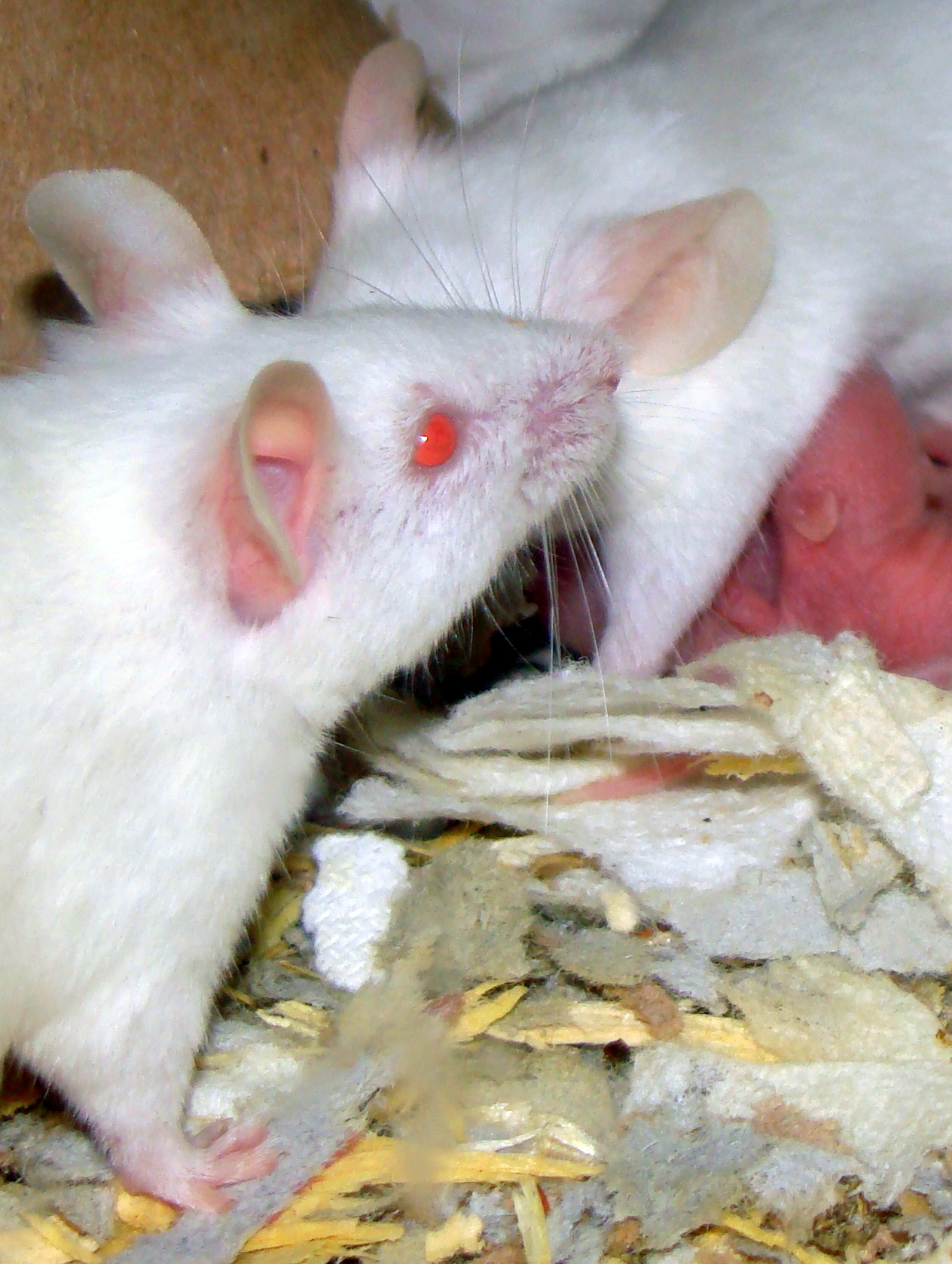
People in recovery often say the hardest part is not the drug. It is the room. Who you spend time with after you stop can decide whether you stay stopped. That folk wisdom now has a mechanistic echo in mice. In a study published in Neuron, researchers report that opioid-experienced mice actively seek out other opioid-experienced mice, and they trace the pull to a specific chain of neurons that starts in a region devoted to smell.
The behavior is called social homophily: a preference for company that resembles yourself. Given a choice between a former-user peer and a drug-naive one, the opioid-experienced observer mice leaned toward their own kind. What made them do it was not sight or sound. It was scent.
An odor cue that opens a hidden channel
The team narrowed down the signal by testing different senses. Ultrasonic vocalizations did not do it. Visual cues did not do it. Olfactory cues did. When an opioid-abstinent "demonstrator" mouse, or just its smell, was presented to an observer, it triggered a burst of a stress-linked messenger molecule called corticotropin-releasing hormone, or CRH.
That release happened along a defined route: from the anterior piriform cortex, an area that handles odor information, to the basomedial amygdala, part of the brain's emotional core. The CRH surge occurred at a very particular moment. Not while the mouse sat idle, but specifically as it approached the other animal. The signal acted through CRH receptors in the amygdala, and its effect was to raise social motivation. In plain terms, the smell of a fellow former user made the mouse want to draw closer.
This is an unusual assignment for the piriform cortex, which is usually cast as a straightforward odor decoder. Here it is feeding an emotional decision about who to befriend.
Cut the circuit, and recovery gets shakier
The more consequential finding is what happened when the researchers disrupted this preference. Breaking the social homophily impaired addiction-related memory and increased relapse behavior in the opioid-abstinent mice. Put another way, the drive to bond with peers who share the same past was not a quirk. It appeared to be doing protective work.
That flips a common assumption. It is easy to picture former users clustering together as a bad influence, a group that drags each other back toward the drug. In these animals the pattern looked more like mutual scaffolding. And when the authors looked at the flip side, they found that contact and support from non-addicted peers mattered for the abstinent mice too. The takeaway the researchers emphasize is the value of social support during recovery, from inside and outside the shared-history group.
What a mouse can and cannot tell us
The usual cautions apply, and they matter here. These are mice, and human addiction is layered with things a cage cannot hold: choice, stigma, money, memory of a life before the drug. A CRH circuit that steers a mouse toward a scent is not the same as a person deciding who to call at 2 a.m. The study also focuses on opioid experience specifically, so it would be a stretch to generalize the exact wiring to other substances without more work. And "relapse behavior" in a rodent is a proxy, measured in a controlled task, not a real-world return to use.
What the work does offer is a concrete handle on something clinicians have long described but rarely pinned down. The pull toward similar company after quitting is not only psychological. In mice it runs through identifiable cells and a nameable molecule, and interfering with it changes outcomes. CRH signaling is already a target of interest in stress and addiction research, so a circuit that links smell, social choice, and relapse gives that interest a sharper focus. Whether any of this translates to a person walking out of treatment is an open question. But the study makes a case that the company you keep is written, at least partly, in the brain.
Wang, Y. et al. "Corticotropin-releasing hormone signaling from piriform cortex to amygdala mediates social homophily in opioid addiction." Neuron, 2025. doi.org/10.1016/j.neuron.2025.08.012
PubMed PMID: 40945515.
Photograph: Pogrebnoj-Alexandroff, CC BY-SA 3.0, via Wikimedia Commons.
Comments