


Learning to be afraid is fast. A rat that gets shocked after a tone needs only one bad pairing. Unlearning that fear is a different, slower business, and it is the part that goes wrong in anxiety disorders and post-traumatic stress. The fear does not really vanish. The brain lays down a new, competing memory that says the tone is now safe, and that safety memory has to win out over the original one. A new paper in Nature Neuroscience follows the chemistry of that competition down to a single molecule and the small population of cells that release it.
The team, led by researchers at Shanghai Jiao Tong University and Fudan University, worked in male mice trained on a classic protocol. A tone predicts a foot shock, the mice freeze in anticipation, and then over repeated sessions the tone plays with no shock until the freezing dies down. The question was what, inside the ventral hippocampus, tips an animal from the fear-on state into the fear-off state.
One neuron type, two speeds of inhibition
The answer centers on a specific class of inhibitory interneurons that make neuropeptide Y, or NPY. These cells do two jobs at once. They release the fast neurotransmitter GABA, which clamps down on nearby excitatory neurons in the usual quick way. But they also release NPY itself, a slower signal that lingers and acts on a longer timescale. The researchers found the fast GABA release helps the animal acquire the fear in the first place. The slow NPY release does something else. As extinction training goes on, the activity of these NPY neurons ramps up, and so does the amount of NPY they dump into the tissue. That rise tracks the behavioral shift from freezing to calm.
To watch this in real time, the group measured calcium activity in the NPY cells and used a sensor to follow NPY release directly. Both climbed as the mice learned that the tone no longer meant danger. This was not a coincidence riding along with the behavior. When the authors blocked NPY, extinction stalled. When they supplied it, extinction sped up. In their words, NPY was both necessary and sufficient to set the rate and the degree of forgetting the fear.
Two receptors carve up the job
What makes the story more than a single-molecule tale is where the NPY lands. The researchers traced its effects to two different receptors on two non-overlapping groups of downstream neurons. One subensemble carries the NPY1R receptor, the other carries NPY2R. These two populations do not overlap, and they govern different phases. The NPY1R group gates the early, fast stage of extinction. The NPY2R group gates the later, slow stage. So a single peptide, released from one cell type, splits into two channels that hand off control as the animal moves through the process of letting a fear go.
That division maps onto a broader idea in memory research. Fear memories are stored in engrams, sparse sets of excitatory neurons that fire together when the memory is recalled. Whether that engram stays rigid or becomes editable is what neuroscientists call lability versus stability. This work assigns that decision to peptide signaling from interneurons rather than to the excitatory engram cells themselves, and it shows that the timing of the peptide, slow rather than fast, is what makes it suited to shaping a memory over minutes rather than milliseconds.
What the experiment does and does not show
Some caution is worth keeping in view. The study ran entirely in mice, and only in males, so how the same circuit behaves in females or in humans is untested here. Cued fear extinction in a lab is a controlled stand-in for the messier reality of a person reliving a trauma, and the leap from one to the other is large. The findings also describe a mechanism, not a treatment. Still, NPY has drawn interest as a target for anxiety and PTSD for years, and the appeal of this result is that it explains why the peptide might help. It does not just calm the brain broadly. It works through two addressable receptor systems that control the pace at which a fear loosens its grip.
The practical hook is timing. If early and late extinction run on separate receptor channels, a drug aimed at one might work better at one point in therapy than another. That is a long way from the clinic. But it turns a fuzzy question, why is unlearning fear so hard, into a more concrete one about which receptor to nudge and when.
Wu, Y.-J. et al. "Neuropeptide Y co-opts neuronal ensembles for memory lability and stability." Nature Neuroscience, 2026. doi.org/10.1038/s41593-026-02235-x
PubMed PMID: 41917464.
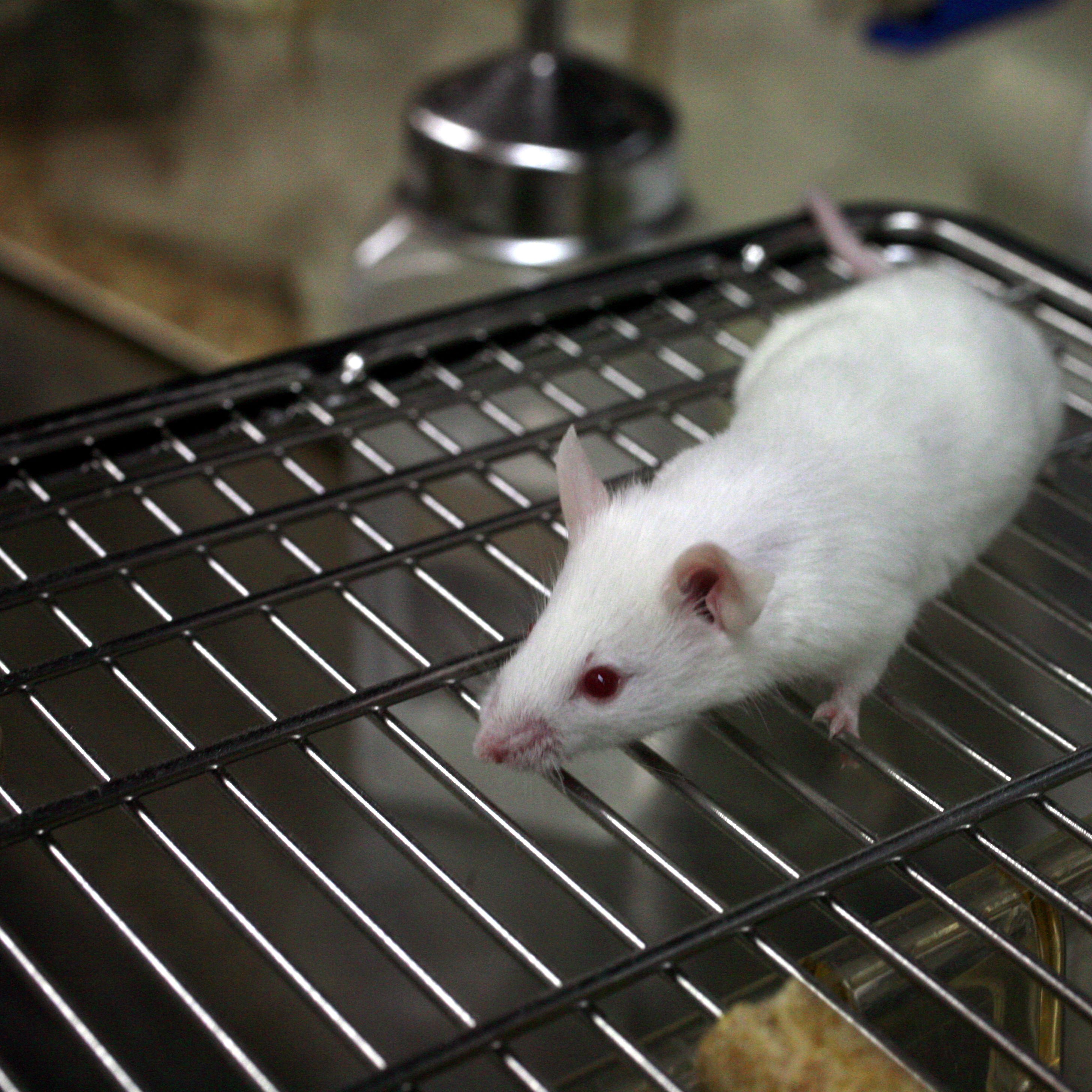
Photograph: Rama, CC BY-SA 2.0 fr, via Wikimedia Commons.
Comments