


Your gut is full of bacteria, and most of the time you have no idea what they are up to. The wall of the intestine, though, seems to be paying closer attention than the rest of you. A team at Duke reports that a thin layer of sensory cells in the colon can pick out a single bacterial protein from the churn of digestion and use it to send a message straight to the brain: ease off the food.
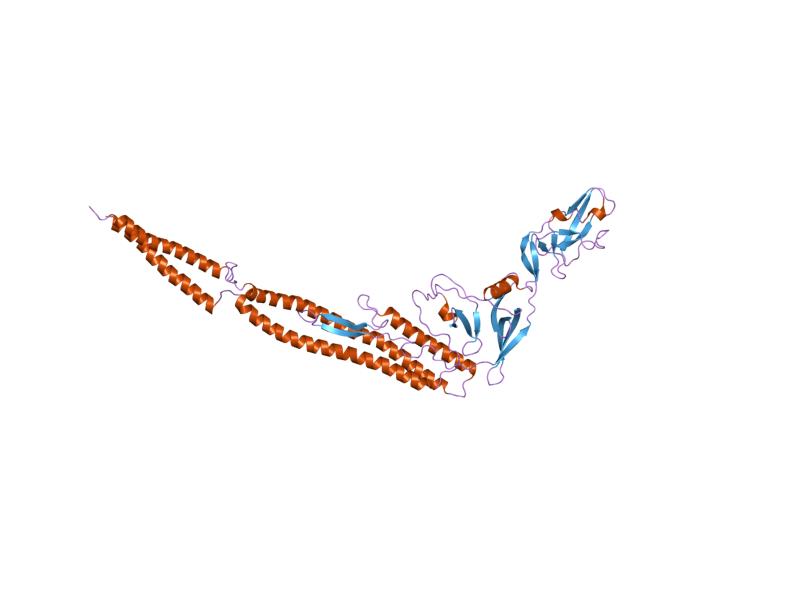
The protein is flagellin. It is the building block of the flagellum, the corkscrew tail that lets bacteria swim, and it shows up across wildly different microbial groups. That ubiquity is the point. A cell that reacts to flagellin is not tracking one particular microbe. It is reading a signature shared by a huge slice of the bacterial world, a kind of standing report on the crowd living downstream.
A sensor cell wired to the vagus nerve
The work centers on neuropod cells, which are rare hormone-producing cells scattered in the gut lining. Unlike most gut endocrine cells, neuropod cells reach out and form synapse-like connections with nerve fibers, so they can pass a signal to neurons in milliseconds rather than dribbling a hormone into the bloodstream and waiting. Diego Bohórquez's lab spent years establishing that these cells exist and that they talk to the vagus nerve, the main data cable running from the gut up to the brainstem.
In the new study, the researchers found that a subset of colonic neuropod cells carry Toll-like receptor 5, or TLR5, the classic detector for flagellin. When flagellin from the colon's interior binds TLR5, the neuropod cell releases the hormone peptide YY onto a nearby vagal neuron. That neuron carries the signal toward the brain, and the animal eats less. The team traced the chain from the microbial protein to the receptor to the hormone to the specific vagal neurons, then to the change in behavior.
To test whether the sensor actually matters, they bred mice that lacked TLR5 only in these gut cells. Those mice ate more and put on more weight than their normal littermates. Take away the ability to sense flagellin at this one spot, and the appetite brake loosens.
Why this is not just immunity in disguise
TLR5 is best known as an immune sensor. Flagellin is one of the molecules the immune system uses to recognize that bacteria are present, and it can kick off inflammation. So the obvious worry is that the mice simply ate less because they felt sick. The authors went after that directly. The appetite effect showed up without the usual signs of an immune response, without shifts in metabolism, and even in mice with no gut microbiota at all, as long as flagellin was supplied. Flagellin also did not act on the nerve directly. It needed the neuropod cell in between, working from the gut lumen.
That separation is what lets the researchers call this a genuine sense rather than a side effect of defense. The same molecule the body uses to raise an alarm is also being read, through a different cell and a different circuit, as ordinary information about who is in the neighborhood. They name it the neurobiotic sense, sitting at the border between the microbiota and the brain.
What the study can't say yet
This is mouse work, and the colon of a mouse is not the colon of a person. Humans have neuropod cells and TLR5, so the parts are there, but nobody has shown the same appetite circuit operating in people, and the leap from a lab rodent to a clinic is where a lot of gut-brain findings stall.
The experiments also lean on purified or engineered flagellin delivered under controlled conditions. In a real gut, flagellin arrives amid thousands of other bacterial molecules, its amount rising and falling with the makeup of the microbiome and the movement of bacteria near the gut wall. How strong the everyday signal is, and how much it actually shapes normal meals, is still open. And eating less over a short test is not the same as long-term weight regulation, which involves many overlapping circuits. Losing this one brake made mice heavier, but that does not make it the master switch.
What the paper does deliver is a clean mechanism connecting a microbial protein to a feeding decision through a named cell and a named nerve. It reframes part of appetite as a conversation with the bugs in the gut, not just a response to calories. If the circuit holds up in humans, a receptor that reads bacterial flagella becomes an unexpected place to think about hunger, and about how the residents of the gut quietly help set the terms of the meal.
Liu WW et al. "A gut sense for a microbial pattern regulates feeding." Nature, 2025. doi.org/10.1038/s41586-025-09301-7
PubMed PMID: 40702192.
Photograph: Jawahar Swaminathan and MSD staff at the European Bioinformatics Institute, Public domain, via Wikimedia Commons.
Comments