


A plant under attack cannot run. When a bacterium lands on a leaf and tries to slip in through the tiny breathing pores called stomata, the guard cells around each pore can close to shut the door. That much has been known for years. What was missing was the bigger picture: how a leaf that has never met the pathogen somehow knows to close its own pores too, before the invader ever arrives.
A team led by researchers at Tsinghua University has now named the messenger. Writing in Cell, they describe a small mobile peptide that carries an alarm from an infected leaf to distant, uninfected ones, triggering what they call systemic stomatal immunity. The plant, in effect, warns the rest of its body from a single point of contact.
The molecule that carries the alarm
The signal comes from an unexpected place in the genome. It is encoded not by a normal gene but by an upstream open reading frame, or uORF, a short stretch of code that usually sits ahead of a gene and rarely gets much attention. The peptide it produces was named the systemic stomatal immune conductor, or USIC.
In the leaf that first senses trouble, USIC ramps up in response to pathogen and pattern signals. It is then secreted into the apoplast, the watery space between plant cells, and shipped over long distances through the plant. That mobility is the whole point. A signal that stays put cannot coordinate a body-wide response, and USIC does not stay put.
How a distant leaf reads the message
Arriving at a leaf that has not been infected, USIC has to be recognized. The authors report that it is picked up by a receptor complex on the cell surface built from two proteins, SIRK1 and a kinase called KIN7. Once USIC is perceived, it sets off a cut. An enzyme called METACASPASE 4 cleaves KIN7, and that cleavage is what flips the switch.
KIN7, the researchers found, physically associates with the machinery that controls water and ion movement in guard cells, including proton pumps and aquaporins. Those are the parts that make a stoma swell open or deflate shut. By acting on them, the cleaved KIN7 drives the guard cells to close the pore. A leaf that was never touched by the pathogen ends up locking its own entrances anyway.
What makes the work satisfying is that it connects the dots from start to finish. A short peptide born from an overlooked piece of code, a route through the plant, a receptor to catch it, and a mechanical response at the pore. Each step was traced rather than assumed.
What the study does not settle
The findings come from controlled experiments, and the abstract does not claim this is the only mobile signal a plant uses to spread danger information. Plants have many overlapping defense pathways, and stomatal closure is one layer among several. How much USIC contributes in a real field, against real pathogens, under weather and competition, is a separate question the paper does not answer.
There is also a practical tension worth noting. Stomata are how plants take in carbon dioxide and release water. Closing them protects against invaders but comes at a cost to photosynthesis and gas exchange. Any effort to harness this pathway for tougher crops would have to reckon with that balance, and the study is a description of the mechanism rather than a plan for deploying it.
Still, the discovery reframes how a plant defends itself. Instead of a patchwork of leaves each fending for themselves, there is a shared warning system, and now one of its couriers has a name. For a field trying to build crops that resist disease without heavy chemical spraying, knowing exactly which molecule to reach for is a real starting point.
Liu, C. et al. "An uORF-encoded mobile peptide sparks systemic stomatal immunity." Cell, 2026. doi.org/10.1016/j.cell.2025.12.024
PubMed PMID: 41605207.
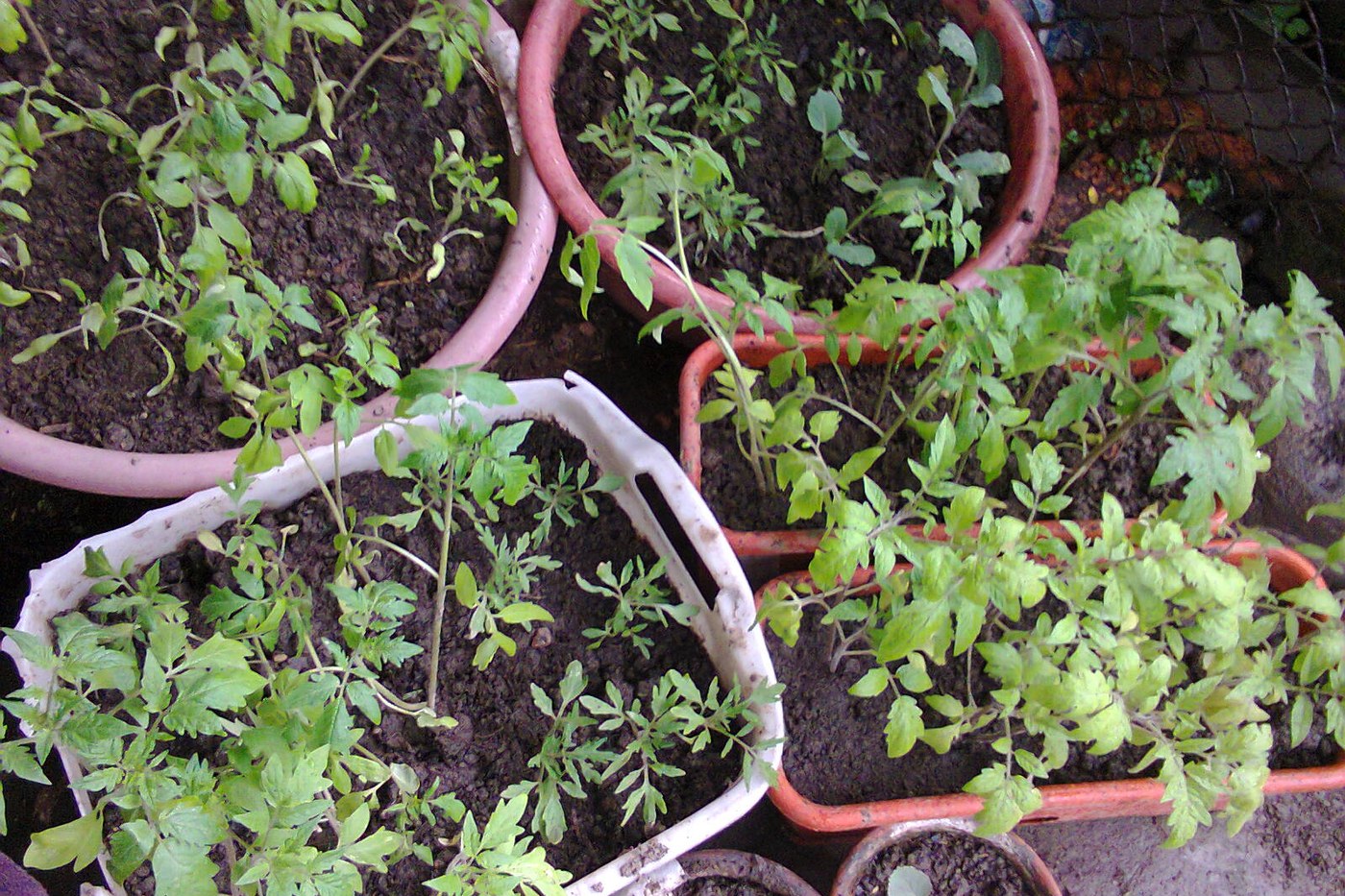
Photograph: Emmanuel Boutet, CC BY-SA 3.0, via Wikimedia Commons.
Comments