


Pack corn plants tightly into a field and you get more grain per acre. You also get more trouble. Crowded plants sit closer to each other's pests and pathogens, and a single infection has a shorter trip to the next host. Farmers have known this tradeoff for a long time. What nobody could quite explain was why densely planted maize often holds up better against attack than you would expect from plants under that much stress.
A team led by researchers at Zhejiang University now has an answer, and it runs underground. Crowded maize, they found, quietly rewires the community of bacteria living around its roots, and that new microbial neighborhood turns on a broad form of resistance. The trigger is a smell.
A leaf scent that plants overhear
The signal is linalool, a volatile compound with a floral, slightly citrusy odor that maize leaves give off more of when plants are packed together. Linalool is common in the plant world, and it drifts easily through the air. The surprise is what it does to the plants that breathe it in.
When a neighboring maize plant picks up linalool, it ramps up jasmonate signaling, one of the main internal alarm systems plants use to coordinate defense. That alarm does not stop at the leaves. It travels down to the roots and changes what the plant pumps out into the surrounding soil. The researchers traced the effect to a class of root-secreted chemicals called benzoxazinoids, and to one member of that family in particular, a compound they abbreviate HDMBOA-Glc.
So a scent released above ground ends up altering the chemistry below ground. That is the first half of the loop.
Feeding the right microbes
Those root exudates do not act on pests directly. Instead they reshape the rhizosphere, the thin, biologically busy zone of soil that clings to living roots. The changed chemical menu favors certain bacterial groups over others, and the bacteria that flourish are the ones that prime the plant for defense.
Once those microbes take hold, the maize gains what the authors describe as broad-spectrum resistance, protection that is not aimed at one specific enemy but raises the plant's guard generally. The team showed that this microbe-driven step depends on salicylic acid signaling, a second defense pathway that works alongside the jasmonate response set off by the linalool.
The full picture is a feedback loop with several handoffs. Crowding raises linalool. Linalool alerts neighbors. Alerted neighbors feed the soil. The soil community shifts. The shifted community switches on resistance. Because the plants are seeding their own protective microbiome through the dirt, the researchers call it a plant-soil feedback, and it helps explain how a dense stand of corn can be tougher than the sum of its stressed individuals.
What the study can't say yet
The protection is not free. The same feedback that buys resistance costs the plants some growth, which fits the long-standing observation that defense and growth pull against each other. That tradeoff matters for anyone hoping to use this in the field, because the whole point of dense planting is to grow more, not less.
The work was done in controlled settings with maize, and the authors are careful about how far it generalizes. Whether the same linalool-to-microbiome chain operates the same way across the messy variety of real farm soils, climates, and maize varieties is an open question. A rhizosphere in a research plot is not the same as one in a decades-old commercial field with its own established microbial residents. And knowing that specific bacterial taxa drive the effect is not the same as being able to reliably deliver or maintain them where a grower wants them.
There is also the question of durability. Broad-spectrum resistance is attractive precisely because pathogens have a harder time evolving around it than around a single resistance gene. But the study does not follow these effects over many seasons, so how stable the protection is over time remains to be tested.
What the paper does offer is a mechanism, spelled out step by step, for something farmers have half-noticed for years. If the chemistry holds up outside the lab, it points toward a different way of thinking about crop protection, one that treats the soil community as part of the plant's immune system rather than as inert background. Managing what maize whispers to its neighbors, and what its roots feed the microbes below, could become as much a part of defense as spraying the leaves above.
Guo et al. "Linalool-triggered plant-soil feedback drives defense adaptation in dense maize plantings." Science, 2025. doi.org/10.1126/science.adv6675
PubMed PMID: 40811531.
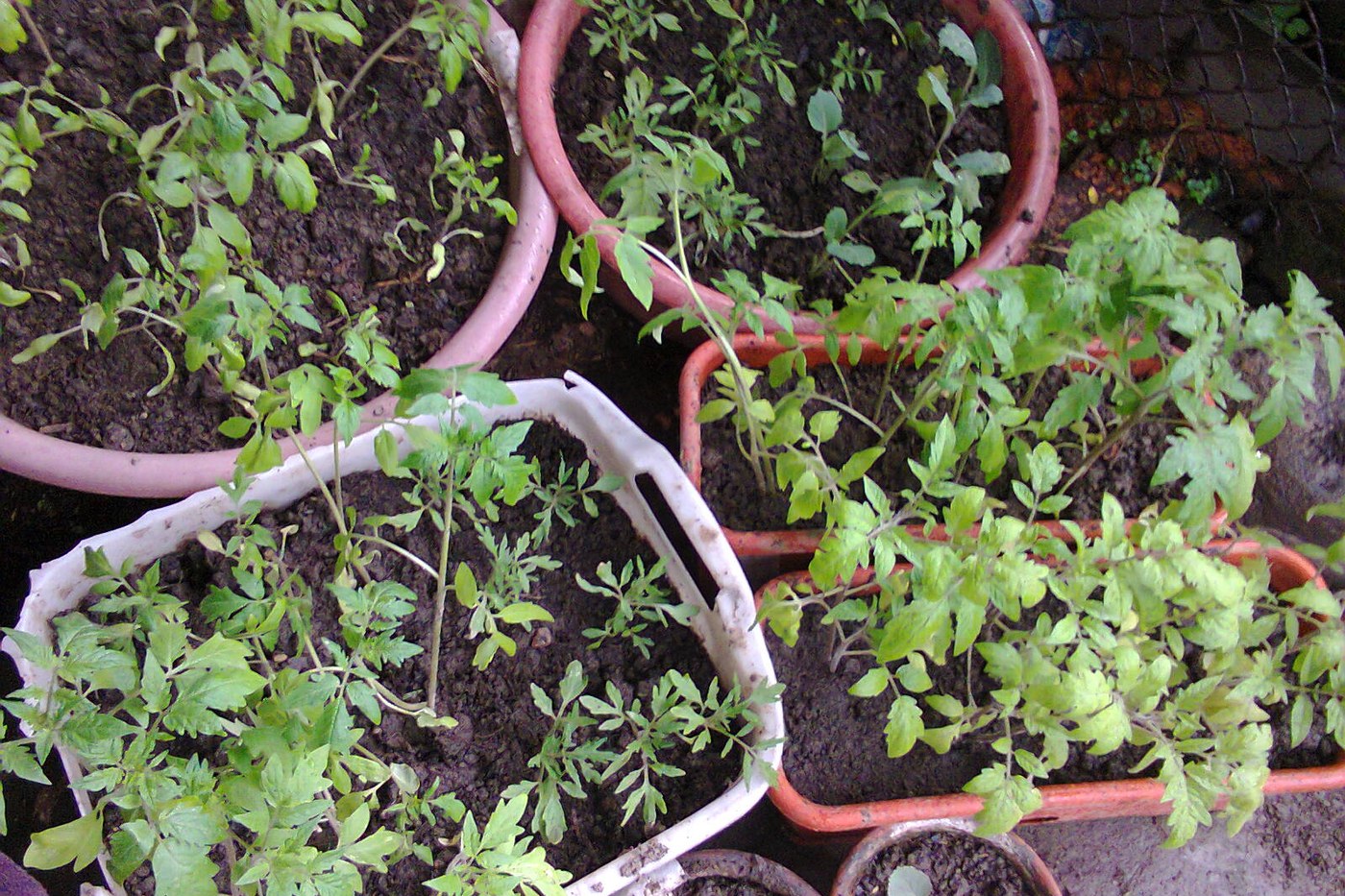
Photograph: Lotus Head, GFDL / CC BY-SA, via Wikimedia Commons.
Comments