
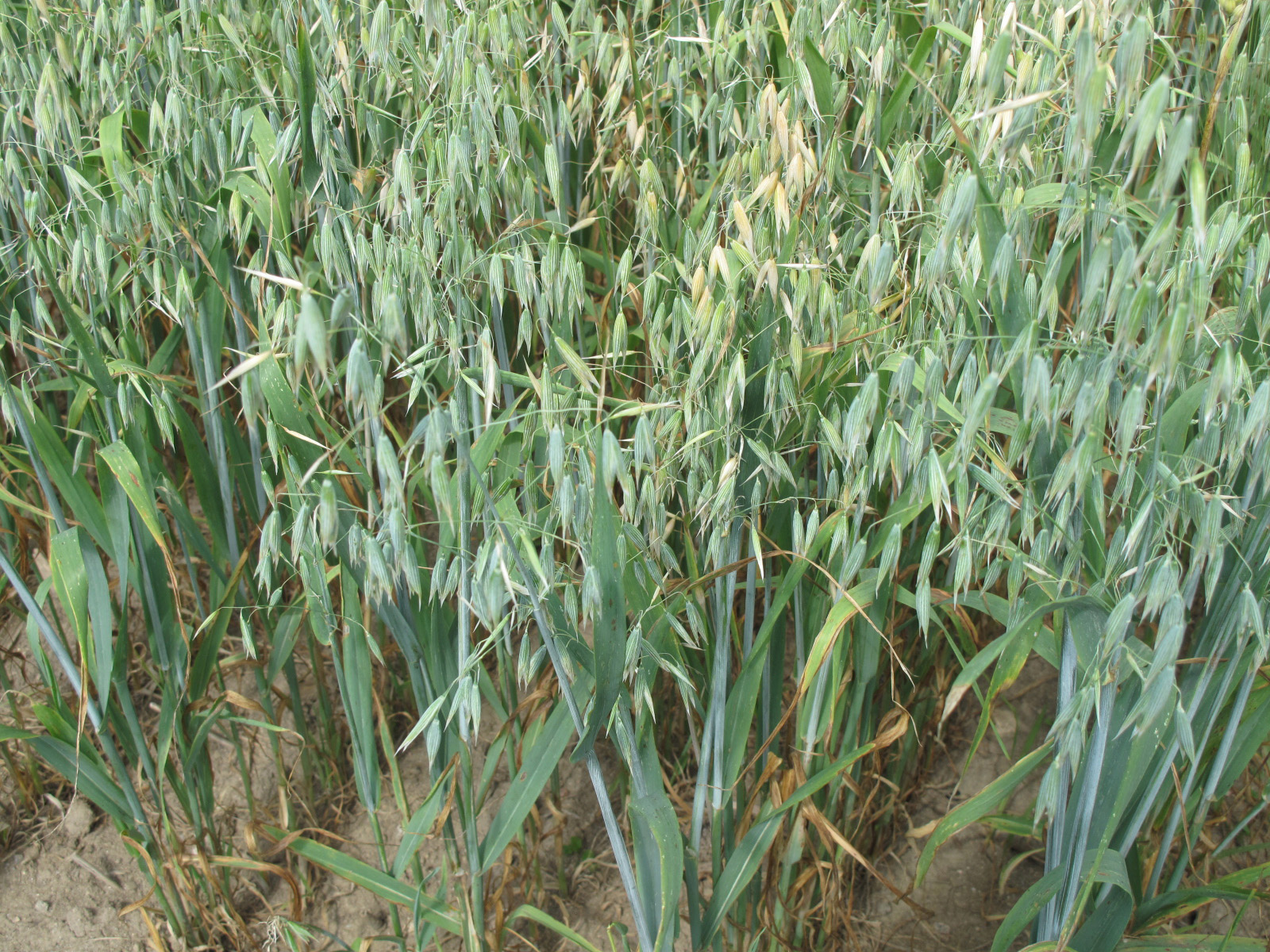
Oat milk is now a fixture in coffee shops, and that shift has pulled a once-quiet cereal into the spotlight. Demand jumped. The science behind the plant did not keep pace. Oat has one of the messiest genomes among major grains, and for years geneticists lacked the kind of detailed reference map that wheat, rice and barley researchers take for granted. A large international team has now closed much of that gap.
Writing in Nature, Raz Avni and colleagues assembled chromosome-scale genome sequences for 33 oat lines, spanning wild relatives and domesticated varieties. For 23 of those lines they went further and tracked gene activity across six tissues at different developmental stages, building an atlas of not just what genes are present but which ones actually switch on and where.
Three genomes crammed into one plant
Part of what makes oat difficult is its architecture. Cultivated oat is an allohexaploid, meaning it carries three distinct sets of chromosomes that came together from different ancestral grasses. The result is a large, repeat-heavy genome that has been reshuffled by exchanges between those subgenomes over evolutionary time. Assembling it cleanly is a real technical challenge, which is why oat genomics sat at an early stage while other cereals raced ahead.
Having three copies of most genes also raises a biological question. What happens when one copy is lost? The pantranscriptome offered an answer. When a gene disappears from one subgenome, the surviving copies on the other subgenomes tend to ramp up their activity to compensate. But that buffering has limits. The more the subgenomes have diverged from one another, the weaker the compensation. So the plant has a backup system, and the backup gets less reliable the further apart the three genomes have drifted.
Rearrangements that shaped real breeding programs
The team also connected specific structural quirks to traits that breeders care about. One large pericentric inversion on chromosome 7D is associated with early flowering, and it explains a pattern of distorted inheritance that had shown up on that chromosome. A separate event, a swap of sequence between chromosomes 2A and 2C, turned up in a semi-dwarf mutant. Shorter, sturdier plants resist falling over, and this particular rearrangement has become common in elite Australian oat varieties.
These are not abstract findings. They are the genetic fingerprints of choices made in breeding fields over decades, now visible at the level of DNA. Chromosomal rearrangements, the authors note, have substantially affected recent oat breeding.
What the map does and does not do
A pangenome is a tool, not a finished product. It gives breeders a far richer catalog of the variation available across wild and cultivated oats, which should speed up efforts to combine useful traits. It does not, on its own, produce a better oat. Turning genome sequences into hardier or more nutritious plants still takes years of crossing, selection and field trials.
The work also draws on a defined panel of 33 assembled lines and expression data from 23 of them. That is a substantial sample, but oat diversity worldwide is larger, and some regionally important types will not be represented. The compensation pattern between homeologous genes is a broad trend, not a rule that holds for every gene in every line. And expression measured across six tissues at set developmental stages captures a snapshot, not the full range of how these plants respond to drought, cold or disease in the field.
Still, the direction is clear. Oat sits at an unusual moment, with commercial interest running well ahead of its scientific foundations. Rich in dietary fiber and tied to measurable benefits for human health, it has become the base for a fast-growing category of plant-based milk analogues. A reference this detailed gives researchers a foundation to understand how domesticated oats evolved and adapted, and a starting point for improving them more deliberately than trial and error alone would allow.
Avni, R. et al. "A pangenome and pantranscriptome of hexaploid oat." Nature, 2025. doi.org/10.1038/s41586-025-09676-7
PubMed PMID: 41162711.
Photograph: Gilles Ayotte, CC BY-SA 4.0, via Wikimedia Commons.
Comments