The standard account of what would make bird flu dangerous to people runs through the receptor. Avian influenza viruses attach to a sugar arrangement common in bird airways; human airways carry a different one. The worry, repeated in every preparedness document, is that a virus in a human host acquires changes that let it grip the human version well.
A structural analysis of the virus from a severe human case in British Columbia found close to the opposite. The hemagglutinin variants recovered from that patient bound the bird-type sugars far less well than usual, and the human-type sugars poorly or not at all. The patient, an adolescent girl hospitalised in November 2024 with respiratory failure, was severely ill from a virus whose surface protein had become worse at the step textbooks treat as essential.
Why it matters: Surveillance for pandemic risk leans on the assumption that stronger binding to human-type receptors marks a dangerous virus. A severe case driven by variants that bind both receptor types weakly does not overturn that, but it does show the relationship between receptor binding and severe disease is looser than the shorthand suggests.
The study, by Ni et al. at the University of British Columbia, appears in Nature Communications. The strain, from the H5N1 lineage circulating in birds worldwide, is referred to as BC24.
What the structure showed
Using cryo-electron microscopy, the team found that a sugar chain normally sitting in the receptor-binding site of H5 hemagglutinin, attached to the protein itself, was missing from the BC24 version. That absence is a structural hint of weakened affinity for the bird-type receptor, and it was borne out by two independent assays: glycan microarrays and ELISA both showed severely reduced or absent binding, to the human-type sugars as well.
Two mutations in the receptor-binding region were responsible, and each produced the effect on its own as well as in combination. Sequencing showed a mixed viral population in the patient, with the weak-binding variants a substantial minority rather than the whole picture.
It is worth being precise about what the receptor-binding story rests on. The best-known evidence comes from other subtypes, where particular substitutions switched binding preference toward human-type sugars and were associated with human transmissibility. The authors note that one of those historically important changes does not, by itself, increase binding in either the H1 or H5 setting. Single mutations are rarely switches on their own; they act in combination and against the background of the rest of the protein, which is part of why predicting risk from sequence alone remains unreliable.
A virus that infects without gripping well
If binding was that poor, the obvious question is how the virus entered cells at all. Expressed in a human lung-derived cell line, the BC24 protein still drove membrane fusion, the step that delivers the virus into a cell, though at lower levels than previous H5 versions.
The authors offer the candid possibilities rather than picking one. The protein may bind relevant sugars at an affinity below what their assays can detect, with many weak contacts adding up to enough grip in practice; or it may use receptors they did not test. Both are hypotheses, and distinguishing them would take experiments this paper does not contain.
Their conclusion stays at that level: The substantial minority prevalence of weakly binding HA variants in this BC24 case reveals further complexity in the factors that may be present in severe avian influenza infection.
What the study can't say yet
The most important limit is that the live virus was never isolated from the patient. Everything here is built from sequences recovered from respiratory samples and the proteins made from them, so these are measurements of hemagglutinin, not of an intact, replicating virus. A protein that binds poorly in a dish may behave differently as part of a whole virion with many copies working together.
Because the patient carried a mixed population, it is also unresolved which variant actually drove the illness. The weak binders were a substantial minority; the rest of the population was not of this type, and the paper cannot assign responsibility for the severity to either group.
The cell work is a further step removed. The authors note plainly that the lung-derived cell line they used does not perfectly imitate real lung tissue, and fusion in culture is not infection in a person. Nor can a single case support general claims: this is one patient, one virus population, one set of structures.
One further observation sits unexplained. The patient's post-infection serum bound hemagglutinin from several influenza subtypes strongly, including subtypes she had not tested positive for on admission. The authors report it without a confident interpretation, and it is the kind of detail that usually looks clearer in hindsight.
Quick questions
Does this mean H5N1 is less dangerous than thought? No. It means severity in this case cannot be explained by better binding to human receptors, and that the link between receptor grip and severe illness is less direct than the usual summary implies.
Why does receptor type matter so much in flu surveillance? Because the sugars lining human airways differ from those in birds. A virus that binds the human version well is likelier to spread between people, so that shift is watched closely as a warning sign.
What's the one-line takeaway? Hemagglutinin variants from a severely ill H5N1 patient bound both bird-type and human-type receptors poorly, which complicates the assumption that dangerous human infections are explained by improved receptor binding.
Ni JH, Malek Zadeh S, Berezuk AM, et al. "Diminished sialoside binding in novel H5N1 influenza hemagglutinin variants identified in a human patient." Nature Communications, 2026;17(1). doi.org/10.1038/s41467-026-77829-x
PubMed PMID: 42806028.
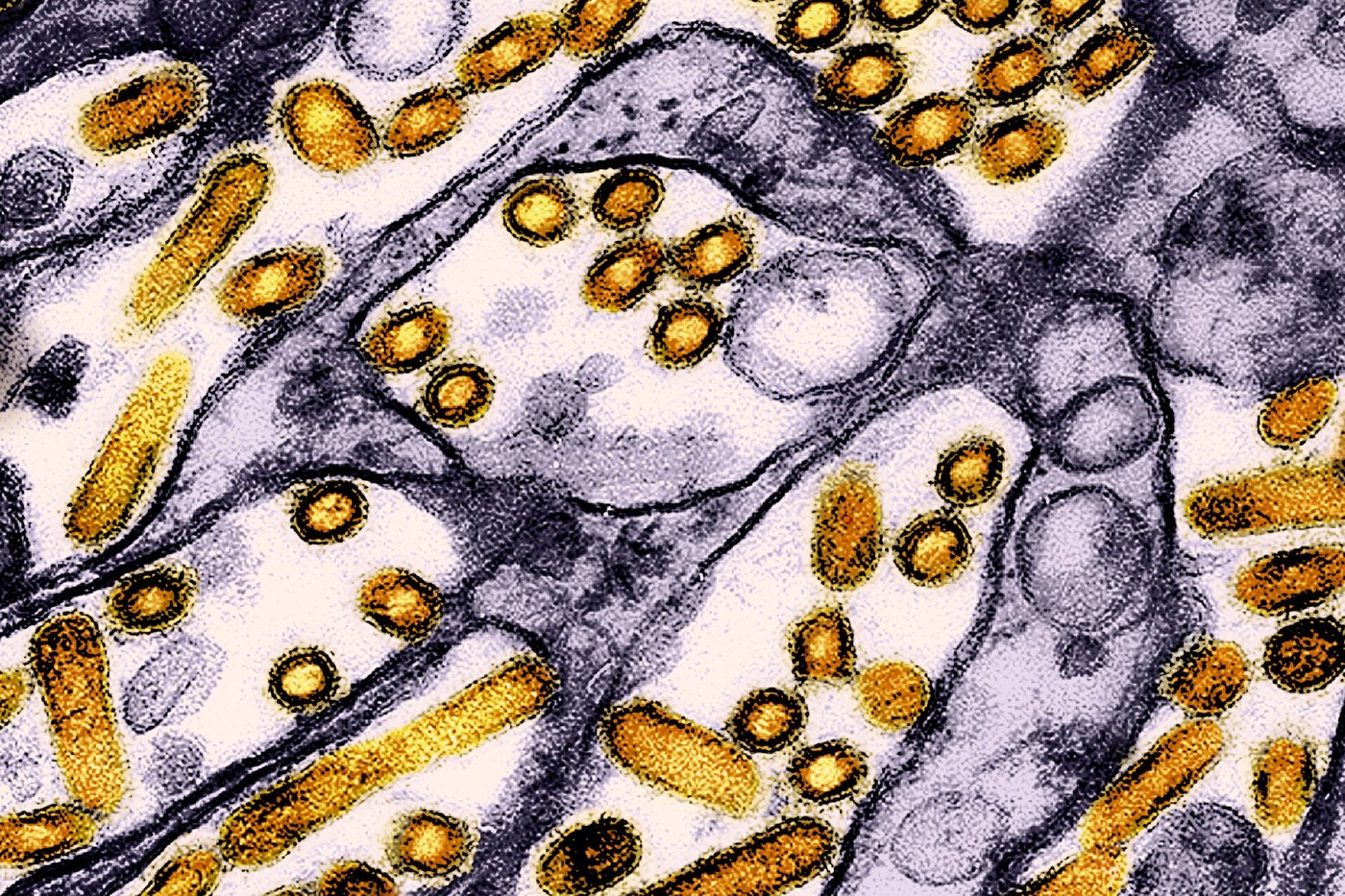
Image: H5N1 avian influenza virus particles. NIAID, CC BY 2.0, via Wikimedia Commons.
Comments