Years before a doctor ever says the word diabetes — before the unshakable thirst, the afternoon fatigue, the first worrying finger-prick reading — something may already be shifting in a place almost no one thinks to look. Not the pancreas, not the blood, but the warm, crowded city of microbes living in the lower gut. A new study suggests that this inner community begins to rearrange itself quietly, sometimes years ahead of any symptom, as if the body were leaving footprints toward a disease that has not yet arrived.
That is the picture drawn by a large new analysis led by Gaël Toubon and senior researcher Rikard Landberg at Chalmers University of Technology in Gothenburg, Sweden, working with colleagues at the Karolinska Institutet and Uppsala University. Published in Cell Reports Medicine in 2026, the team read the gut bacteria of 4,685 Swedish adults and then followed those same people forward in time. Over roughly five years, 383 of them developed type 2 diabetes — and when the scientists looked back at who those people had been, microbially speaking, they found the signs had been there all along.
Why it matters: Type 2 diabetes is one of the most common chronic diseases on Earth, and by the time it is diagnosed the body has usually been struggling with it silently for years. A test that could flag the danger early — from something as ordinary as a stool sample — would hand people a head start, a window in which changes to diet and lifestyle still have the most power to change the outcome. This study is an early step toward reading that warning in the gut.
A head count of the gut, taken in advance
The real strength of this study is its direction in time. Many microbiome studies are snapshots: they compare people who already have a disease with people who do not, which makes it impossible to know whether the microbes caused the problem or simply moved in afterward. This was different. The researchers took their census of the gut first, while everyone was still healthy, and only later saw who went on to fall ill — like photographing a neighborhood today and returning in five years to see which houses changed, rather than arriving after the fact and guessing what the street used to look like.
To take that census, the team sequenced the DNA in each person’s stool sample — a kind of roll call for the gut. Every microbe carries its own genetic barcode, and by fishing all of them out at once, scientists can estimate which species are present, roughly how many of each, and even what jobs their genes are equipped to do.
Nine microbes that kept unusual company
Out of that teeming population, nine bacterial species stood out as travelling companions of future diabetes. Some appeared in greater numbers in people who would later develop the disease; others were conspicuously scarce. On their own, none of these microbes is a villain or a hero — most are ordinary residents of a healthy gut. What mattered was the pattern: the way certain species rose while others thinned out. It is the difference between noticing one unfamiliar face on your street and noticing that half your neighbors have quietly moved away.
One name on the list was a genuine surprise. Akkermansia muciniphila is usually cast as one of the good guys of the gut, a bacterium often linked to a healthy metabolism and a well-sealed intestinal lining. Yet here it was elevated in the very people heading toward diabetes — a contradiction that turned out to hold the study’s most interesting clue.
The good bacterium that turns on the wallpaper
To understand the twist, picture the inner wall of the intestine as a room lined with a thick, protective layer of mucus — a slippery blanket that keeps the trillions of resident microbes at arm’s length from the delicate cells beneath. Akkermansia makes its living grazing on that mucus. In a well-fed gut, that is a healthy arrangement: the grazing keeps the layer fresh and even stimulates the body to produce more of it, the way trimming a lawn encourages it to grow back thicker.
But the study found that the story depended heavily on what the person was eating — specifically, on dietary fiber, the tough plant matter we cannot digest but our gut bacteria can. When fiber ran low, high levels of Akkermansia were tied to greater diabetes risk. The interpretation, drawing on earlier work, is unsettlingly tidy: starved of their usual plant-based meals, the bacteria turn to the mucus blanket itself and begin to strip it away — peeling the wallpaper off the walls, exposing the tissue underneath to the kind of low-grade inflammation that quietly nudges the body toward insulin resistance. A helpful lodger becomes a problem tenant only when the pantry is bare.
What the study can’t say yet
This is a single observational study, and it is important to be honest about its limits. It shows association, not proof of cause: the altered microbes and the later diabetes travel together, but the study cannot on its own show that the bacteria drive the disease rather than merely marking some deeper change already underway. The mucus-stripping mechanism is a plausible interpretation supported by other research, not something proven inside these participants. The volunteers were all middle-aged and older Swedish adults, so the same bacterial signatures may not hold in other populations, diets, or age groups. And five years is a relatively short window in the slow arithmetic of a chronic disease. At this stage the finding is a research result, not a clinical test.
Quick questions
Does this mean my gut bacteria give me diabetes? Not exactly. The study shows that certain patterns of gut bacteria tend to appear in people who later develop type 2 diabetes, but it cannot prove the microbes are the cause. They may be an early warning sign, a contributing factor, or both — untangling that will take further work.
Should I run out and take an Akkermansia supplement? No. The study is a caution against exactly that kind of leap. The same bacterium looked protective or risky depending on how much fiber a person ate, which suggests that context matters enormously and that flooding the gut with one species could backfire.
Is there anything useful I can do today? The most grounded takeaway is an old one, newly explained: eating plenty of fiber — from vegetables, legumes, whole grains, and fruit — keeps the gut’s microbes fed on plants rather than on your own intestinal lining. That is sensible advice regardless of what any single microbe is doing.
The one-line takeaway? Years before type 2 diabetes shows up in the blood, it may already be leaving a trace in the gut — and a fiber-rich diet appears to keep that inner ecosystem on the right side of the line.
Toubon G, Landberg R, et al. “Gut microbiome composition and functional potential associate with incident type 2 diabetes in 4,685 adults from a Swedish prospective cohort.” Cell Reports Medicine, 2026. doi.org/10.1016/j.xcrm.2026.102835
PubMed PMID: 42202790.
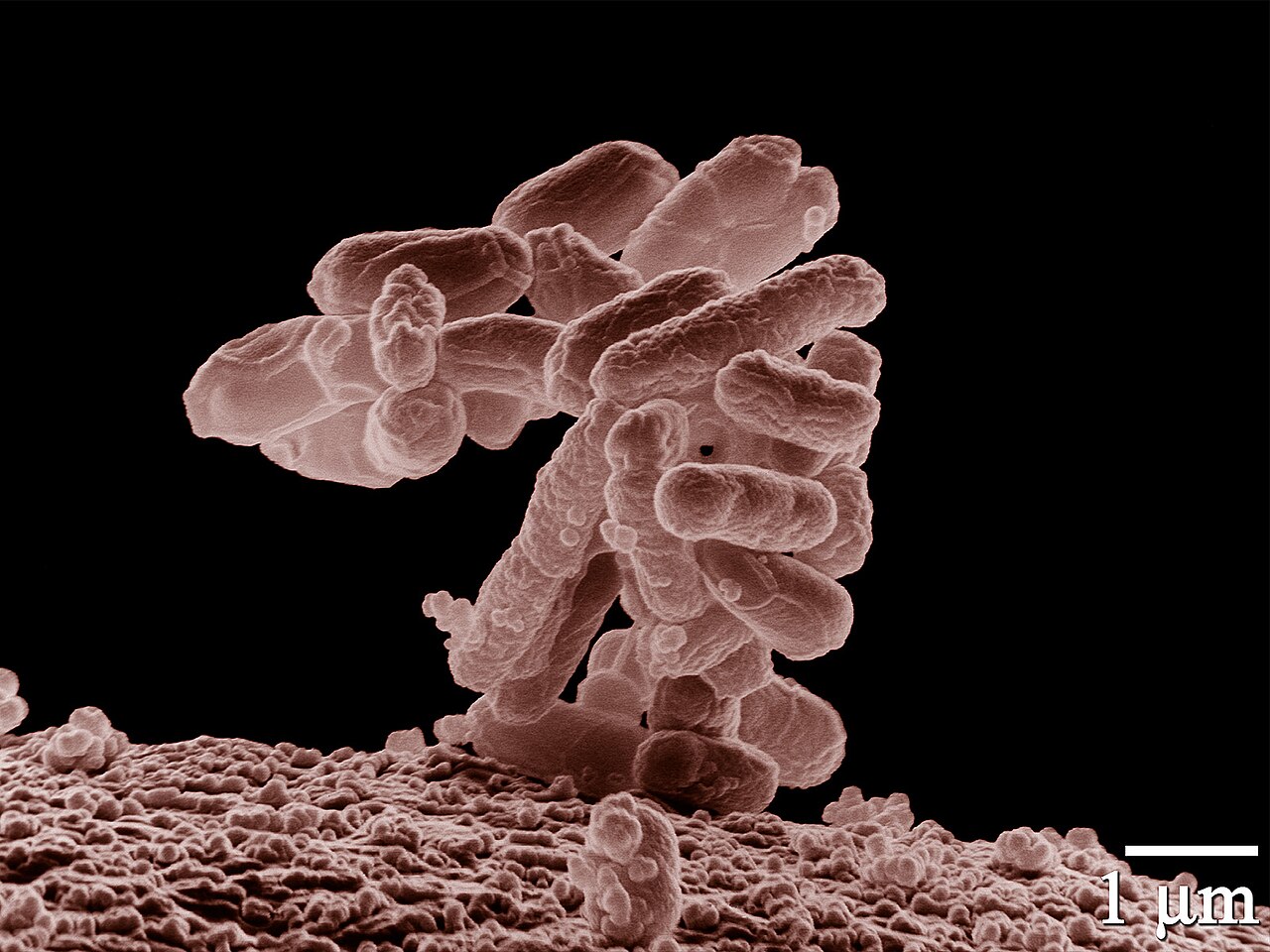
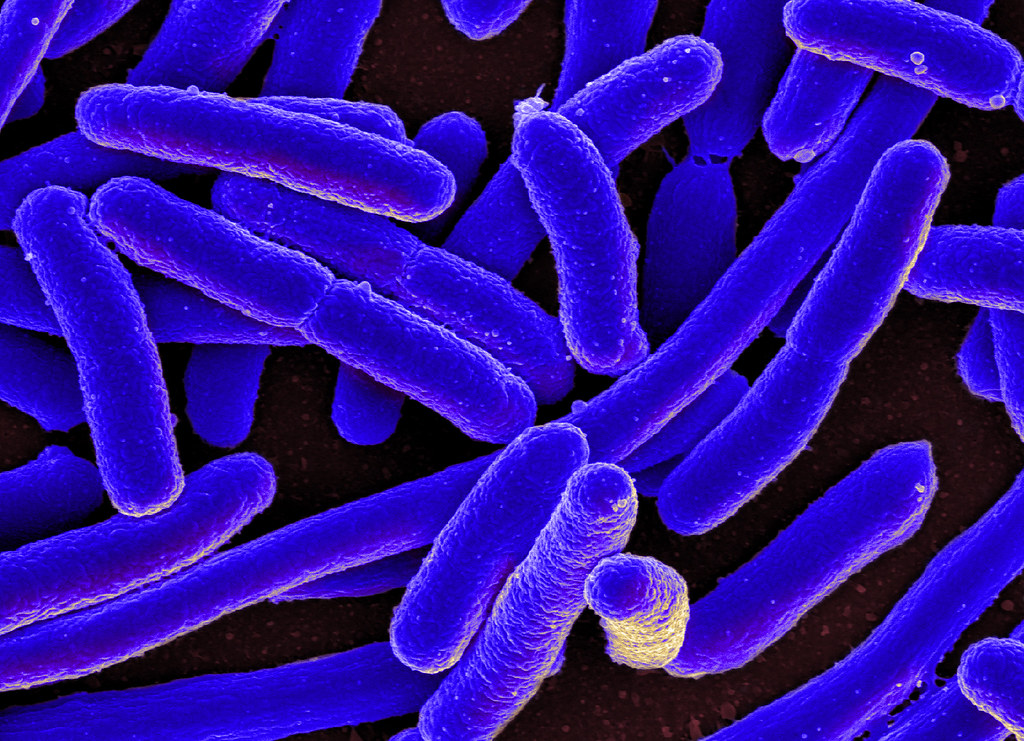
Image: Scanning electron micrograph of Escherichia coli, a common gut bacterium. National Institute of Allergy and Infectious Diseases (NIAID/NIH), CC BY-NC 2.0, via Flickr.
Comments