


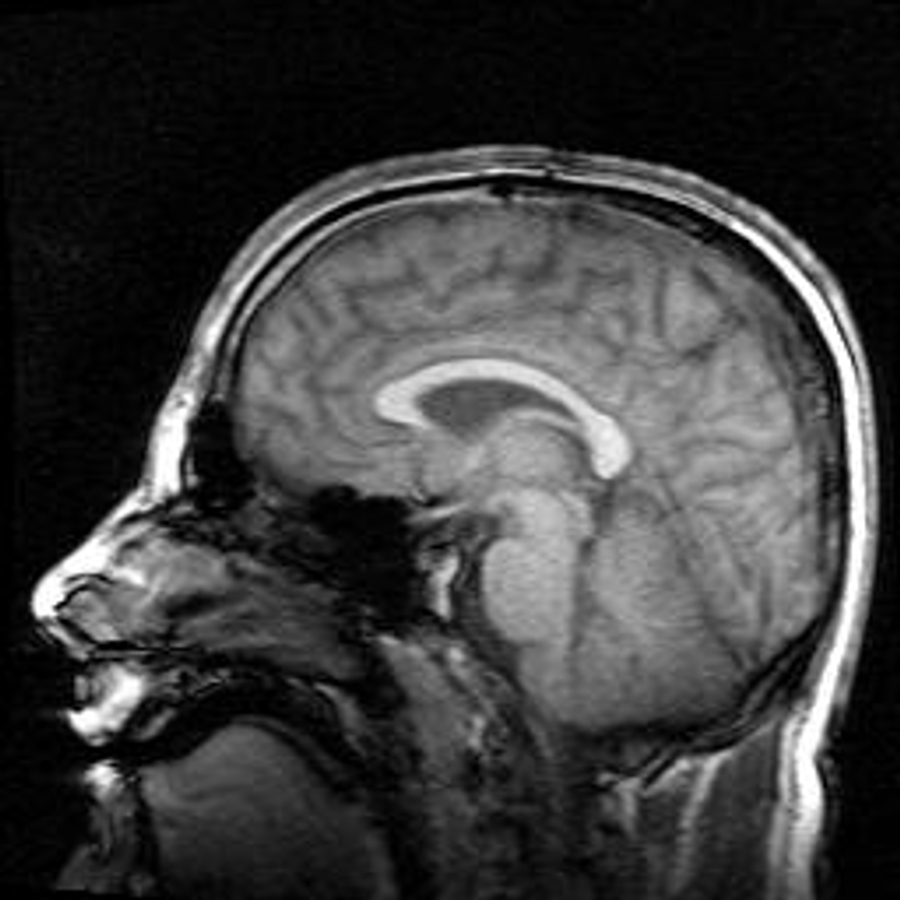
Rats have grid cells. When a rat crosses a room, certain neurons in its entorhinal cortex fire in a repeating triangular lattice, tiling the floor like graph paper laid over the world. Those cells help the animal know where it is. Humans have them too. But the same machinery seems to do something stranger and more abstract: it maps ideas, not just places. A new study in Cell asks whether that abstract mapping is something we grow into, and whether having a sharper map makes a person a better thinker.
The team, led by Yukun Qu and Yunzhe Liu at Beijing Normal University with Tim Behrens, scanned 203 people between the ages of 8 and 25. Each learned a made-up world in which objects varied along two dimensions, forming a kind of conceptual grid. Then, in the scanner, participants had to infer relationships they had never been directly taught. If you know how A relates to B and B relates to C, where does C sit relative to A? That is inference, and it is the sort of reasoning that Piaget argued children build up in stages.
Reading a hidden lattice from brain activity
You cannot see individual grid cells with a standard brain scanner. What you can pick up is a signature they leave behind: activity in the entorhinal cortex that rises and falls with a six-fold symmetry as a person mentally moves through the space. The researchers found this grid-like signal in a non-spatial, purely conceptual task. And the signal got stronger with age. Older participants carried a cleaner, more organized lattice for the abstract map than younger ones did.
That strengthening was not just a curiosity of the scan. Participants with clearer grid-like codes were better at the inference problems. The entorhinal signal also seemed to feed the medial prefrontal cortex, which encoded the distances between objects on the two-dimensional map. So the picture is of one region holding the coordinate system and another reading off where things sit within it.
When the map tracks intelligence
The part that will get attention is the link to intelligence. The maturation of these neural codes tracked real-world measures of cognitive ability, and the connection was strongest for reasoning. In other words, the developmental sharpening of an internal map lined up with the kind of intelligence that involves working out relationships rather than recalling facts.
The authors also watched people fold in new information. When participants learned something new about the world they had built, they slotted it into the existing grid pattern in the entorhinal cortex rather than storing it off to the side. That fits a long-standing idea from psychology, that we understand new things by fitting them into structures, or schemas, we already have. Here that assimilation had a cellular-level correlate you could point to on a scan.
What the study can and cannot say
Worth keeping in mind: this is a cross-sectional snapshot, not a study that followed the same children as they grew. Age differences across separate people can hint at development, but they are not the same as watching one brain change. The grid-like signal is also an indirect readout inferred from the geometry of the scanner data, not a direct recording of grid cells, so it reflects a population pattern rather than single neurons. And a correlation between sharper codes and higher reasoning scores does not settle which drives which, or whether some third factor shapes both.
Still, the result stitches together three things that usually live in different fields. Piaget's century-old account of how children learn to reason. The grid cell, one of the most celebrated findings in systems neuroscience. And standardized measures of intelligence. The claim is that a single geometric code, the one the brain seems to use for navigating rooms, gets recruited for navigating ideas, and that its quality improves through childhood and adolescence in step with how well a person reasons. If that holds up in studies that track individuals over time, it would give a concrete target for asking what actually changes in a brain as it gets better at thinking.
Qu, Y. et al. "Development of non-spatial grid-like neural codes tracks inference and intelligence." Cell, 2026. doi.org/10.1016/j.cell.2026.02.028
PubMed PMID: 41887217.
Photograph: Oliver Stollmann, CC BY, via Wikimedia Commons.
Comments