Your dog eats what you cook, breathes the air in your house, sees the same vet-recommended food aisle, and grows old alongside you. That shared life is exactly what makes the family dog such a useful stand-in for studying how a gut community changes with age. A study published this week in Nature Communications put that idea to work, sequencing the gut microbes of more than 900 companion dogs living across the United States.
The work comes from the Dog Aging Project, a long-running effort to understand why some dogs stay healthy into old age and others do not. This particular slice, the Precision cohort, pulled together fecal shotgun metagenomic sequencing, owner surveys about diet and behavior, environmental details, and clinical lab tests. The dogs spanned many breeds, home settings, and ages. That range matters. A pack of identical lab beagles fed identical kibble would tell you almost nothing about the messy variation of real life.
The gut keeps a rough calendar
The headline finding is that a dog's gut carries a readable signature of its age. The researchers found gradual, age-linked shifts in which microbes dominate, and those shifts were consistent enough to train a model that estimates a dog's age from its microbial profile alone. In other words, the community of bacteria in the gut drifts on a rough schedule, and you can partly reverse-engineer the calendar from a stool sample.
This is not a crystal ball. An age estimate built from microbes is a population-level pattern, not a birthday certificate for any single animal. But it hints at something biologists have chased in humans too: the idea that the microbiome ages in ways that track, and maybe even influence, the health of its host.
Diet and some unglamorous habits leave marks
Owners will recognize the factors that mattered most. Diet was near the top. Dogs fed commercial food carried different microbial profiles than dogs eating home-cooked meals. Behavior mattered too, including coprophagy, the polite term for eating feces. That habit, common and frustrating to owners, showed up in the gut data as an associated shift in community composition. It is a reminder that the microbiome is not some sealed internal organ. It is constantly reseeded by what an animal puts in its mouth.
The team then asked a more pointed question. Do dogs age in the gut the way people do? They compared their cohort against the Lifelines-DEEP cohort, a large human dataset, to see which age-associated microbial patterns appear in both species. Some did. That overlap is the real prize here. If a companion animal that shares our homes and our habits also shares aspects of how its gut changes over a lifetime, then dogs could serve as a practical model for questions that are slow and expensive to study in people.
What the study does not settle
A few cautions are worth stating plainly. This is a cross-sectional snapshot, not a decades-long film. It shows that microbial composition is associated with age and with factors like diet, but it does not prove that a shifting microbiome drives aging or that changing the microbes would change how a dog ages. Correlation is doing a lot of the work. Older dogs differ from younger ones in many ways beyond their bacteria, from accumulated medications to dental health to how much they move, and untangling cause from consequence will take longer studies that follow the same animals over time.
The human comparison, while striking, is also limited. Sharing a few age-associated patterns is not the same as sharing a mechanism. And a US-based cohort of owned pets skews toward animals whose people volunteer for science and can afford veterinary care, which is its own kind of selection.
Still, the practical value is easy to see. For veterinary medicine, a microbial read on a dog's aging could eventually flag animals drifting off a healthy track. For aging research more broadly, a large, well-characterized dog population offers a middle ground between mice and humans, closer to our lives than a lab rodent and faster to study than a person. The next time your dog does something you would rather not describe at dinner, it may be leaving a data point behind.
Bamberger, T. et al. "Mapping the canine gut microbiome: insights from the Dog Aging Project." Nature Communications, 2026. doi.org/10.1038/s41467-026-73193-y
PubMed PMID: 42156772.
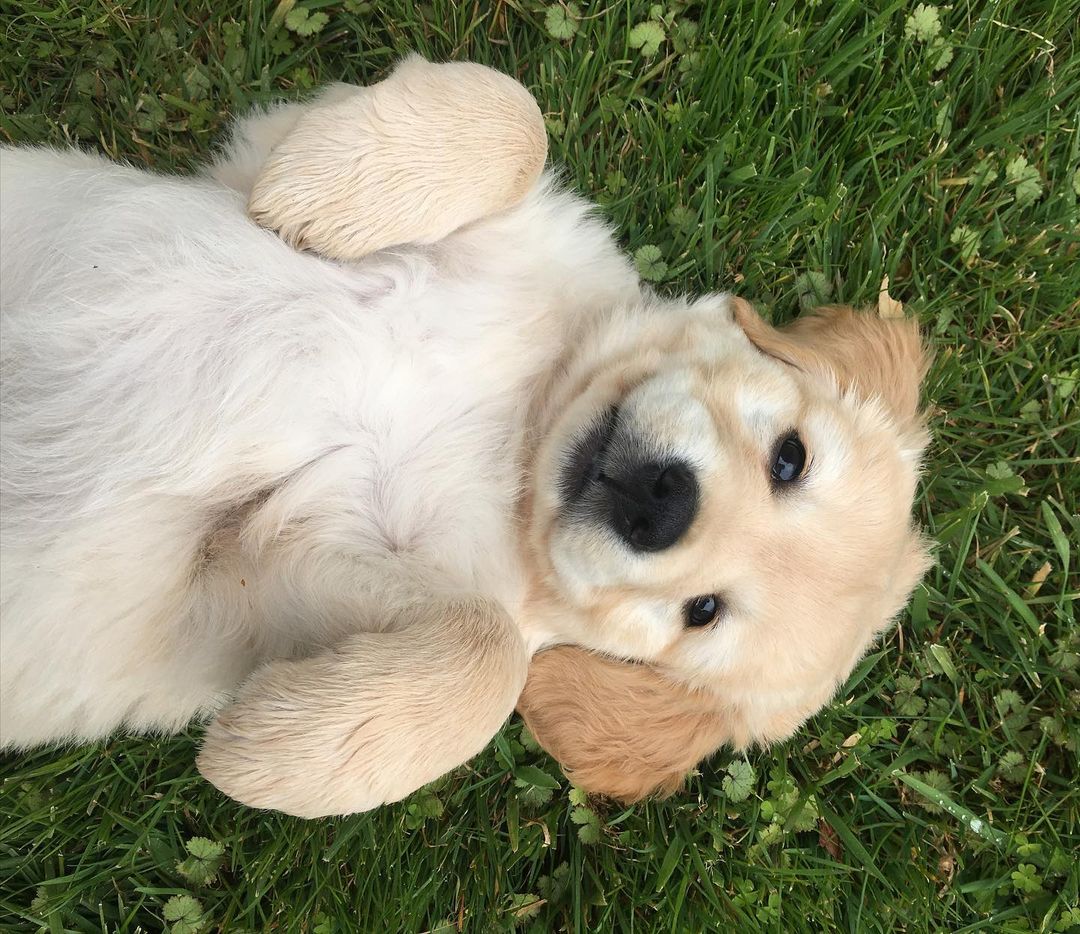
Photograph: Nicole Qowens, CC BY-SA 4.0, via Wikimedia Commons.
Comments