


Nature spent billions of years inventing enzymes. A group at the University of Washington just built four decent ones on a computer and skipped the optimization entirely.
The proteins in question are zinc metallohydrolases, catalysts that use a bound zinc ion to help snip apart chemical bonds. Enzymes like this are workhorses in biology and industry, and chemists have long wanted to build custom versions on demand. The hard part is the active site. A working enzyme needs its catalytic residues arranged around the reacting molecule with something close to atomic precision, holding the fleeting transition state steady while the chemistry happens. Get the geometry slightly wrong and the protein does nothing.
Letting the AI place the atoms
The team, reported December 3 in Nature and led in part by David Baker, built on a generative AI system called RFdiffusion. The original version could design enzyme scaffolds, but it came with a stiff requirement: you had to tell it exactly where each catalytic residue sat in the sequence and where its backbone atoms should go. That constraint boxed in what the software could explore.
Their new tool, RFdiffusion2, drops both requirements. You hand it a description of the active-site geometry, worked out from quantum chemistry, and the model figures out the rest of the protein around it. Which residues, in what order, folded into what shape. That freedom lets it search a much wider space of possible proteins for one that will actually hold the pieces in place.
The results are what make the paper worth reading. From a first batch of 96 designs made in the lab, the most active enzyme reached a catalytic efficiency of 16,000 per molar per second. That figure is orders of magnitude above earlier designed metallohydrolases. A second round of 96 designs produced three more strong performers, with efficiencies climbing to 53,000 and a turnover rate of up to 1.5 reactions per second.
The structure matched the blueprint
Numbers on an assay plate are one thing. The more convincing evidence came from crystallography. When the researchers solved the structure of their most active design, it lined up closely with the computer model they had started from. The AI did not just stumble onto a functional protein by luck. It predicted the physical structure and got it right.
Two other prediction tools, PLACER and Chai-1, suggest why these particular designs work. Their active sites appear preorganized, meaning the catalytic machinery is already locked into the right shape before the substrate arrives. That arrangement positions the target molecule for attack by a water molecule that the bound zinc has chemically activated. Preorganization is a hallmark of good natural enzymes, and seeing it emerge from a design pipeline is a meaningful step.
What stands out most is that the four best enzymes came straight off the computer. No directed evolution, no rounds of mutate-and-screen to coax weak activity into something usable. That lab-based tuning has been the standard crutch for de novo enzyme work, and it is slow and unglamorous. Removing it changes the economics of making a new catalyst.
What this does and does not show
Some perspective is worth keeping. Four active enzymes came out of nearly 200 tested designs, so most attempts still fell flat, and the paper reports success for one reaction type using zinc. Whether the same approach transfers to harder chemistry, other metals, or reactions with no natural precedent is an open question the study does not answer. And a turnover of 1.5 per second, while respectable for a designed protein, is modest next to the fastest natural enzymes, which can run thousands of times quicker. These are strong first-generation catalysts, not finished industrial tools.
Still, the direction is clear. The authors frame their method as a route to designer catalysts built to order, and the logic holds. If you can specify the chemistry you want and let a model assemble a protein around it, enzyme engineering starts to look less like breeding and more like drafting. For fields that depend on custom catalysts, from green chemistry to drug manufacturing, that is a shift worth watching.
Kim, D. et al. "Computational design of metallohydrolases." Nature, 2026. doi.org/10.1038/s41586-025-09746-w
PubMed PMID: 41339547.
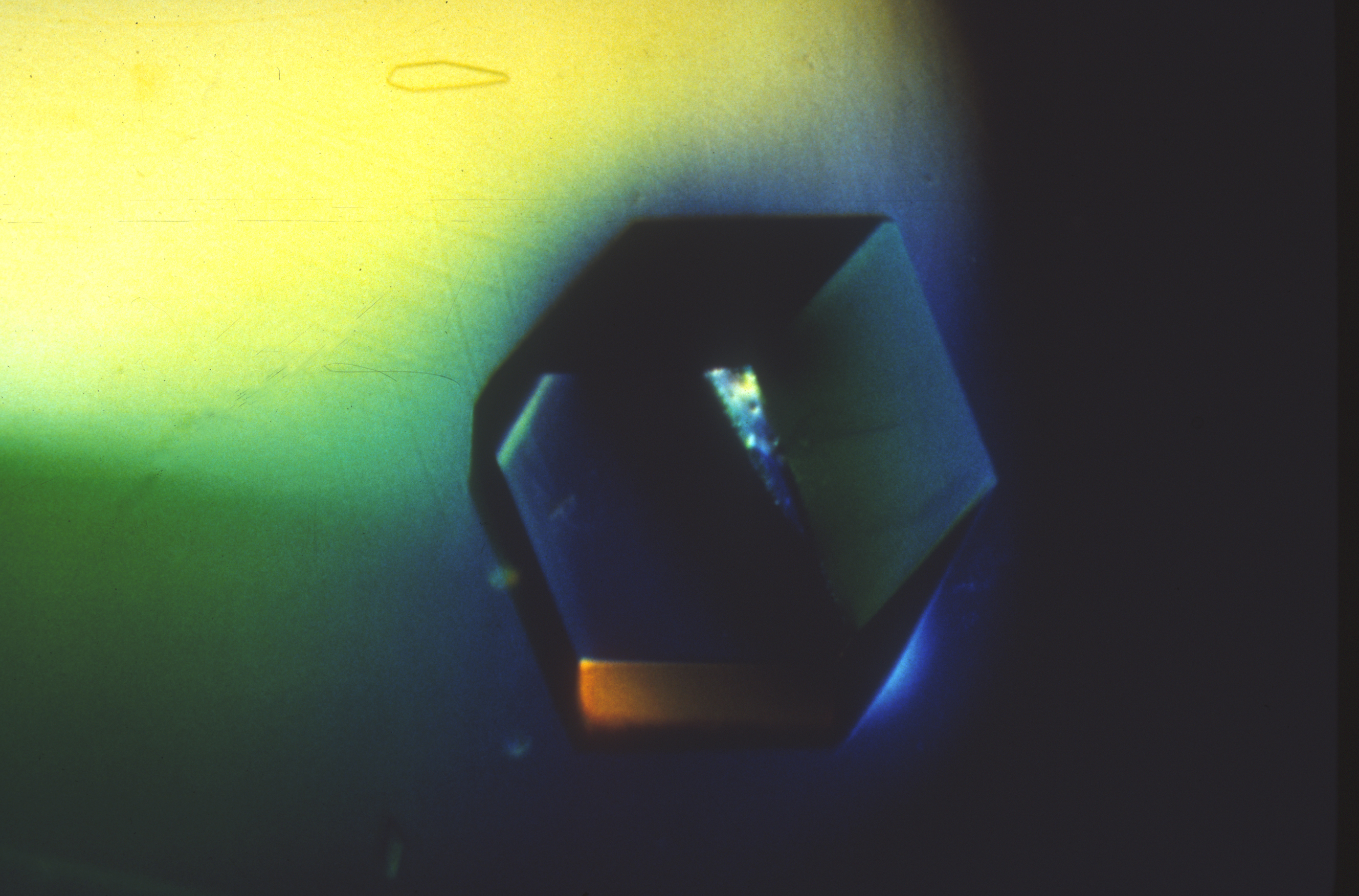
Photograph: CSIRO, CC BY 3.0, via Wikimedia Commons.
Comments