
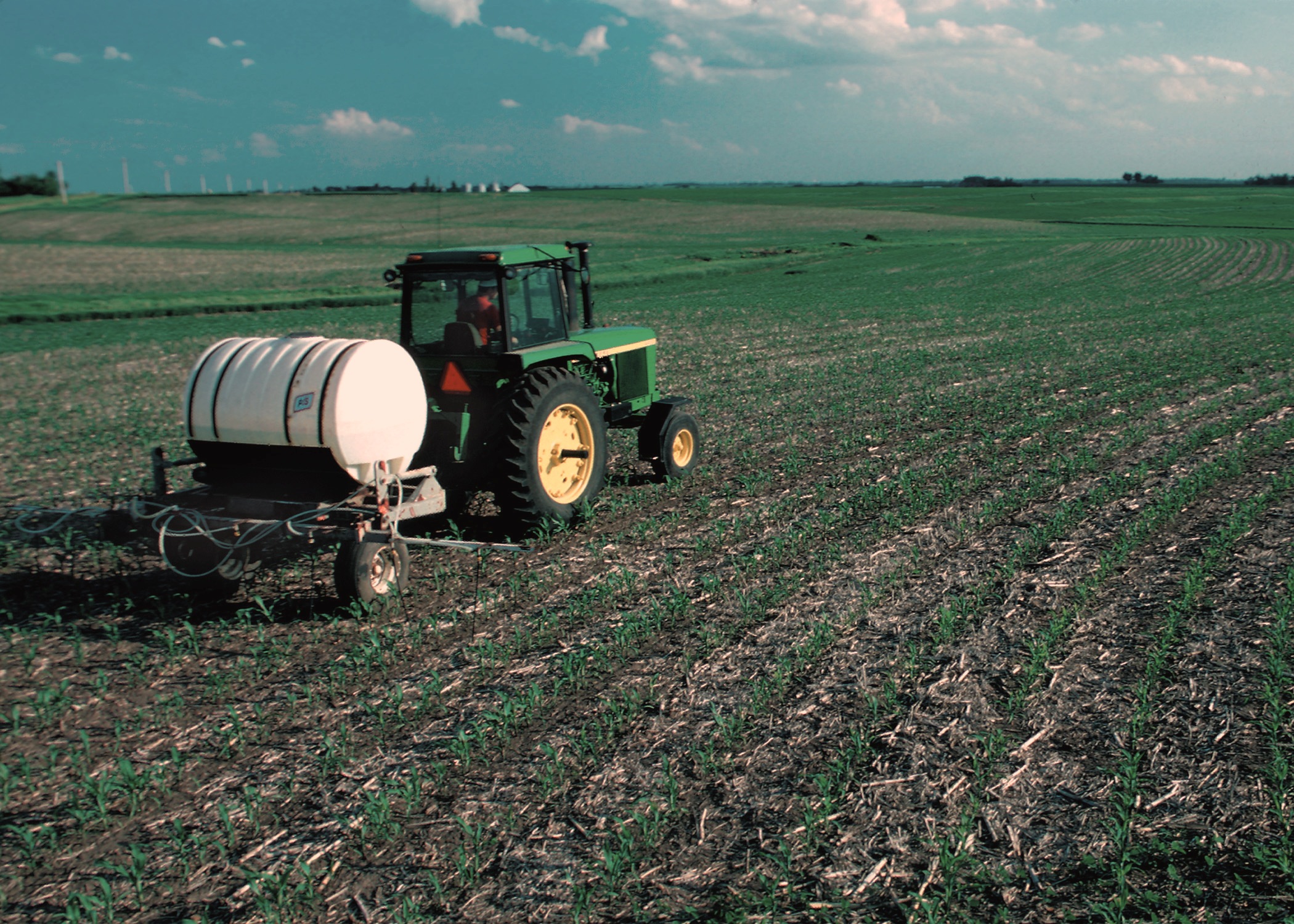
Every spring, farmers across the US Corn Belt face the same gamble. Put down too little nitrogen and the crop underperforms. Put down too much and money washes off the field along with the fertilizer. Faced with that asymmetry, most growers lean toward more. The extra nitrogen feels like cheap insurance against a bad harvest.
A study published on 5 February in Nature Communications argues that the insurance is being overbought. Francisco Palmero and colleagues re-examined maize yield-response trials and found that nitrogen application rates across the Corn Belt could drop by 12 to 16 percent with what they describe as negligible risk of yield loss. The key move was not a new fertilizer or a new seed. It was taking the uncertainty in the recommendations themselves seriously.
Why the recommendations run high
Standard nitrogen guidelines aim at an economically optimal rate, the point where the last pound of fertilizer roughly pays for itself in extra grain. That number is not a fixed constant. It shifts from field to field and season to season, and any recommendation carries a band of uncertainty around it. When you ignore that band and just chase the single best-guess figure, the safe-feeling choice is to round up.
Palmero and colleagues built the uncertainty back into the math. Once you account for how flat the yield-response curve is near its peak, you find that pulling the rate down by roughly an eighth costs almost nothing in grain. The curve barely bends in that zone. Farmers have been paying for nitrogen that the plants were never going to convert into yield.
What the cut buys downstream
The environmental arithmetic is where the numbers get interesting. According to the analysis, the 12 to 16 percent reduction would cut nitrous oxide emissions from these fields by about 10 percent. Nitrous oxide is a potent greenhouse gas, so that matters well beyond the farm gate. Nitrogen leaching into groundwater and streams would fall by roughly 13 percent, easing the nutrient pollution that feeds algal blooms and the dead zone in the Gulf of Mexico.
The authors put a dollar figure on cleaner air and water. Better environmental outcomes from the reduced application translate to a social benefit they estimate at $230 to $530 million. That is money that does not show up on any single farmer's balance sheet, which is part of the problem the paper is really about.
Where the easy gains stop
The study is careful about how far this logic stretches. Going below the 12 to 16 percent band starts to bite. Cutting nitrogen further would deliver additional benefits for ecosystems and human health, the authors note, but it comes with a high risk of yield loss. For a grower whose margins depend on the harvest, that trade is simply not acceptable, and the paper says so plainly.
A few caveats are worth keeping in view. This is a modeling analysis built on yield-response field trials, not a controlled rollout across working farms, so real-world results will vary with soil, weather, and management. The reduction targets the US Corn Belt specifically. And the figures rest on the assumptions baked into the emissions and leaching estimates, which the authors treat as approximate rather than exact.
The deeper point is about incentives. The private cost of over-applying nitrogen is small and immediate. The public cost is large and diffuse, spread across watersheds and the atmosphere. A farmer acting rationally on their own numbers will still tend to over-apply, because the downside of a short crop lands on them while the downside of pollution does not. Palmero and colleagues argue the fix is not to lecture growers but to build incentive programs that share the responsibility along the whole food supply chain. The agronomy here is almost the easy part. Aligning who pays and who benefits is the harder work.
Palmero, F. et al. "Environmental and societal costs of maize production decrease by addressing the uncertainty in nitrogen rate recommendations." Nature Communications, 2026. doi.org/10.1038/s41467-026-68988-y
PubMed PMID: 41639088.
Photograph: Lynn Betts, USDA NRCS, Public domain, via Wikimedia Commons.
Comments