
You are halfway across a street when a car appears at the corner. For a fraction of a second you stop, weighing whether to keep going or step back. That flicker of pause has a name in the lab: hesitation. It is one of the most common things brains do, and until recently almost nobody could say where in the brain it happens.
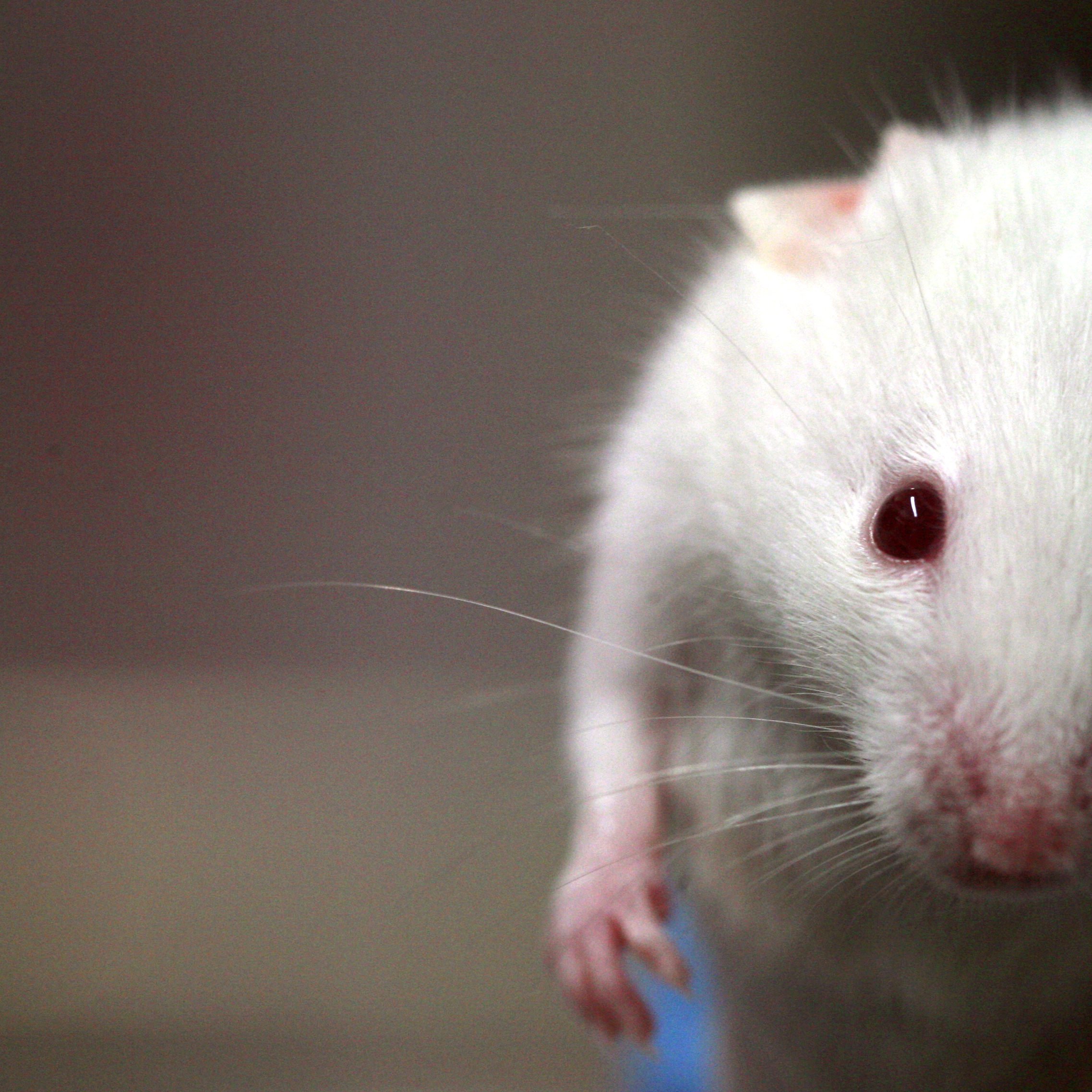
A new report in Nature Neuroscience pins it down. Working in mice, researchers at the University of Pittsburgh and Carnegie Mellon University found that hesitation runs through a specific route inside the striatum, a deep brain structure that helps decide which movements to launch and which to hold back. The pause, they report, comes from the striatum's so-called indirect pathway.
Building a paradigm that catches a pause
The hard part of studying hesitation is provoking it on demand. An animal that pauses only now and then gives you too little to measure. So the team designed a new behavioral task that, in their words, reliably evokes hesitation in mice. That reliability matters more than it sounds. If you can make an animal hesitate over and over under controlled conditions, you can start asking which neurons are active in the instant it holds back, and whether silencing or driving those neurons changes the behavior.
With that paradigm in hand, the researchers could turn to the wiring. The striatum sends its output through two broad routes that have been studied for decades, usually in the context of Parkinson's disease and movement disorders. The direct pathway tends to promote action, a kind of go signal. The indirect pathway tends to restrain it, more of a stop signal. The obvious question was which of the two governs the momentary hold that defines hesitation.
Stop, not go
The answer was clean. Hesitation was mediated by the indirect pathway neurons in the dorsomedial striatum, and not by the direct pathway. Both pathways sit side by side in the same region, so this is not a case of two far-flung brain areas doing different jobs. It is two intermingled populations of cells, and only one of them accounts for the pause.
That fits the broader picture of what the indirect pathway is thought to do, but it sharpens it. Restraining movement in general is one thing. Pausing an action specifically in the face of uncertainty is more particular, and the study frames it that way: the finding establishes a role for the indirect pathway in suppressing action under uncertainty. Uncertainty is the operative word. Hesitation is not the same as simply not moving. It is the brief brake you apply when you are not yet sure the move is safe or right, and the indirect pathway appears to be the machinery behind that brake.
What a mouse pause can and cannot tell us
This is a short paper reporting a focused result, and it is worth being plain about the limits. The work was done in mice, whose split-second choices are simpler than the tangled deliberations of a person deciding whether to send a risky email or trust a stranger. The circuit logic of the striatum is broadly conserved across mammals, which is why mouse basal-ganglia studies have informed human medicine for years, but conservation is not identity. Whether the same indirect-pathway signature underlies human hesitation remains to be shown.
The brief also leaves open questions it does not try to settle. What tips the balance from pausing to committing? How does information about uncertainty reach these neurons in the first place? The study identifies the pathway that carries out the pause without fully mapping what feeds into it.
Still, giving hesitation a home in the brain is useful beyond curiosity. The indirect pathway is already a target in conditions where the balance between acting and holding back goes wrong, from the frozen movements of Parkinson's to the stuck loops of obsessive-compulsive disorder, a research focus of the senior labs involved. If pathological indecision and healthy hesitation share circuitry, then understanding the ordinary pause may be a step toward understanding what happens when the pause will not lift, or will not come at all.
Geramita, M.A. et al. "The striatal indirect pathway mediates hesitation." Nature Neuroscience, 2026. doi.org/10.1038/s41593-025-02135-6
PubMed PMID: 41350455.
Photograph: Rama, CC BY-SA 2.0 fr, via Wikimedia Commons.
Comments