
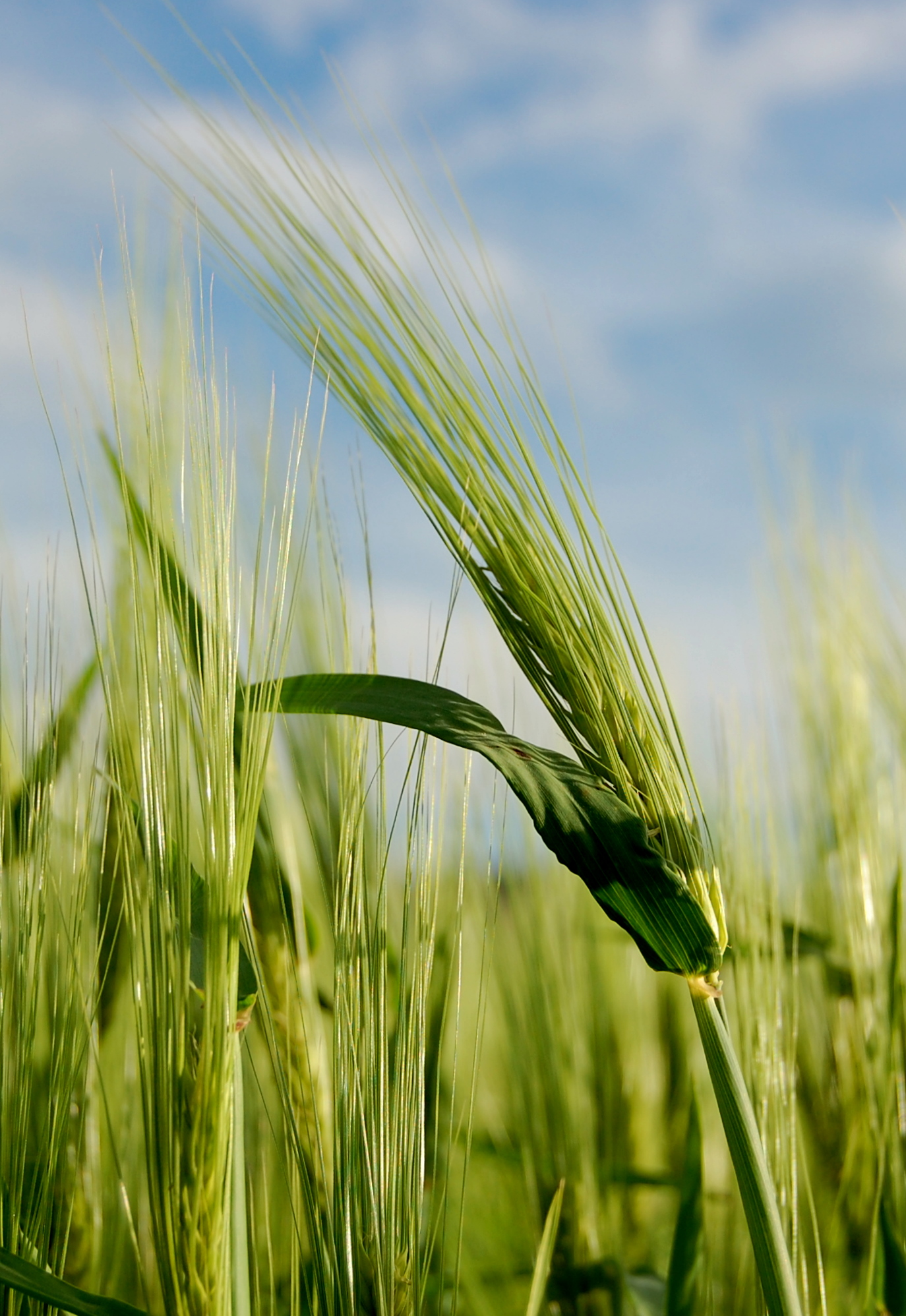
Barley does not get the glamour of wheat or rice, but it was there at the beginning. People in the Near East were harvesting it before writing, before cities, before most of what we call agriculture. The question of exactly where and how it became a domesticated crop has been argued over for decades, and the answers keep getting more complicated rather than less.
A new study in Nature adds a fresh layer to that argument by treating the barley genome as a mosaic and asking where each tile came from. Instead of looking for one birthplace, the researchers looked for the origins of haplotypes, the stretches of DNA inherited together as blocks. Trace enough of those blocks and you can reconstruct which wild populations fed into the domesticated crop, and roughly when.
Reading the genome as a patchwork
The team analysed whole-genome sequences from 682 genebank accessions, a mix of wild and domesticated barley held in seed collections, alongside 23 archaeological specimens. That second group matters. Ancient grains carry DNA from plants that actually grew thousands of years ago, so they act as a check on inferences drawn from living samples. When the ancient DNA lined up with the genome-wide picture from modern barley, the conclusions got a lot harder to wave away.
What emerged was not a tidy single origin. Earlier work had already rejected that idea in favour of what the authors call mosaic genomic ancestry, meaning domesticated barley is a blend drawn from several wild sources rather than a single ancestral field. The new haplotype approach pushes further and tries to name the contributors, tracing the spatial and temporal origins of those DNA blocks and identifying which wild populations added to the crop during domestication and through later gene flow.
The headline result is a founding domesticated population that emerged in the Fertile Crescent. That part fits the textbook. The twist is the timing. The analysis points to this population forming during a prolonged period of what the researchers describe as pre-domestication cultivation, a stretch when people were already growing and tending barley before it carried the full genetic signature of a domesticated crop.
Why the messiness matters for breeders
This is where the story stops being purely about the deep past. Barley populations turn out to be highly differentiated at the haplotype level. Different lineages carry very different blocks of DNA, and that variation arose independently or was layered on top of the effects of selection. For someone reading the genome as a historical record, that richness is a gift. For a plant breeder trying to pin down which gene controls a useful trait, it is a headache.
The authors are blunt about this. High haplotype differentiation among barley populations poses a real challenge for mapping adaptive loci, the specific genetic regions behind traits like drought tolerance or disease resistance. When populations differ so much in their background structure, it becomes harder to separate the DNA that actually drives a trait from the DNA that simply travels alongside it because of shared ancestry. Knowing that the mosaic is this tangled is itself useful, because it tells breeders their statistical tools need to account for it.
What the study does not settle
Ancient DNA is powerful but thin. Twenty-three archaeological specimens is a real anchor, yet it is a small window onto a process that unfolded across a wide region over thousands of years, and each surviving grain is a lucky accident of preservation. The reconstruction of where haplotypes originated depends on which wild populations are sampled today, and wild barley itself has shifted over the millennia. The paper describes a founding population and a pattern of later gene flow, not a frame-by-frame account of who planted what and when.
Still, the shape of the finding is worth sitting with. Domestication reads less like a single invention and more like a slow accumulation, with people cultivating barley for a long time before the crop looked genetically domesticated, and with the modern plant carrying pieces from more than one wild lineage. According to PubMed, the work was published in Nature (doi.org/10.1038/s41586-025-09533-7). The grain in your beer and your bread has a longer, more braided family tree than the standard origin story suggests.
Guo, Y. et al. "A haplotype-based evolutionary history of barley domestication." Nature, 2025. doi.org/10.1038/s41586-025-09533-7
PubMed PMID: 40993384.
Photograph: Lucash, CC BY-SA 3.0, via Wikimedia Commons.
Comments