
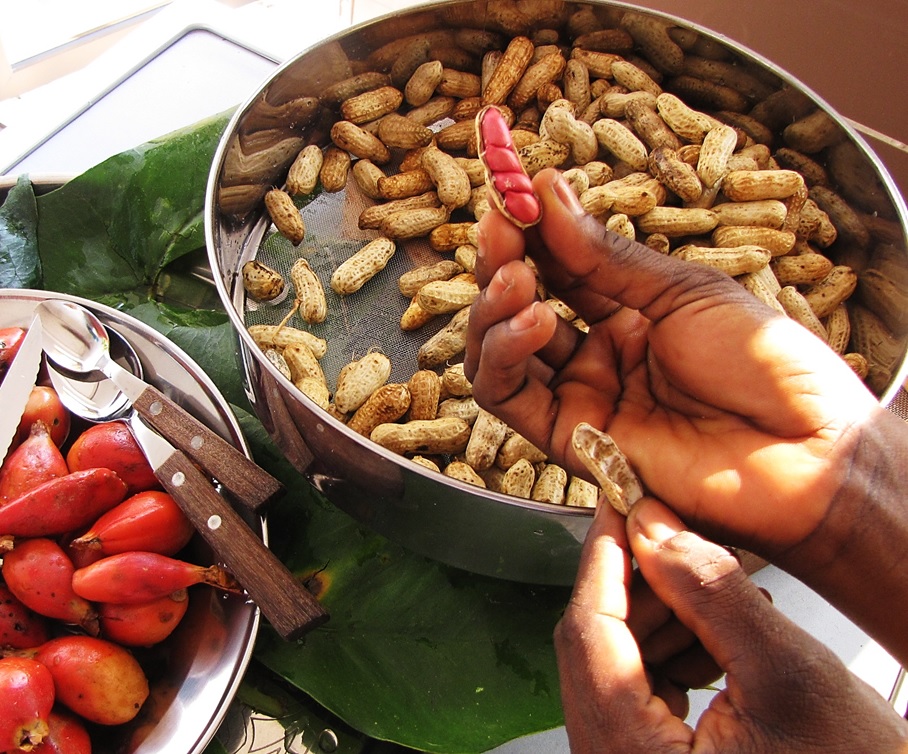
Two proteins in a peanut do most of the damage. They are called Ara h 1 and Ara h 2, and for people with a peanut allergy they are the molecules that immune cells latch onto to trigger a reaction that can shut down breathing within minutes. A new study reports that some of the bacteria already living in your mouth and small intestine can take those proteins apart before they ever get the chance.
The work, published in Cell Host & Microbe on March 3, comes from a team led by researchers in Madrid and at McMaster University in Canada. They went looking for microbes that could metabolize peanut allergens, and they found them in human saliva and in the jejunum, a stretch of the small intestine where food is absorbed. Bacteria from the genera Rothia and Staphylococcus stood out. In lab dishes, these microbes digested Ara h 1 and Ara h 2 into fragments that the allergic immune system barely recognized.
Less protein for IgE to grab
The reason this matters comes down to a specific antibody. In allergic people, an antibody called IgE recognizes the intact allergen and sets off mast cells, the immune cells that flood the body with histamine and other signals during a reaction. When the researchers fed peanut proteins to isolated Rothia and Staphylococcus in vitro, the resulting broken-down proteins bound much less IgE. They also triggered far less mast cell activation. Chop up the target, and the alarm system has less to react to.
Then they tested it in living animals. Mice colonized with Rothia had lower levels of intact Ara h 1 and Ara h 2 in their tissue, both locally in the gut and throughout the body. When those mice were challenged with peanut, their anaphylaxis was blunted compared with mice lacking the bacteria. So the effect was not just a test-tube curiosity. The microbes were doing the same job inside a body, lowering the amount of allergen that reached the immune system.
A pattern in patients, too
The part that pushes this beyond mouse biology is what the team saw in people. Across their clinical samples, peanut-degrading bacteria including Rothia were more abundant in peanut-allergic patients who tolerated allergen exposure better. In other words, the allergic individuals who happened to carry more of these bacteria were the ones whose bodies handled peanut contact more calmly. That is a correlation, not proof that the bacteria caused the milder reactions in humans. But it lines up with the mechanism the mouse and lab experiments spelled out.
It is a nice example of what microbiome researchers keep finding: the trillions of microbes we host are not passive passengers. They are metabolically active, and sometimes their day job is quietly editing the molecules we eat before our own cells weigh in. Here the editing happens to strip a dangerous protein of the exact features that make it dangerous.
What this does not yet mean
Worth being blunt about the limits. This is not a treatment. Nobody should read it as a reason to skip an epinephrine auto-injector or to test their own tolerance. The human evidence is an association drawn from patient samples, and the causal demonstrations were done in mice and in cell cultures, not in allergic people under controlled challenge. How reliably these bacteria colonize a given person, how much allergen they can realistically clear during a normal meal, and whether boosting them would actually protect someone are all open questions.
Still, the direction is interesting. If specific bacteria can be identified that reduce allergen load, they become candidates for a targeted probiotic or a defined microbial supplement aimed at food allergy, a field where prevention has been hard to engineer. The authors frame their findings as pointing toward avenues to prevent or reduce the severity of IgE-mediated reactions. For a condition where the standard advice is strict avoidance and emergency response, the idea that your own microbes might take some of the edge off the allergen is a genuinely new angle.
Sanchez-Martinez, E. et al. "Microbial metabolism of food allergens determines the severity of IgE-mediated anaphylaxis." Cell Host & Microbe, 2026. doi.org/10.1016/j.chom.2026.02.013
PubMed PMID: 41780533.
Photograph: T.K. Naliaka, CC BY-SA 4.0, via Wikimedia Commons.
Comments