


People who carry two copies of a gene variant called APOE2 almost never get late-onset Alzheimer's. Their risk drops by roughly 99 percent compared with people who carry two copies of the other end of the spectrum, APOE4. The gene is the same length, in the same spot on the same chromosome. It differs by only a couple of letters. That tiny genetic difference is one of the strongest inherited predictors of Alzheimer's known, and it has haunted the field for decades because you cannot choose which version you inherited.
A team at the University of Kentucky decided to ask a blunt question. What if you could change it? Not at conception, but in an adult animal that already carries the risky allele. In a study published in Nature Neuroscience, Lesley Golden and colleagues engineered mice with a genetic toggle sitting inside the APOE gene itself, and then flipped it.
Building a gene that can change its mind
The animals, which the authors call APOE4s2, start life making the human E4 protein. Give them a dose of the drug tamoxifen and the machinery rearranges the gene so the same cells now make E2 instead. The switch is genetic and permanent once thrown, but the timing is under the experimenter's control. Gene expression and protein measurements confirmed the handoff. Before tamoxifen, the mice made E4. After, they made E2.
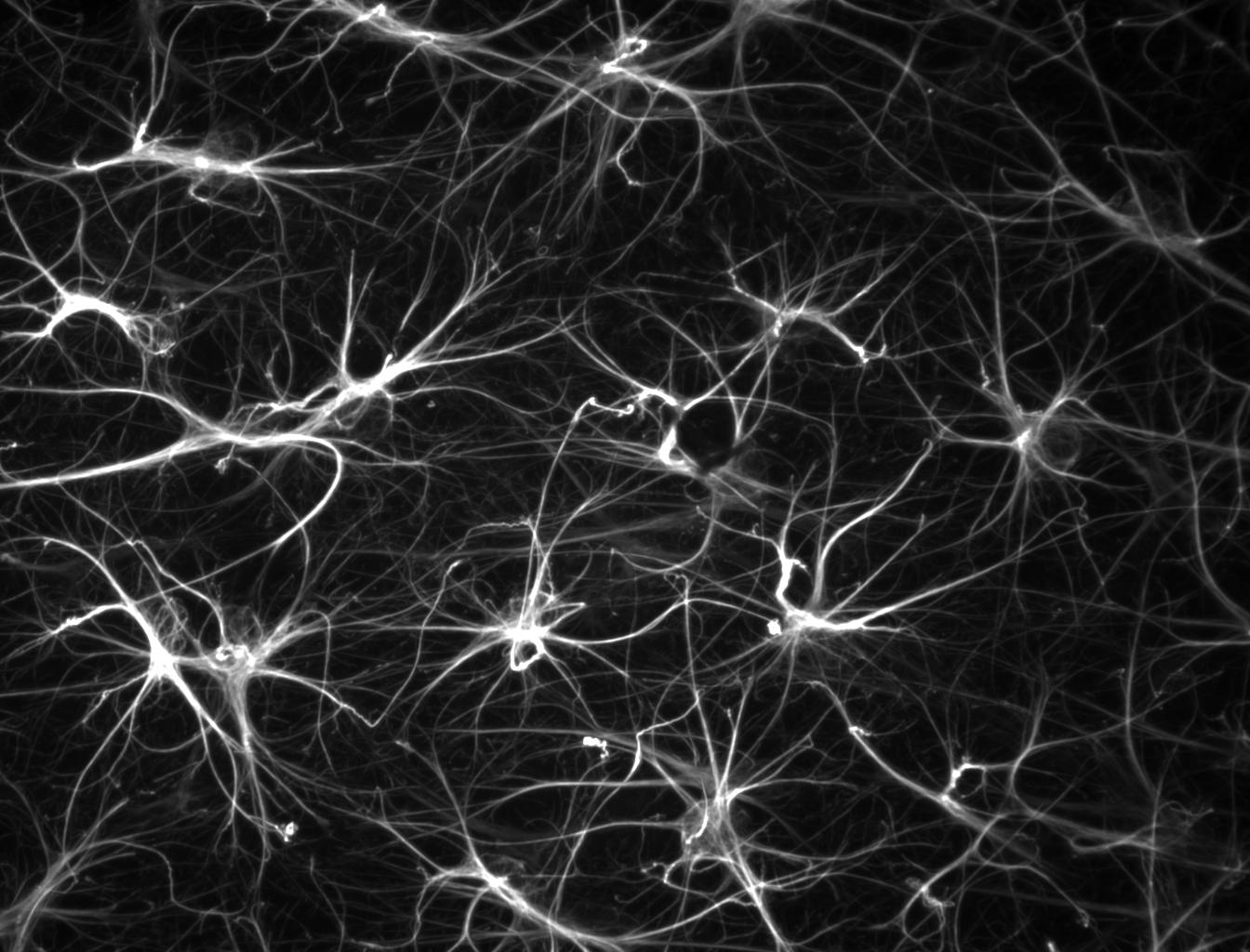
What surprised the team was how far the effects reached. A whole-body switch pushed the animals' blood and tissue chemistry toward something that looked like a human E2/E2 carrier. Fats in the brain shifted. Single-cell sequencing showed the biggest transcriptional response came from astrocytes, the star-shaped support cells that produce most of the brain's APOE in the first place.
A partial switch, and memory that held up
The harder test came next. The researchers crossed their switchable mice with 5xFAD animals, a line bred to develop the amyloid plaques central to Alzheimer's. Then they flipped the gene only in astrocytes, leaving the rest of the body as E4.
That astrocyte-only change was enough. The mice that switched to E2 did better on cognitive testing. They accumulated less amyloid. Markers of brain inflammation, called gliosis, went down, and there was less apolipoprotein E clustered around the plaques that did form. The protective allele did not need to be everywhere. Swapping it in one cell type, the one that makes most of the protein anyway, moved several disease features at once.
That last point matters for anyone thinking about treatment. Most Alzheimer's drugs go after a single target, usually amyloid. Here, one genetic change nudged the lipid profile, the inflammatory state, and the plaque burden together, because APOE sits upstream of all of them.
What a mouse can and cannot tell us
This is a proof of concept in animals, and the gap to a human therapy is wide. The switch was thrown with an engineered genetic cassette and a drug, not with any tool you could hand to a patient today. Real APOE gene editing in people would need a way to reach astrocytes across the human brain safely and precisely, which nobody has yet. The 5xFAD mice model amyloid aggressively but do not reproduce the full course of human Alzheimer's, so improvements in these animals do not guarantee the same in people. And the study measured cognition over the timescale of a mouse's life, not the decades over which human disease unfolds.
What the work does establish is more specific and more useful than a headline cure. It shows that shifting APOE from its harmful form to its protective form, in a brain that already carries the risk, can still help. That reframes APOE from a fixed piece of bad luck into a possible handle. The authors argue that astrocyte-targeted APOE replacement is worth pursuing as a gene-editing strategy. The value of these mice is that the next team can now test that idea without waiting an animal's whole lifetime to see whether flipping the switch was worth it.
Golden, L. et al. "APOE4 to APOE2 allelic switching in mice improves Alzheimer's disease-related metabolic signatures, neuropathology and cognition." Nature Neuroscience, 2025. doi.org/10.1038/s41593-025-02094-y
PubMed PMID: 41219507.
Photograph: Yann Bernardinelli, CC BY-SA 3.0, via Wikimedia Commons.
Comments