


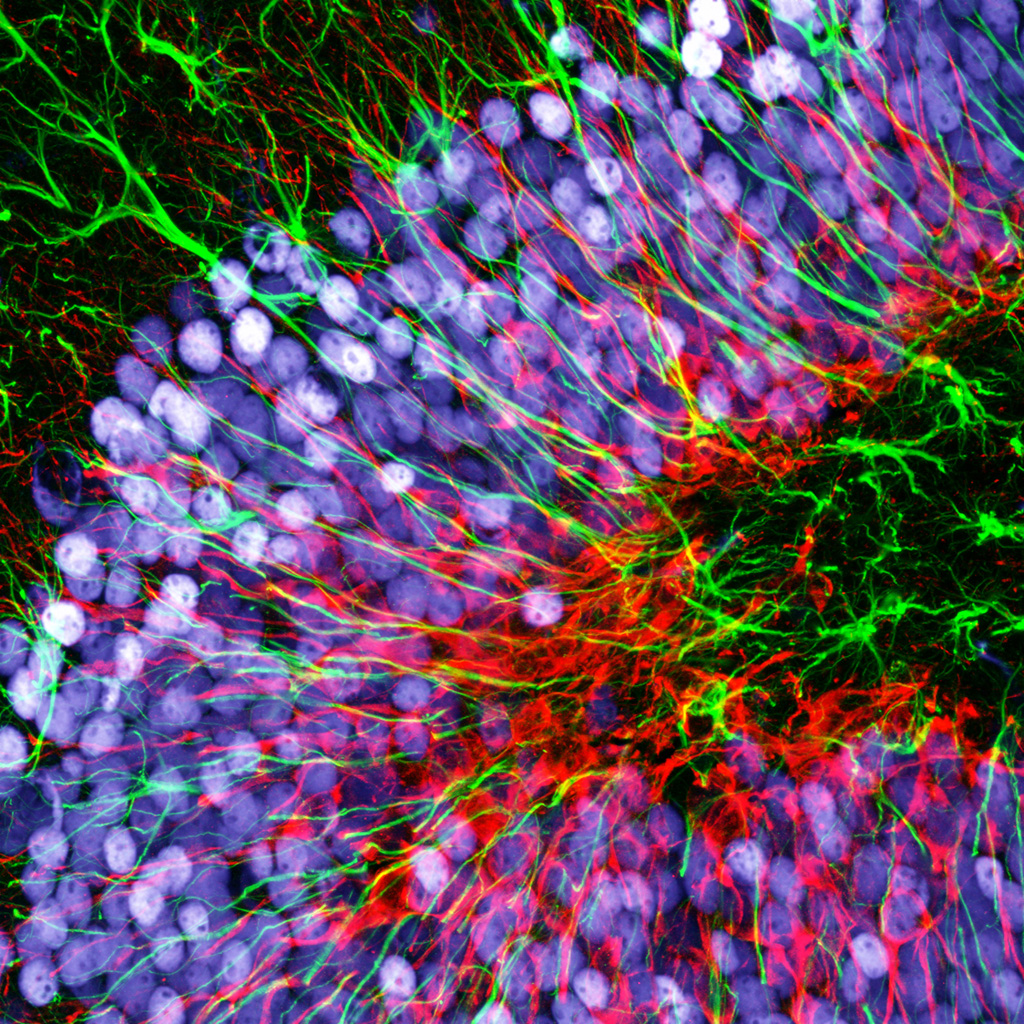
General anesthesia is supposed to switch off awareness. The patient is unconscious. They will not remember the surgery. So what is the deep brain doing while the person is under? A study published this week in Nature suggests the answer is a lot more than anyone assumed. Deep in the hippocampus, neurons kept parsing spoken language, tracked the grammar and meaning of sentences, and even predicted what word was coming next.
The work comes out of Baylor College of Medicine and collaborating labs, led by Kalman A. Katlowitz and colleagues. It relied on a rare opportunity. Some patients, usually being evaluated for epilepsy surgery, have electrodes placed directly in the hippocampus for clinical reasons. That let the team slide in high-density Neuropixels probes and eavesdrop on individual neurons and local brain rhythms while the patients were anesthetized. You cannot get this kind of resolution from a scalp EEG or an fMRI scanner. This is single cells, in a living human, listening.
An ear for the unexpected
The researchers started simple. They played sequences of tones, most of them identical, with an occasional odd one out. This is the classic "oddball" test used to probe whether a brain notices a break in a pattern. Even under anesthesia, hippocampal neurons and their surrounding oscillations flagged the oddball tones. The system was still discriminating.
Then came the part that surprised me. Over the roughly ten minutes of the experiment, the response to the oddballs got stronger. The brain was not just detecting the deviation, it was sharpening its detection as the session went on. That is plasticity. The hippocampus was updating itself in real time while the person had no conscious experience of any of it. To make sense of the effect, the team built a recurrent neural network model and found that this kind of learning fell out naturally from a system trained to tell tones apart. The plasticity was not a fluke of the recording. It looked like a basic property of flexible discrimination.
Following the sentence
The stranger result came when they switched from beeps to speech. When natural language was played to the anesthetized patients, single neurons and local field potentials carried information about the semantic and grammatical structure of what was being said. Not just "sound is happening," but distinctions tied to meaning and to the parts of speech. And the neural signals contained predictive information about the semantic content of upcoming words. The hippocampus was running ahead of the sentence, the way your brain does when a familiar phrase practically finishes itself.
What makes this notable is location. The hippocampus sits far from the primary auditory cortex, both anatomically and functionally. It is a memory structure, not a first-stop sound processor. Finding that it holds detailed, structured, predictive representations of speech in an unconscious brain says the machinery for higher-order pattern recognition does not need consciousness to keep turning.
What this does not settle
Worth being careful here. This is not evidence that anesthetized patients are aware, or that they will remember words spoken during surgery. Detecting that neurons carry information about speech is a very different claim from saying the person understood or experienced it. The recordings came from a specific clinical population with electrodes already implanted, so the sample is small and unusual, and the anesthesia protocols in an epilepsy-monitoring setting are not identical to a general operating room. The study also does not pin down whether this residual processing serves any purpose, or whether it is simply the cortex idling in a way that keeps some functions online. And the RNN model is a plausibility argument, not proof of the exact mechanism the neurons use.
Still, the picture is provocative. Consciousness has long been treated as the gatekeeper for complex cognition, the thing that has to be online before the brain can do anything sophisticated with language or prediction. These recordings poke a hole in that assumption. Somewhere below awareness, in a structure best known for making memories, the lights were still on and the sentences were still being read.
Katlowitz, K. A. et al. "Plasticity and language in the anaesthetized human hippocampus." Nature, 2026. doi.org/10.1038/s41586-026-10448-0
PubMed PMID: 42092132.
Photograph: AlmudenaFM, CC BY-SA 4.0, via Wikimedia Commons.
Comments