
Before the 1900s, the American chestnut was one of the most common trees in eastern North American forests. Then a fungus arrived. The chestnut blight, carried in on imported Asian nursery stock, spread through the canopy and killed something on the order of four billion trees within a few decades. The species was not driven fully extinct, because chestnut stumps can still send up shoots. But those sprouts get reinfected and die back before they ever grow into mature, seed-bearing trees. For most of the last hundred years, the American chestnut has been a ghost that keeps trying to come back.
A study published in Science lays out the genetic groundwork for finally reversing that. Jared Westbrook and a large team of collaborators sequenced and compared the resistant Chinese chestnut against the susceptible American species, then used that map to guide a breeding program aimed at putting a competitive, blight-tolerant chestnut back into the woods.
Reading the difference between two chestnut species
The core problem is that resistance to the blight is not controlled by a single gene you can simply move over. It is spread across many locations in the genome, which makes it slow and fiddly to breed for. To get a handle on it, the researchers built reference genomes for both species and looked at how each responded to the fungus. They tracked which genes switched on during infection and profiled the chemical compounds accumulating in the stems, where the blight does its damage.
Chinese chestnuts, which evolved alongside the pathogen, mount a defense the American trees largely lack. Comparing the two species at the level of genes and metabolites gave the team a shortlist of what resistance actually looks like in the tissue, rather than treating it as a black box. That matters for breeding, because you want to know what you are selecting for.
The 70 to 85 percent answer
The strategy is introgression: crossing American and Chinese chestnuts, then breeding the hybrids back toward the American side so the offspring keep native traits while carrying resistance alleles. The obvious risk is that you dilute the resistance if you go too far toward American ancestry, or you end up with a tree that behaves too much like a Chinese chestnut and cannot compete in an American forest.
Here is the useful part. Working from large-scale phenotyping and genotyping of hybrid trees, plus simulations and direct inoculation experiments where they infected trees and measured what survived, the team found that meaningful resistance gains are achievable in trees that average roughly 70 to 85 percent American chestnut ancestry. That is a specific, actionable target. It says breeders do not need to give up most of the American genome to get durable resistance. They can aim for trees that are overwhelmingly American and still carry enough of the right variants to hold off the blight.
What this does and does not settle
This is a foundation, not a finished restoration. The paper frames its genomes, expression data, and genetic markers as resources meant to speed up breeding, and breeding trees is measured in years and decades, not months. Resistance in an inoculation trial is not the same as a tree thriving across the full range of soils, climates, competitors, and pathogen strains it would meet in the wild. The authors are also explicit that the goal is diverse restoration populations, not a single elite clone, because a genetically narrow chestnut would be fragile in exactly the way that let one fungus flatten the species the first time.
There is also a second introduced pathogen in the picture beyond the blight, and long-lived trees face a moving target as pathogens evolve. So the honest read is that this work sharpens the tools and sets a clear ancestry target, while the actual forests are still a long project ahead.
Still, it is a concrete step for a tree that has spent a century mostly failing to grow up. Knowing that a mostly-American chestnut can carry real resistance changes what restoration crews can plausibly aim for.
Westbrook, J. et al. "Genomic approaches to accelerate American chestnut restoration." Science, 2026. doi.org/10.1126/science.adw3225
PubMed PMID: 41678621.
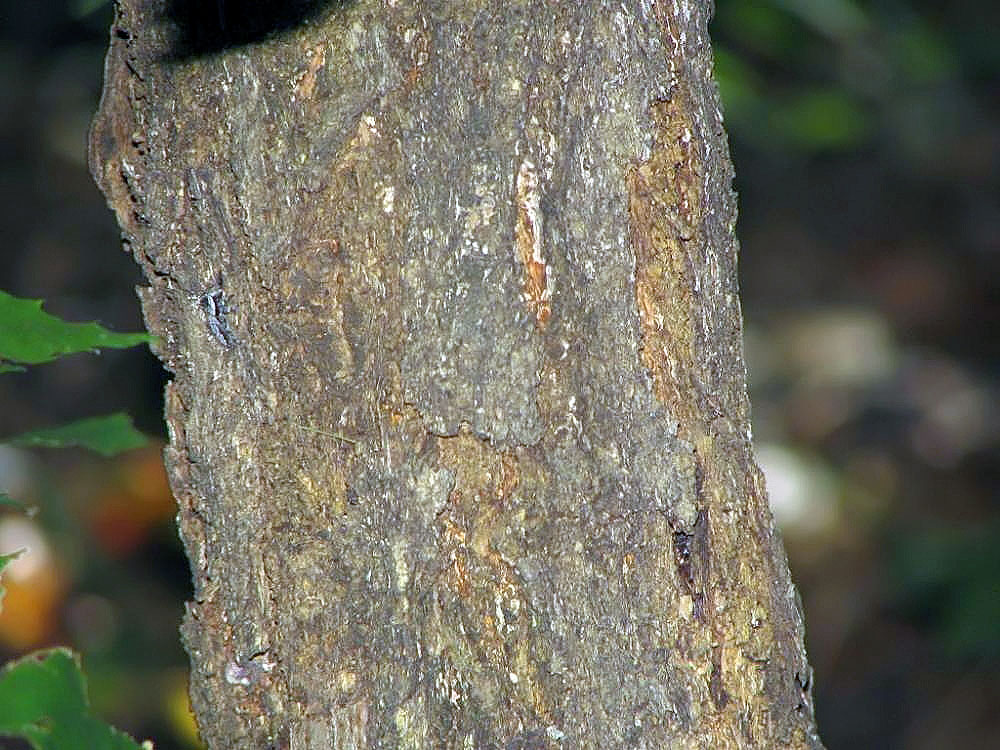
Photograph: David J. Stang, CC BY-SA 4.0, via Wikimedia Commons.
Comments