


Yellow fever virus has been studied for more than a century. We have a good vaccine against it. We have a name for the disease it causes and a grim sense of what it does to the liver. What we did not have, until now, was a clear answer to a basic question: which molecule on the surface of a human cell does the virus actually latch onto to get inside?
A team led by Zhenlu Chong and Michael Diamond at Washington University reports the answer in Nature. It is not one receptor. It is a small club of related ones, all members of the low-density lipoprotein receptor (LDLR) family, the same proteins your cells normally use to pull cholesterol-carrying particles out of the blood.
A screen that switched off one gene at a time
The group used a CRISPR-Cas9 screen aimed specifically at genes for surface proteins, knocking them out across a population of cells and then asking which knockouts made the cells hard for the virus to infect. One gene stood out: LRP4, an LDLR family member. When the researchers deleted LRP4, infection dropped. When they added the gene back, or forced cells to make extra LRP4, infection climbed again.
They then worked out the physical handshake. A specific piece of LRP4, called an LA domain, grips domain III of the virus's envelope protein. That is the part of the viral surface that first touches the cell. Related viruses in the same yellow fever antigenic group behaved the same way, which suggests the mechanism is not a quirk of one strain.
Here is the part that matters for treatment. The researchers made a soluble version of the receptor, a fragment fused to an antibody stub, and used it as a decoy. Floating free, it mopped up virus before the virus could reach a real cell. In culture, these LRP4-Fc decoys neutralized the virus. In mice, they cut the amount of virus in the body.
Why one receptor was not the whole story
Deleting LRP4 did not stop infection completely. Some virus still got in. That residual signal pushed the team to ask whether other members of the same family were also serving as doors. They were. Two more receptors, LRP1 and VLDLR, turned out to support infection on their own.
This redundancy is why naming a single receptor had been so hard for so long. Knock out one, and the virus quietly uses another. It also raises the stakes for any countermeasure, because blocking just one route leaves the others open.
The decoy approach seems to handle that. Fc decoys built from LRP1, LRP4, and VLDLR each protected mice from a viral challenge. The LRP1 decoy went further: in mice engrafted with human liver cells, it blocked infection and reduced the liver damage that makes severe yellow fever so dangerous. And when the researchers removed LRP1 from primary human liver cells directly, those cells became harder to infect. The liver is where the worst of yellow fever plays out, so a receptor that matters in human hepatocytes is worth paying attention to.
What this does and does not settle
A few limits are worth stating plainly. Much of this work happened in cell culture and in mice, including mice carrying human liver tissue, but that is still not the same as a person with a raging infection. The decoy receptors are a proof of concept, not a drug you can prescribe. And because these are the same receptors cells use for normal cholesterol traffic, a therapy that ties them up will need careful checking for side effects.
Still, the direction is promising. Yellow fever sits inside a larger group called orthoflaviviruses, which includes several emerging threats. If those relatives lean on the same LDLR family doorways, a single decoy strategy might reach beyond yellow fever. Knowing exactly how a virus opens the cell is the kind of unglamorous groundwork that later makes a treatment possible. For a pathogen we have watched for a hundred years, filling in that blank is overdue.
Chong, Z. et al. "Multiple LDLR family members act as entry receptors for yellow fever virus." Nature, 2025. doi.org/10.1038/s41586-025-09689-2
PubMed PMID: 41162706.
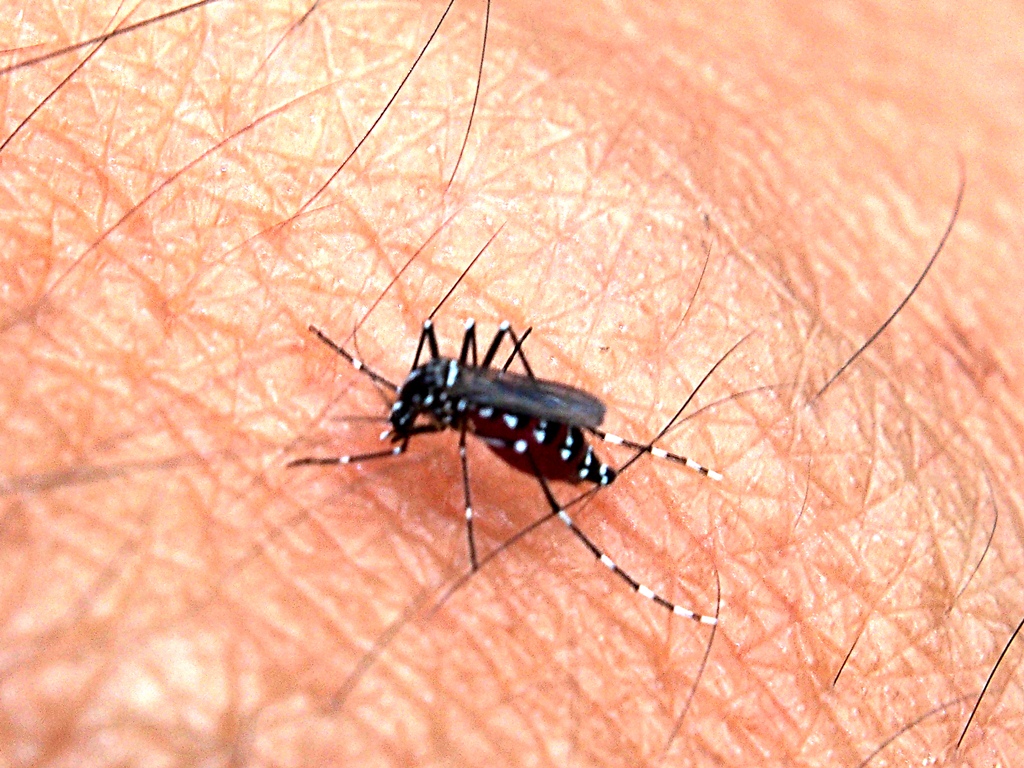
Photograph: John Ragai from Petaling Jaya, Malaysia, CC BY 2.0, via Wikimedia Commons.
Comments